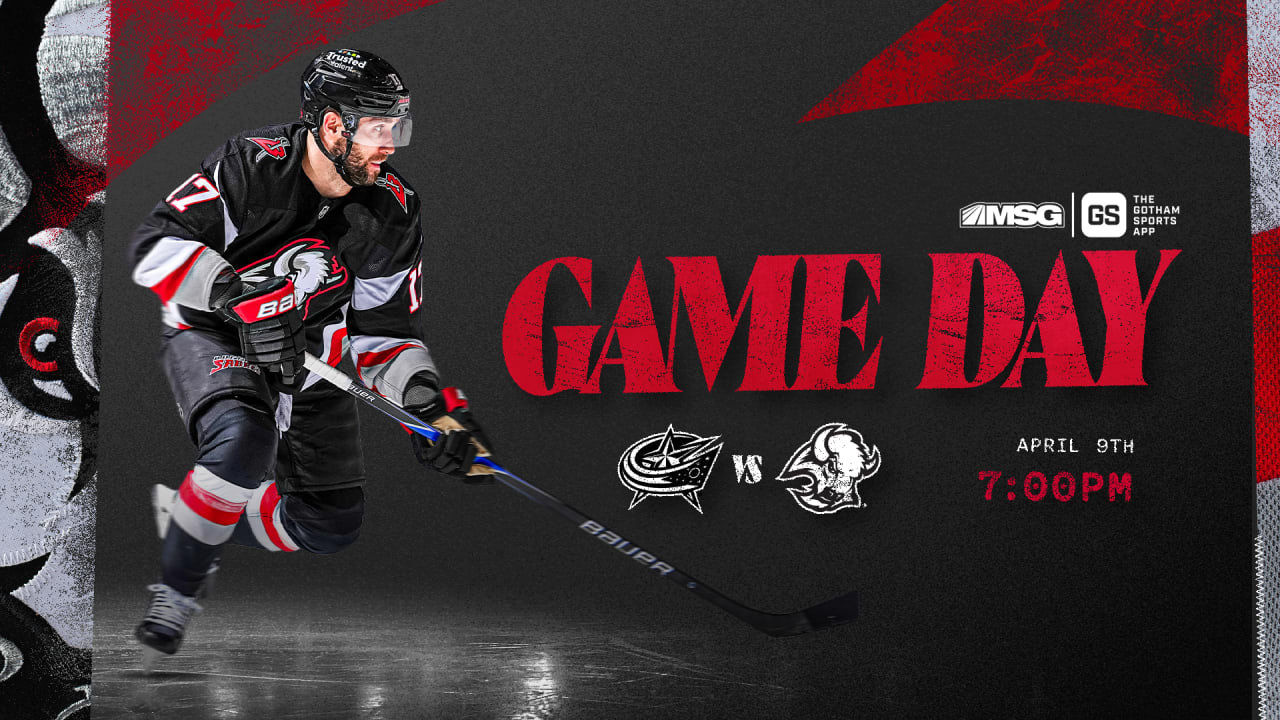
The Buffalo Sabres and Columbus Blue Jackets clash at KeyBank Center in a pivotal late-season NHL encounter, directly impacting both teams’ playoff aspirations. For Buffalo, this game is an opportunity to solidify a two-point lead in the Atlantic Division, securing critical home-ice advantage. Columbus faces acute pressure in the wild card race, trailing by an identical two points as the regular season concludes.
Tactical Evolution and Third-Period Resilience
Buffalo’s recent 5-3 comeback victory against the New York Rangers revealed a critical tactical evolution. Initially struggling with puck management and trailing after two periods, the Sabres strategically simplified their offensive approach, prioritizing direct net-front presence. This pivot towards a more physically disruptive, ‘engineered chaos’ style yielded an 8-1 shot advantage in the final frame, highlighting an effective adjustment from perimeter play to high-danger zone engagement.
Securing crucial points without their ‘A-game’ demonstrates a burgeoning competitive resilience, vital for deep playoff runs. Forward Alex Tuch’s advocacy for a ‘fast and direct’ approach signals a clear coaching mandate: minimize transition errors and exploit defensive vulnerabilities. This philosophy translates into sustained net-front pressure, effectively neutralizing disciplined defensive structures and generating high-percentage scoring opportunities through sustained volume and proximity.
This consistent comeback ability—their fourth win when trailing after two periods—is not an anomaly but a defining characteristic, pointing to superior cardiovascular conditioning and unwavering mental fortitude. The Sabres excel at exploiting opponents who retreat into passive or conservative defensive postures late in games. Consequently, Columbus must implement a proactive defensive strategy, even if leading, to counteract Buffalo’s proven late-game surge capacity.
Columbus and the Strategic Imperative of Intelligent Aggression
Columbus arrives in Buffalo following a morale-boosting shootout victory against Detroit, which snapped a six-game winless streak and maintained their mathematically improbable, yet extant, postseason hopes. Head coach Rick Bowness mandates ‘intelligent aggression,’ a strategic imperative balancing high-pressure forechecking with disciplined defensive responsibility. This philosophy aims to prevent the Blue Jackets from passively reacting, which often causes structural breakdowns against Buffalo’s high-speed transition game.
Columbus’s operational success critically depends on dictating game tempo without compromising defensive integrity. Relentlessly pursuing Buffalo for sixty minutes is physically unsustainable and would create exploitable neutral zone gaps. Therefore, the coaching staff emphasizes purposeful movement and disciplined positioning, ensuring aggressive forechecking translates into pressure, not high-risk turnovers or dangerous odd-man rushes for the Sabres.
While the Detroit win offers a crucial confidence boost for a team plagued by late-season inconsistency, transitioning from a shootout victory to challenging the Atlantic Division leaders demands a significant escalation in execution. The Blue Jackets must replicate their late-game urgency from Detroit while rigorously preserving the structural integrity necessary to contain Buffalo’s potent top-six forward rotation.
Goaltending Volatility and Risk Mitigation
The anticipated goaltending matchup featuring Jet Greaves (Columbus) and Colten Ellis (Buffalo) injects a critical layer of volatility. Starting depth netminders in a game with immense playoff ramifications underscores the NHL’s late-season physical toll and the strategic imperative of managing primary starter fatigue. For Ellis, this opportunity provides Buffalo with essential secondary coverage, allowing them to maintain an aggressive offensive posture while mitigating catastrophic defensive lapses.
Greaves, however, faces a more immediate crucible, tasked with anchoring a Columbus defense prone to high shot volumes. The efficacy of both teams’ defensive strategies, particularly on special teams, will hinge on these netminders’ performances. Early stability from Greaves would enable Columbus to adhere to Bowness’s intelligent aggression; conversely, rapid Buffalo goals could force the Blue Jackets into a high-risk, desperation-fueled style, ideally suited for the Sabres’ transition game.
This strategic reliance on secondary goaltending also illuminates the organizational depth and talent development capabilities within both franchises. In a playoff-magnified market, Ellis and Greaves’s performances transcend a single game result, serving as key indicators of overall organizational health. With virtually no margin for error, a solitary soft goal could irrevocably alter the momentum of either the Atlantic Division race or the tenuous wild card hunt.
Special Teams as Performance Differentiator and Market Insights
Special teams remain a critical performance differentiator. Columbus’s power play, with 37 conversions on 189 opportunities, presents a tangible offensive threat. The Sabres’ disciplined penalty killing will be paramount, especially given their tactical shift towards a more physical, net-front game, which inherently risks increased minor penalties. These potential man-advantage opportunities could enable Columbus to neutralize Buffalo’s statistical superiority at even strength.
From an analytical perspective, platforms like Kalshi’s prediction trades offer a unique, real-time quantification of game probabilities, treating outcomes as tradable assets. Their pricing reflects an aggregated market assessment, weighing Buffalo’s home-ice advantage against Columbus’s acute motivational urgency. As the season concludes, these markets exhibit heightened sensitivity to lineup adjustments, injury reports, and concurrent game results, such as the Tampa Bay-Montreal matchup, providing dynamic insights.
The financial and strategic stakes are substantially amplified by the potential for home-ice advantage, which translates into significant revenue for the hosting organization. Buffalo’s management and ownership recognize that a division title and an extended playoff run catalyze long-term commercial growth and fan loyalty. Consequently, securing the top seed in the Atlantic Division is driven by both competitive ambition and institutional financial strategy, rendering every regulation win a premium asset.
Downstream Implications for the Eastern Conference
The Sabres-Blue Jackets outcome will generate immediate cascading effects across Eastern Conference standings, particularly impacting Tampa Bay and Montreal. A regulation win for Buffalo, coupled with favorable divisional results, could decisively secure the top tier of the Atlantic. This would enable the Sabres to initiate a strategic pivot towards playoff preparation, including load management for key veterans and refinement of specific defensive schemes tailored for protracted seven-game series.
Conversely, a loss for Columbus would drastically constrict their postseason path, potentially triggering a difficult organizational reassessment of roster and coaching staff. The wild card race is a zero-sum contest; failure incurs an early off-season and substantial lost playoff revenue. Thus, the pressure on the Blue Jackets in Buffalo transcends mere sports competition, becoming a critical determinant of the franchise’s immediate strategic trajectory and internal morale.
Entering the regular season’s final week, the convergence of tactical adjustments, goaltending depth, and division-wide incentives fosters an intense, high-stakes environment where minor operational errors yield significant strategic consequences. The Sabres’ pursuit of the top seed and the Blue Jackets’ fight for playoff survival represent potent, contrasting motivations. The resolution at KeyBank Center will definitively reveal which organization is better prepared to navigate the structural and psychological demands of elite-level hockey.
Institutional Alignment and Home-Ice Value
Jason Zucker’s explicit emphasis on home-ice advantage underscores a deep institutional understanding of the Sabres’ symbiotic relationship with their market. Beyond tactical benefits like last-change privileges, home ice serves as a tangible reward for a resilient fan base. Operationally, hosting additional playoff games provides a substantial capital injection via ticket sales, concessions, and local media rights, reinforcing a virtuous cycle of competitive and commercial growth.
This potent financial incentive precisely aligns with the coaching staff’s competitive objectives, fostering a unified organizational drive towards the division title. The Sabres are competing for both the trophy and the substantial strategic and economic advantages of securing the primary seed. This critical alignment of interests rigorously guards against complacency, even after recent successful comeback victories.
In stark contrast, Columbus’s persistent inconsistency exemplifies the formidable challenges of institutional stability during extended playoff droughts or demanding rebuilds. Rick Bowness’s urgent call to action demands that his players demonstrate elite-level competition under maximum pressure. For the Blue Jackets, this game is a crucial opportunity to validate their internal processes and prove their capacity to challenge top-tier teams, irrespective of the final playoff outcome.
Prediction Markets: A Data-Driven Analytical Lens
The integration of prediction markets like Kalshi’s NHL picks signifies an evolving paradigm in sports analysis and consumption for informed audiences. Functioning as sophisticated real-time information aggregators, these markets synthesize diverse data—from goaltending shifts to historical performance—into dynamic price points. This offers a more nuanced, data-driven perspective on game stakes than conventional journalism, explicitly quantifying risk and reward for every conceivable outcome.
For industry stakeholders, these markets provide a critical, bias-free, data-driven perspective on team performance, uninfluenced by fandom or local narratives. The Sabres’ favoritism reflects their superior statistical profile and recent momentum, yet market volatility also acknowledges the inherent unpredictability of a desperate opponent like Columbus. This analytical overlay enriches viewer comprehension, framing the game not merely as a physical contest, but as a complex interplay of probabilities and strategic gambles.
Ultimately, the Sabres vs. Blue Jackets game encapsulates the modern NHL: a high-octane, tactically intricate, and financially consequential event where success or failure hinges on inches and milliseconds. Whether Buffalo’s ‘engineered chaos’ or Columbus’s ‘intelligent aggression’ prevails, the tactical decisions executed will reverberate throughout both franchises. As the puck drops at KeyBank Center, all eyes will be on which team can flawlessly implement their strategic vision amidst the season’s most intense pressure.