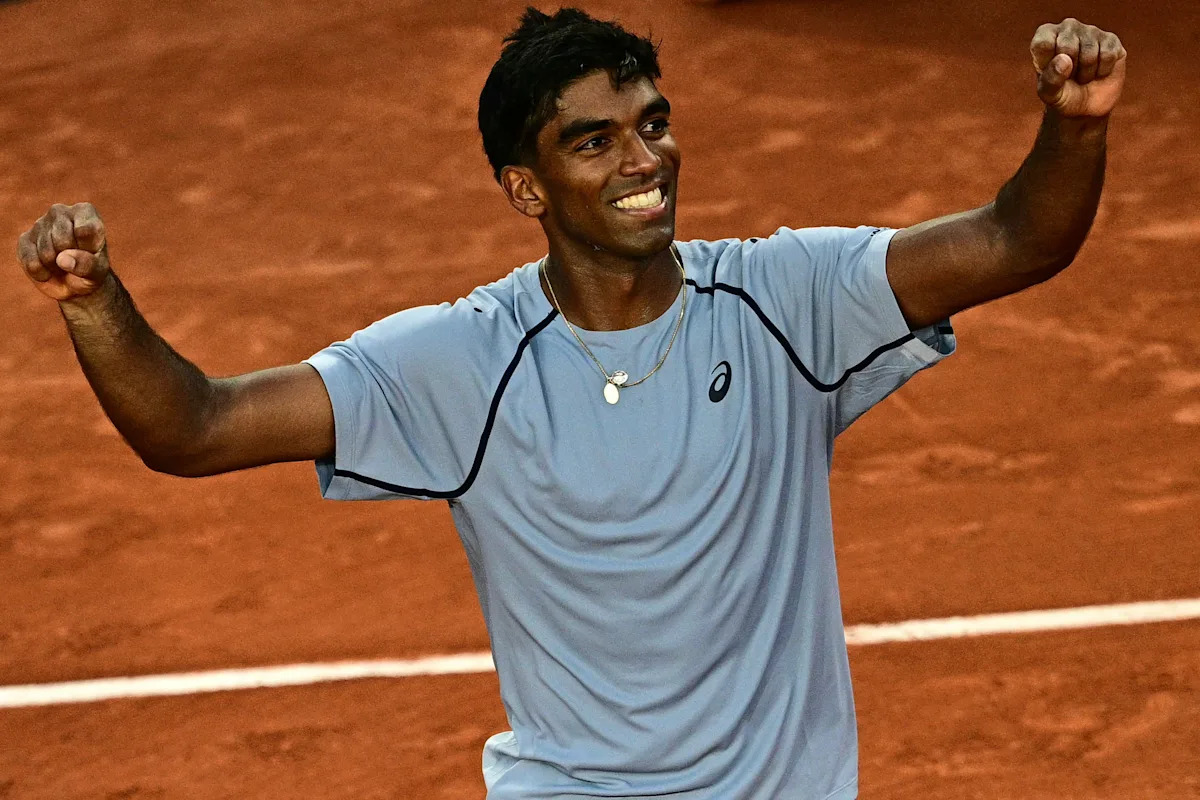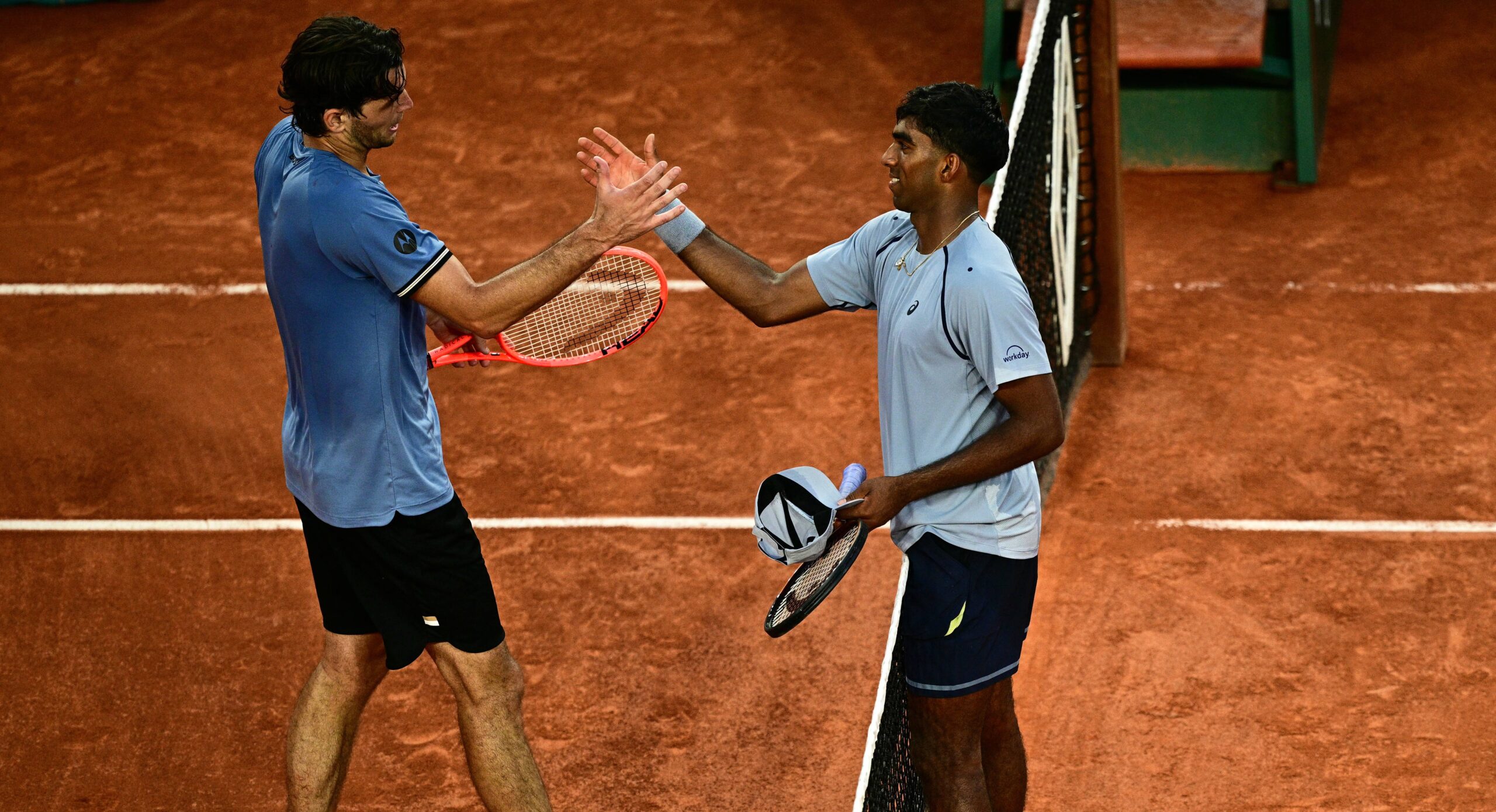
The opening day of the Roland Garros main draw delivered a profound structural shock to the men's singles field as unseeded American Nishesh Basavareddy upset his seventh-seeded compatriot, world No. 9 Taylor Fritz. The grueling 7-6, 7-6, 6-7, 6-1 encounter on Court Suzanne-Lenglen represents the first major upset of the clay-court Grand Slam. This result carries immediate implications for the lower half of the draw, altering seeding security and disrupting Fritz's campaign to defend vital PIF ATP Ranking points.
For Fritz, the defeat marks a recurring vulnerability on clay. This is his second consecutive opening-round departure in Paris, following a 2025 first-round loss to Germany's Daniel Altmaier where he competed as the fourth seed. This pattern of early exits threatens to compromise his long-term tournament scheduling, seeding protection, and overall position within the elite tier of American men's tennis.
In contrast, the victory elevates 21-year-old Basavareddy into the global spotlight. Ranked No. 148, the former Stanford University standout secured entry into the main draw by winning the USTA's Roland Garros Wild Card Challenge. Delivering his first-ever victory over a top-10 player, Basavareddy has validated the competitive viability of the American collegiate tennis system as a legitimate incubation pathway for elite professional talent.
Physical Deficits and the Clay-Court Preparation Gap
The stark divergence in biomechanical readiness and competitive match play proved decisive. Fritz arrived in Paris with severely compromised clay-court acclimation, having contested just one competitive match in the preceding two months—a straight-sets defeat to Australia's Alexei Popyrin in the Round of 16 at the Geneva Open. This restricted schedule was dictated by persistent knee tendinitis, which limited his training volume and prevented him from developing the necessary lateral slide-and-recovery endurance required for red clay.
Clay-court tennis demands high physical patience and sustained multi-directional movement, variables that cannot be replicated without intense match play. Fritz's deficit in competitive court hours left him vulnerable to a highly physical, high-intensity strategy. As the match crossed the two-hour mark, the lack of conditioning reserves became increasingly apparent, demonstrating the operational risks of entering a grueling five-set tournament with unresolved physical issues.
Conversely, Basavareddy exhibited the physical resilience of a competitor accustomed to grinding through the lower tiers of the professional circuit. Although he had played only five tour-level matches this season, his physical preparation was unburdened by injury. This physical parity allowed him to maintain precise court coverage and tactical execution across four sets, dominating the final frame as Fritz's physical reserves deteriorated rapidly.
Tactical Execution and Statistical Leverage on Court Suzanne-Lenglen
The tactical parameters on Court Suzanne-Lenglen highlighted a systematic blueprint designed to neutralize Fritz's baseline power. Basavareddy consistently deployed drop shots to disrupt Fritz's linear baseline positioning, forcing the taller, movement-restricted seventh seed into forward transitions. This strategy systematically exploited Fritz's knee tendinitis, aggravating his physical discomfort while yielding crucial direct points.
In baseline rallies, Basavareddy's backhand down the line served as an offensive focal point, allowing him to redirect pace and dictate court geometry. Statistically, Basavareddy absorbed Fritz's immense offensive output—withstanding 71 winners from the top-10 player while generating 51 of his own. By asserting early-strike initiative on return games, the 21-year-old prevented Fritz from executing his preferred first-serve-to-forehand sequences.
According to Infosys Stats, Basavareddy's efficiency under acute pressure defined the match outcome. The wildcard saved three of the four break points he faced, denying Fritz the ability to consolidate momentum in critical junctures. This defensive resilience, coupled with clutch execution in the opening two tiebreaks, allowed the wildcard to withstand Fritz's baseline surges across the two-hour and 45-minute contest.
The Collegiate Pathway and USTA Development Structures
Basavareddy's breakthrough performance challenges the traditional American developmental paradigm. Historically, top prospects bypassed the collegiate ranks in favor of immediate entry into the junior ITF and lower-tier professional circuits. However, Basavareddy's successful tenure at Stanford University underscores how the collegiate system can foster the physical maturation, competitive volume, and psychological resilience required to succeed on the Grand Slam stage.
This achievement also underscores the utility of the USTA's developmental structures. The Roland Garros Wild Card Challenge provides lower-ranked American professionals direct entry into a clay-court major, bypassing grueling qualifying rounds. For a player ranked No. 148, capitalizing on this opportunity yields massive financial and competitive leverage, providing the ATP ranking points and prize money essential to fund dedicated coaching, travel, and physical therapy.
Historical Context of American Men on European Clay
The historical significance of Basavareddy's victory is profound. He is the first American male to defeat a top-10 opponent at Roland Garros since Jan-Michael Gambill defeated then-World No. 8 Nicolas Kiefer in 2000. This 24-year drought underscores the systemic challenges American players experience when transitioning from high-velocity North American hard courts to slow European red clay.
American development models have historically prioritized flat groundstrokes and short, serve-dependent patterns. However, Basavareddy—a two-time Next Gen ATP Finals competitor—exemplifies a modern, versatile generation of American players. By incorporating heavy topspin, elite defensive movement, and tactical variety, these younger competitors are proving far more adaptable to the physical and technical demands of clay-court tennis.
Downstream Ecosystem and Draw Dynamics
Fritz's early departure introduces immediate volatility into the bottom half of the draw. His exit removes a projected quarterfinal contender, creating an opportunistic vacuum for lower seeds and unseeded players to orchestrate deep tournament runs. However, for broadcasters and event organizers, the loss of a prominent American star represents a commercial challenge in terms of North American media engagement, shifting the narrative focus onto Basavareddy's underdog run.
The critical question moving forward is how Basavareddy manages the physical and emotional aftermath of this landmark victory. Advancing to the second round of a major is a significant milestone, but sustaining this level of tactical discipline and physical output without the element of surprise will test the young American's ceiling as he transitions from a wildcard challenger to a targeted competitor on the ATP Tour.