Federal Voter Roll Directive Triggers State-Level Legal Confrontation
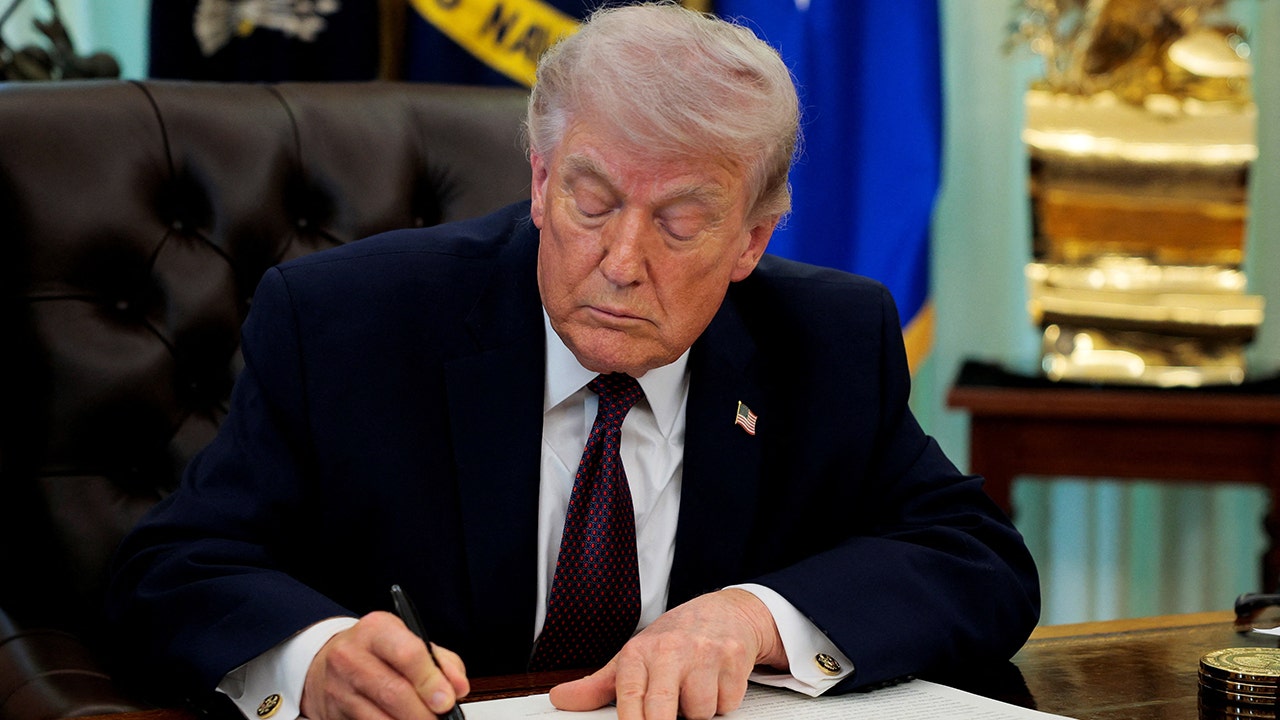
President Donald Trump has signed an executive order mandating the creation of federal lists of verified eligible voters, tied to new constraints on mail-in ballot distribution. The policy, framed by the administration as a critical measure for election integrity, has been met with immediate litigation threats from Democratic-led states, precipitating a constitutional clash over the boundaries of federal versus state electoral control.
The directive instructs the Department of Homeland Security (DHS) to consolidate federal records—including naturalization data and Social Security documentation—into “state citizenship lists.” These datasets are intended to serve as the definitive standard for verifying voter rolls. Furthermore, the order directs the U.S. Postal Service (USPS) to restrict the distribution of mail-in ballots strictly to individuals confirmed through this federal database.
Constitutional Authority and Federalism
The core of the legal dispute rests on the Tenth Amendment and the established principle of state autonomy in election administration. While Article I of the U.S. Constitution grants Congress authority to regulate the “Times, Places and Manner” of federal elections, states have historically maintained primary jurisdiction over voter registration and ballot processing. Opponents argue the administration’s move represents an unprecedented intrusion into sovereign state functions.
President Trump maintains the order is legally robust, asserting, “I don’t see how they can challenge it.” However, the administration’s broader strategic goal—linking voter ID requirements with proof-of-citizenship mandates—suggests a move toward a centralized, federalized model of election oversight that departs from current decentralized practices.
State Opposition and Operational Risks
Arizona, California, and Oregon have led the initial response, citing the executive order as a potential violation of their electoral sovereignty. California Governor Gavin Newsom framed the mandate as a targeted effort to suppress participation, stating: “We’re challenging it. See you in court.”
State officials have raised significant technical concerns regarding the proposed federal verification system. Arizona Secretary of State Adrian Fontes highlighted that 80% of his state’s electorate utilizes mail-in voting. He warned that federal databases—frequently subject to administrative lag—lack the granular, real-time accuracy necessary for state-level voter roll maintenance. Critics contend that relying on federal datasets could result in the mass disenfranchisement of eligible voters due to clerical errors or outdated records.
Broader Implications for Governance
Beyond the primary litigants, states including Colorado, Nevada, Wisconsin, and Washington are monitoring the situation for potential intervention. The outcome of these legal battles will likely establish a lasting precedent regarding the scope of executive power in electoral administration.
The implementation also places the USPS in a precarious position, tasking the agency with complex, politically charged eligibility verification that falls outside its traditional mission. For the administration, the order represents an attempt to reshape electoral infrastructure to align with core constituency priorities; for states, the litigation is a defense of institutional survival against a perceived federal overreach that threatens to disrupt functional, established electoral systems.