
Structural Tensions in Broadcast Analysis
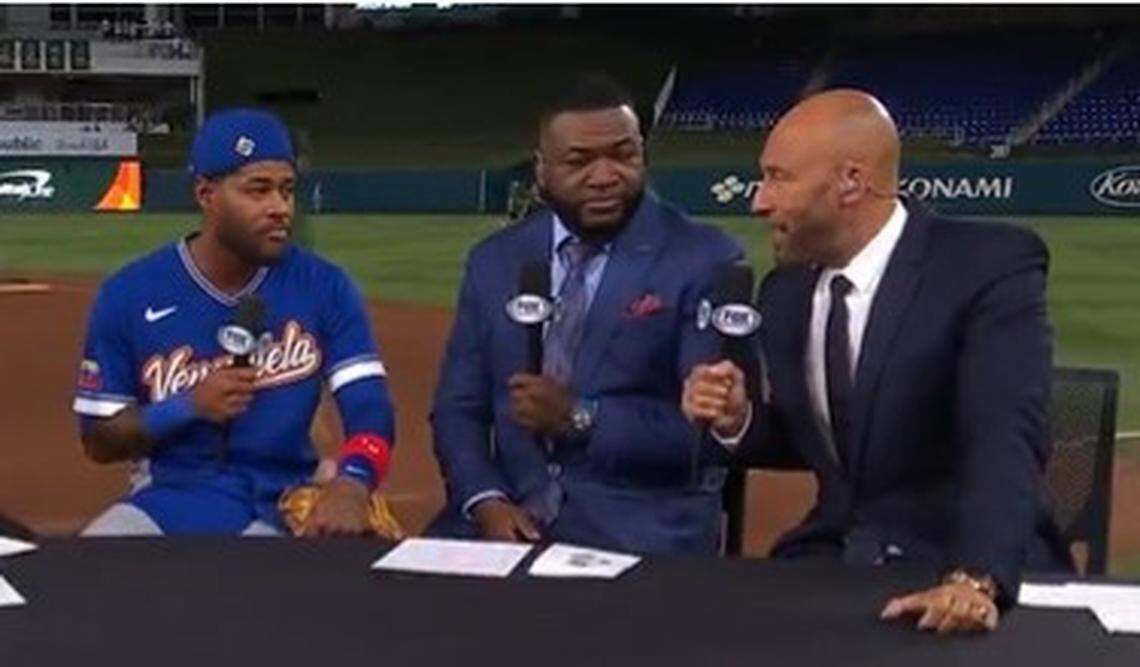
Broadcaster Derek Jeter’s commentary directed at Kansas City Royals third baseman Maikel Garcia during the World Baseball Classic (WBC) transcended standard post-game analysis, functionally revealing latent structural hierarchies within Major League Baseball’s market valuations.
Jeter explicitly contrasted the high-octane, partisan atmosphere surrounding Team Venezuela’s performance in Miami with the perceived engagement levels at Kauffman Stadium. This framing, originating from a figure intrinsically linked to the premium market status of the New York Yankees, immediately reframed Garcia’s clutch semifinal performance—including his decisive RBI single—into a critique of the host market’s perceived enthusiasm ceiling.
Market Perception and Media Leverage Dynamics
The ensuing digital backlash from Royals stakeholders highlights the acute sensitivity surrounding perceived slights against established, yet often statistically undervalued, secondary MLB markets when assessed by national media figures operating under high-profile broadcast mandates.
For the network employing Jeter (Fox Sports), such controversy generates immediate, high-velocity engagement metrics. This necessitates a complex calculation balancing immediate viral traction against the risk of alienating viewership segments whose local market valuation feels diminished.
The comparison implicitly establishes a disparity in perceived significance between marquee international play and regular-season contests in specific locales. This narrative directly influences how local media rights holders and advertisers calibrate future investment strategies based on these externally validated enthusiasm ceilings.
Performance Context and Player Leverage
Maikel Garcia’s pivotal role for Team Venezuela, highlighted by critical late-game hits, provided the necessary platform for Jeter’s observation. Garcia’s terse reply, “Not even close,” simultaneously affirmed the premise of Jeter’s query regarding atmosphere while professionally distancing himself from the comparison—a nuanced position for a player under contract with the Royals.
This incident illuminates the dual contractual and national allegiance players manage during the WBC. Market perception within the domestic league structure critically impacts future contract leverage and endorsement potential, irrespective of international success.
Legacy Branding and Narrative Benchmarking
Jeter’s contextual employment of his historical moniker, “Captain Clutch,” further framed the discussion: established, dominant legacy performance versus localized, emerging success. The commentary serves as a media narrative benchmark applied universally across the league ecosystem.
The timing is critical. Occurring significantly after the Royals’ 2015 pennant run, Jeter’s framing suggests a critique of a sustained baseline engagement level rather than a momentary peak, reinforcing a long-standing perception gap.
Jeter’s transition to media demands rigorous navigation between delivering authoritative analysis and avoiding commentary that suggests dismissal of the league’s broader geographic equity—a challenge amplified by instantaneous digital dissemination.
Digital Decoupling and Stakeholder Weaponization
The viral propagation of the clip demonstrates how isolated broadcast moments are instantly decoupled from their original context and utilized by stakeholder groups, specifically fan bases seeking validation for their regional investment in the sport.
This digital amplification imposes immediate reputational risk on the commentator and the broadcasting entity, mandating rapid internal recalibration of talent deployment against diverse, highly reactive regional audiences.
The controversy overshadowing Garcia’s significant international achievements exemplifies a recurring pattern where narrative conflict supersedes substantive sporting contribution in driving engagement metrics.
Systemic Competitive Implications for MLB
The core issue—the disparity in fan enthusiasm between established media centers and secondary markets—is an intrinsic structural impediment for MLB, influencing revenue sharing models and franchise valuation assessments.
Commentary that reinforces perceptions of lower engagement in specific markets can subtly depress perceived ceilings for those franchises in future media rights negotiations or in attracting high-value free agents prioritizing high-visibility environments.
While the WBC is an independent event, its high-profile broadcast platform subjects participating MLB personnel commentary to scrutiny regarding the league’s overarching market health and geographic stratification.
Operationalizing Broadcast Strategy Risks
Operationally, the event forces network producers to refine the risk/reward calculus of deploying highly branded former stars whose established personal equity may inadvertently clash with the organizational imperative for inclusive league coverage.
Jeter’s strategic deployment, intended to provide gravitas, inadvertently created an adversarial dynamic requiring immediate narrative mitigation efforts across affiliated editorial platforms.
Long-Term Institutional Reinforcement
The long-term fallout involves the subtle reinforcement of existing MLB hierarchies, where the definition of ‘premium’ market support is perpetually negotiated via media representation. For the Royals, this necessitates a strategic counter-narrative leveraging the perceived slight as a unifying catalyst for the upcoming season.
The incident underscores the enduring influence of legacy narratives in sports media, where past career success is wielded as a comparative standard against current market realities, necessitating continuous management by the league to preserve unified appeal.

Photo by aaronw444 on Pixabay.