New Ownership Implements Cross-Sport Management Model Following $10 Billion Valuation
The Los Angeles Lakers organization is undergoing a significant strategic and operational restructuring following its acquisition by Mark Walter, principal owner of the Los Angeles Dodgers. The transaction, valued at $10 billion, establishes a new benchmark for sports franchise valuations and signals a shift toward institutional capital and cross-sport operational integration. The new ownership group has moved to retain existing basketball operations leadership while simultaneously introducing a hybrid management structure that leverages expertise from the Dodgers organization, aiming to create a deeper bench of strategic advisors.
Lon Rosen, the newly appointed president of business operations, confirmed that general manager Rob Pelinka will remain empowered to run basketball operations. Rosen, who transitions from a long tenure as the Dodgers’ chief marketing officer, emphasized the similarities between the two organizations, suggesting a strategic alignment between the Lakers’ brand and the Dodgers’ operational model. This move indicates a focus on leveraging existing infrastructure and market positioning rather than initiating a complete overhaul of the organization’s core identity.
Strategic Implications of the $10 Billion Valuation and Operational Efficiency Mandate
The $10 billion valuation fundamentally redefines major sports franchises as an institutional asset class, reflecting not only the team’s historical success and global brand equity but also the scarcity value of premium media rights and intellectual property in the entertainment sector. The high price point places significant pressure on the new ownership to maximize returns through operational efficiency and strategic leverage. The decision to integrate executives from the Dodgers, a highly successful and data-driven organization, suggests a mandate to apply best practices across different sports properties. The valuation implies a long-term investment horizon focused on sustained growth rather than short-term gains, necessitating a stable and high-performing management structure to justify the capital outlay.
The Hybrid Management Model: Roster Construction and Accountability Dynamics
The strategic decision to retain Rob Pelinka while introducing external advisors creates a hybrid management structure designed to enhance operational depth. Rosen explicitly stated that Dodgers president of baseball operations Andrew Friedman and special adviser Farhan Zaidi will provide input to Pelinka. This integration of baseball executives into basketball operations is unique and suggests an effort to transfer specific skill sets, particularly in data analytics, player evaluation, and long-term roster construction, which have been hallmarks of the Dodgers’ success. This model seeks to combine Pelinka’s existing knowledge of the NBA landscape with the data-driven philosophy associated with the Dodgers’ leadership.
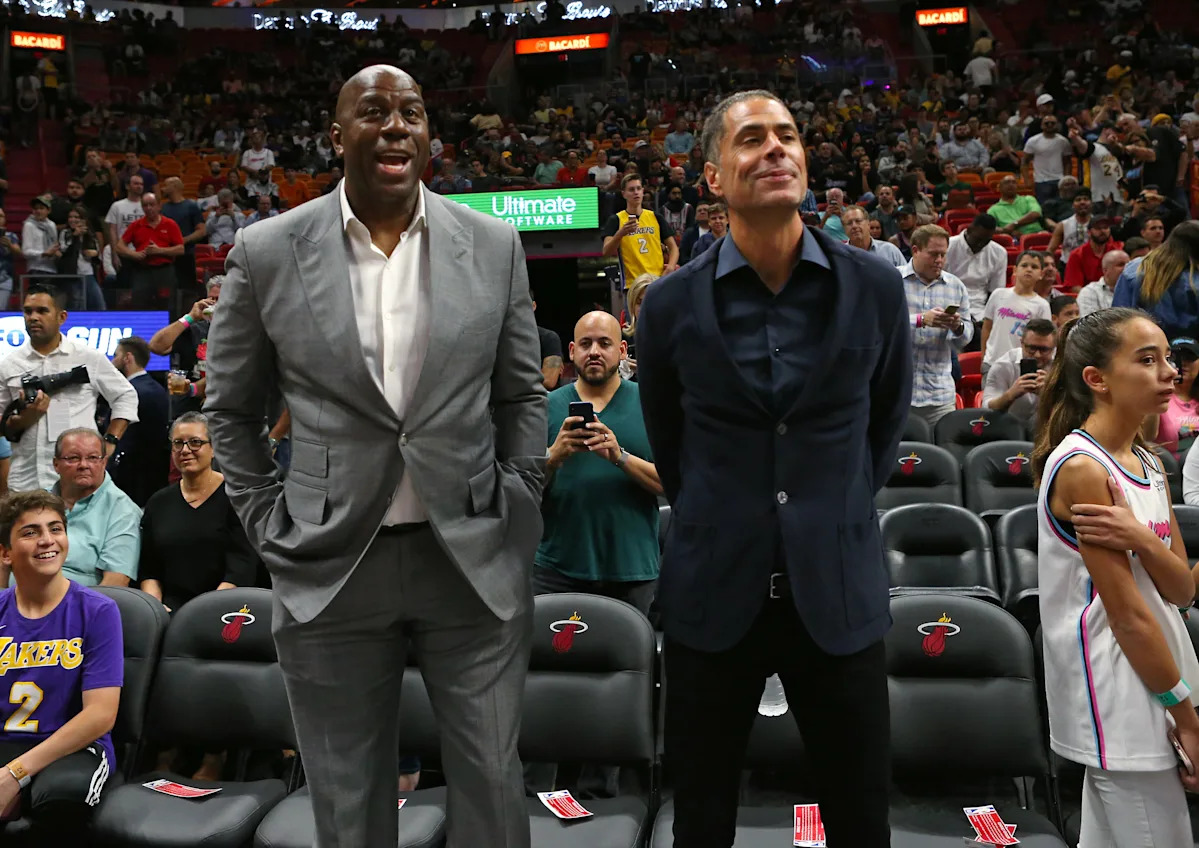
The new structure introduces a complex dynamic of accountability and influence. While Pelinka remains "empowered" to run basketball operations, the presence of Friedman and Zaidi as advisors creates a new layer of oversight and strategic guidance. Furthermore, the involvement of Magic Johnson, who previously served as president of basketball operations alongside Pelinka, adds another layer of complexity. The source indicates Johnson will be involved in operations without holding a formal title. This arrangement suggests a reliance on informal influence and institutional memory, leveraging Johnson’s legacy and relationships within the organization. However, a lack of formal title can complicate accountability structures, potentially creating ambiguity regarding decision-making authority in critical situations.
Strategic Context: Market Speculation and Performance Leverage
The new ownership’s management decisions directly address market speculation regarding Pelinka’s future following the acquisition. The source notes that Pelinka’s status was a major topic around the league, particularly after the Lakers exited the trade deadline holding onto their tradable first-round pick and preserving cap space. The decision to retain Pelinka and empower him with additional resources suggests a vote of confidence in his long-term strategic vision, which prioritizes asset preservation and future flexibility over short-term roster changes. The integration of Dodgers executives provides Pelinka with a deeper bench of strategic support, potentially mitigating risks associated with high-stakes decisions. The source suggests this transfer of skill sets from baseball to basketball is viewed as a unique opportunity to enhance performance leverage and align with the capital investment strategy required to justify the $10 billion valuation.