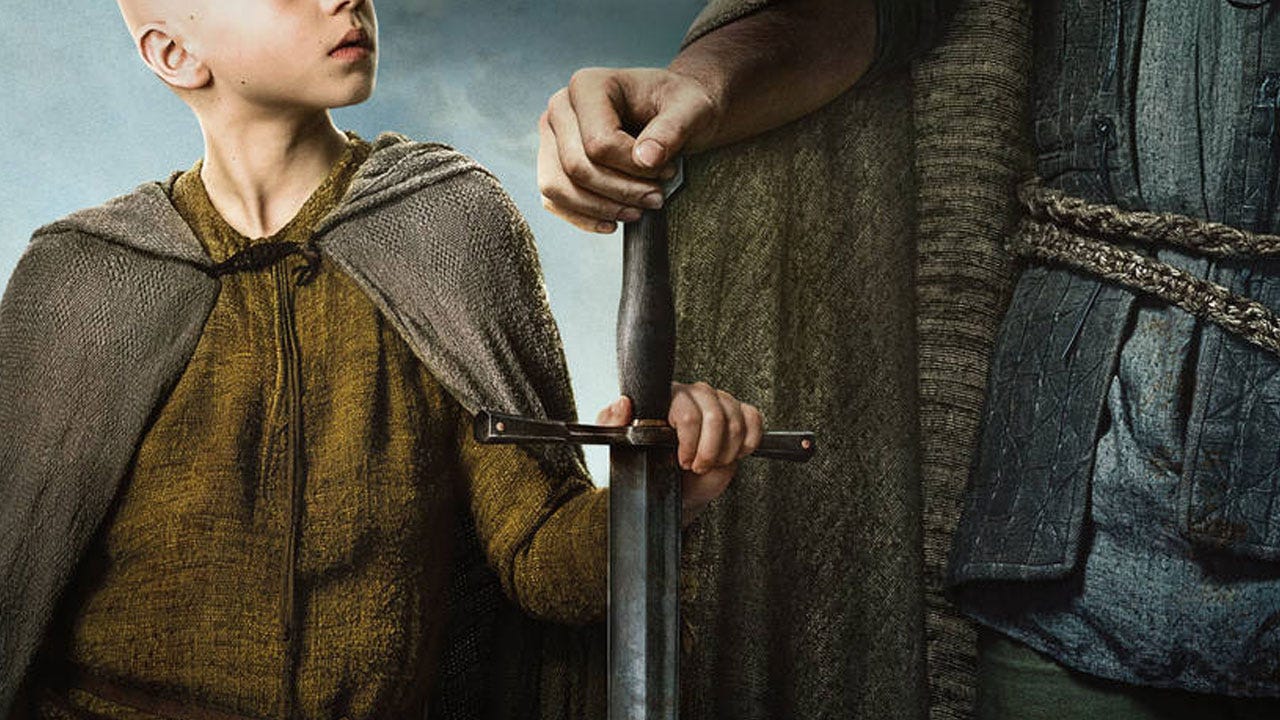
The conclusion of A Knight of the Seven Kingdoms, specifically the episode “The Morrow,” centrally examines Ser Duncan the Tall’s confrontation with survivor’s guilt following the traumatic events at Baelor.
Feudal Instability: Status Conflict and Cognitive Dissonance
Dunk’s internal conflict—contrasting his self-perceived low worth as smallfolk against the inherent value ascribed to highborn casualties—establishes a critical narrative tension: inherited status versus demonstrated merit.
This arc directly challenges the established feudal hierarchy. The narrative posits that the intrinsic worth of nobility, symbolized by Prince Baelor’s terminal vulnerability, is structurally less robust than the operational survival of a common-born knight.
The incentive structure for Dunk is thereby redirected; validation shifts from traditional deference to performance validation, structurally undermining the legitimacy of the incumbent power matrix.
Fragility of Elite Security and Transactional Loyalty
Prince Baelor’s death fundamentally exposes the inherent fragility of highborn security, regardless of perceived divine or hereditary protection, necessitating an immediate re-evaluation of risk management protocols for ruling houses.
Dunk’s guilt, stemming from the patronage of Baelor and Ser Arlan of Pennytree, highlights a form of transactional loyalty that exceeds mere feudal obligation, suggesting the emergence of a moral economy among professional fighting men.
Ser Lyonel Baratheon functions as a crucial recalibration mechanism. By asserting that the knights surrounding the Prince were executing primary risk assessment, Baratheon redirects Dunk’s guilt from personal failure to a systemic miscalculation of asset protection.
Dialogue as Strategic Narrative Control
Baratheon’s assertion that the gods “don’t favor a fraud” is a calculated narrative device, stripping Dunk of any conferred moral authority derived from assumed divine selection. This forces accountability for his protective failures.
This dialogue repositions knighthood’s value proposition: it pivots from inherited title or perceived sanction to demonstrable operational competence under acute duress.
In contrast, Raymun Fossoway’s dynamic with Red introduces a counterpoint of social maneuvering and levity. While Dunk navigates existential ethics, Fossoway actively leverages personal relationships—the “honey trap”—for immediate material gain, illustrating divergent strategic responses to instability.
Media Ecosystem Convergence and Content Monetization
The analysis of the finale is deliberately contextualized alongside the penultimate episode of Industry Season 4. This juxtaposition implies a distributor strategy pairing high-stakes fantasy drama with contemporary financial thrillers, targeting an audience segment engaged in analyzing asymmetric power dynamics across disparate genres.
The inclusion of The Watch: After Dark confirms an established pattern of mandated post-episode dissection, designed to maximize platform engagement duration and foster IP loyalty via community interaction.
Incentivizing Analytical Depth
Sustained engagement required to support companion programming incentivizes producers to engineer narratives possessing sufficient ambiguity or thematic depth to necessitate extended post-broadcast analysis.
Hosts Chris Ryan and Andy Greenwald create a critical feedback loop; authoritative interpretation drives subsequent viewer discussion volume, positioning the critical apparatus as integral to consumption.
The explicit cross-promotion (e.g., YouTube subscription drives) underscores the financial imperative to convert transient episodic consumption into sustainable platform loyalty, monetizing critical discourse as a primary content acquisition channel.
Operational Structure of Multi-Platform Analysis
Production credits (Producers: Kaya McMullen, Kai Grady; Video Supervision: Jacob Cornett) detail a specialized operational structure for high-volume, multi-platform delivery. This division of labor—separating hosting talent from technical supervision—maintains output quality.
Temporal markers (e.g., 4:11 for Knight, 29:47 for Industry) reveal structured segmenting designed to optimize retention by catering precisely to specific audience interests within a single broadcast package.
Character Trajectory Inflection Points and Future Framing
Dunk’s uncertainty in “The Morrow” marks a crucial inflection point, shifting his focus from reacting to the tournament fallout toward establishing a self-directed purpose.
His inability to derive immediate meaning from the preceding violence compels a strategic pivot: away from reactive defense and toward proactive identity construction—a prerequisite for advancement in the forthcoming political landscape.
The narrative’s sustained focus on Dunk’s internalized low self-esteem, despite evidence pointing to systemic noble incompetence, sets the stage for future conflicts where intrinsic meritocracy will directly challenge entrenched aristocratic privilege.
Institutional Validation via Mentorship
Baratheon’s counsel, while pragmatic, serves as vital institutional validation of Dunk’s capability, framing it within the context of protecting a high-value asset. This external anchor is crucial for moving Dunk past immediate emotional processing toward a sustainable operational mindset.
The contrast between Baratheon’s directness and the implied deception of the “honey trap” scenario delineates the dual operational environments characters must navigate: the honorable battlefield and the arena of political maneuvering.
Long-Term Strategic Positioning
If Dunk internalizes the systemic critique that nobility is flawed, his future alliances will likely prioritize demonstrated character over birthright, guaranteeing friction with established power brokers.
His unresolved destination—tethered to the Targaryen fallout or seeking a broader field—defines his operational sphere. This uncertainty maximizes audience investment, as his next strategic alignment will impose significant, unquantified consequences across multiple factions.
Comparative Media Context and Consumption Mechanics
The concurrent review of Industry S4 E7 highlights audience engagement with narratives exploring high-pressure systems, whether feudal or modern finance. Both genres utilize examinations of ambition, moral compromise, and opaque mechanisms.
Industry’s “fiery penultimate episode” mirrors the physical/emotional destruction in Knight, reinforcing thematic consistency in serialized storytelling regarding climactic systemic failure.
The Structural Mandate for Finale Recaps
Immediate, detailed recap availability fulfills a structural necessity in contemporary media consumption, where release velocity outpaces audience capacity for reflection. These analyses provide necessary scaffolding to ensure narrative complexity and foreshadowing are fully assimilated before subsequent content drops.
Insufficient framing risks audience attrition through misinterpretation of subtle character development or thematic underpinning.
Critical Interpretation as Market Signal
The hosts’ positive reception confirms successful narrative payoff, reinforcing the credibility of the critical apparatus analyzing it. Positive reinforcement from established commentators acts as a powerful market signal, influencing viewing patterns for potential franchise newcomers.
This cycle—creation, consumption, critical interpretation, and platform promotion—establishes a self-sustaining economic model where the analysis itself becomes a monetizable asset for premium serialized content.
Institutional Biases and Counter-Establishment Networks
Dunk’s internal conflict regarding the disproportionate value placed on noble life constitutes an implicit critique of the fictional world’s institutional biases. His journey frames survival as non-predicated on merit but on lineage—a foundational instability often preceding political realignment.
The fact that a knight of Dunk’s operational standing internalizes this critique demonstrates that the ruling structure’s ideological foundations are actively being tested by operational realities.
Prioritizing Personal Allegiance over Feudal Contract
The source material emphasizes Baelor and Arlan’s unsolicited kindness, establishing a debt that supersedes contractual obligations. This prioritization of personal bonds over institutional loyalty suggests the narrative favors building a counter-establishment network based on mutual respect.
This foundation of personal allegiance is strategically positioned to be more reliable than oaths sworn to distant lords, offering an advantage to those cultivating such high-trust relationships.
Correcting Debilitating Cognitive Bias
Dunk’s self-perception of being “worth less” directly reflects systemic messaging internalized from the feudal order. Ser Lyonel’s intervention is thus a strategic correction aimed at maximizing Dunk’s future utility by neutralizing a debilitating cognitive bias.
A knight operating under the assumption of expendability risks underperformance or self-sabotage; the narrative invests heavily in correcting this perception to ensure optimal character functionality in subsequent high-stakes challenges.
Operational Context: Processing Conflict and Ambiguity
The Ashford events serve as the operational nexus where chivalric theory collided with the brutal calculus of survival. “The Morrow” focuses on the psychological overhead required to process high-stakes failure, acknowledging that conflict cost extends beyond immediate casualties.
Rhythmic Function of Humor
The reintroduction of levity via Ser Lyonel and Fossoway provides essential tonal management. It functions as a rhythmic counterbalance, offering necessary release valves to sustain long-form audience engagement.
These lighter moments punctuate intense drama, resetting the audience’s emotional baseline before re-engagement with conflict.
Strategic Withholding of Clarity
The finale’s deliberate withholding of Dunk’s strategic clarity maximizes narrative tension for the ensuing installment. This ambiguity compels audience participation in forecasting potential pathways, deepening investment in his resolution.
The unresolved nature of his future allegiance ensures elevated personal and political stakes. Dunk transitions from a reactive participant to a potential independent strategic actor whose next move will define consequences across multiple factions.