Strategic Imperative: Boca Juniors Navigates Critical Performance Juncture
The Torneo Apertura 2026 fixture between Boca Juniors and Racing Club is not merely a contest for three points; it represents a profound strategic inflection point for both clubs. For Boca Juniors, this high-stakes encounter, against a perennial rival in La Bombonera, carries the weight of a season potentially at a crossroads, intensifying the inherent pressures of top-tier football.
Boca’s recent trajectory, characterized by a worrying inconsistency and a demonstrable dip in performance, necessitates an urgent tactical and psychological recalibration. A victory is no longer merely desired but strategically imperative, particularly after a string of unfavorable results, including subpar away performances and a recent goalless home draw against Platense.
This alarming period of operational instability has critically elevated the scrutiny on coach Claudio Úbeda. His tenure is widely perceived as ‘on the ropes,’ suggesting that an adverse outcome against Racing could definitively terminate his cycle, thereby underscoring the relentless, performance-based accountability demanded in elite club management.
The club’s present strategic vulnerabilities are inextricably linked to its elimination from the Clausura 2025 by Racing Club. This historical competitive tension not only amplifies the immediate stakes but also perpetuates a narrative of competitive disadvantage against a key rival, demanding a robust response.
Currently occupying seventh position in Group A with seven points (two victories, one draw, two defeats), Boca’s mid-table standing is indicative of a profound need for a strategic shift. This necessitates regaining competitive momentum to meet both immediate league objectives and the long-term institutional expectations of a club of Boca’s stature.
Operational Strain: Managing Player Welfare and Squad Depth
Boca Juniors has faced acute operational strain due to an unprecedented spate of injuries, critically impacting its central attacking options. The simultaneous absence of all primary center-forwards created a profound tactical bottleneck, severely limiting offensive deployment and exposing vulnerabilities in squad depth management.
The anticipated return of Miguel Merentiel and Edinson Cavani to the starting lineup, complemented by Lucas Janson’s recovery, offers a crucial tactical reprieve. Their reintegration is expected to partially alleviate the operational strain, restoring offensive potency and affording the coaching staff much-needed strategic flexibility.
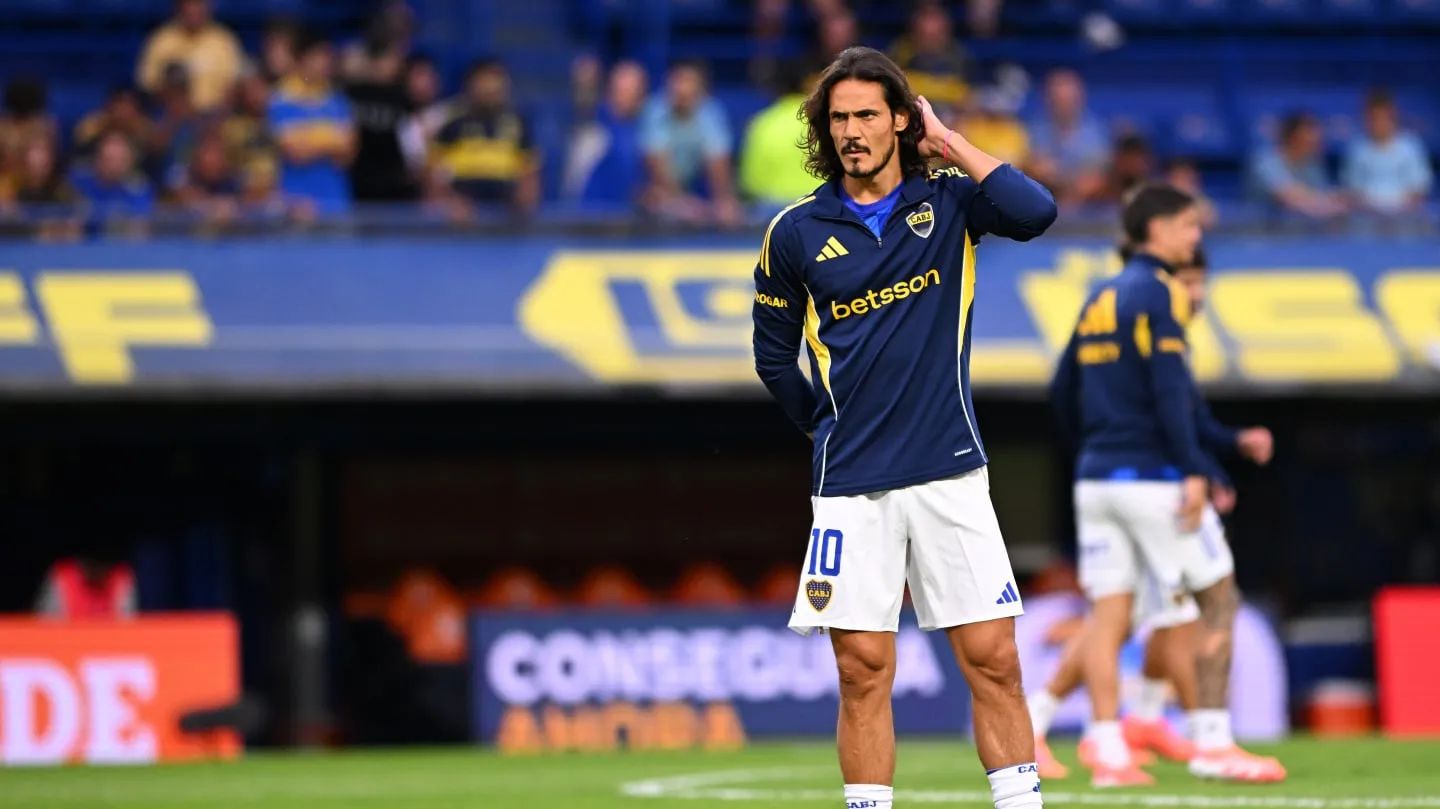
Cavani’s re-elevation to the starting eleven, alongside his appointment as captain, signals a decisive vote of confidence from the coaching staff. This strategic gambit aims to leverage his veteran experience and leadership acumen as a critical stabilizing force amidst the team’s turbulent period, hoping to positively impact both performance and morale.
His prior five-match absence due to lumbago starkly underscores the persistent systemic challenges of elite player welfare and injury management. His gradual reintegration, exemplified by 25 minutes against Platense, reflects a cautious, data-driven approach designed to optimize his physical conditioning and mitigate re-injury risk.
Public scrutiny intensified following Cavani’s warm-up routine against Platense—marked by minimal teammate interaction and a portable cooler—which was initially lambasted as ‘displicent.’ This incident acutely illustrates the relentless media pressure and fervent fan expectations levied upon high-profile athletes, especially amidst periods of collective team underperformance.
Subsequent clarifications, however, revealed Cavani’s specific training methodology reflects a highly nuanced, individualized player preparation strategy that intentionally deviates from conventional team exercises. This episode powerfully illustrates the intricate equilibrium required between managing public perception, accommodating bespoke individual athlete needs, and executing transparent club communication strategies.
Leandro Paredes’ injury directly necessitated Cavani’s elevation to the captaincy, signifying a pivotal, albeit temporary, shift in on-field leadership. This adaptive decision highlights the club’s imperative to respond swiftly to unforeseen circumstances while ensuring a robust, experienced leadership presence to navigate critical match situations.
Competitive Dynamics: Racing Club’s Resurgent Trajectory
In stark contrast to Boca Juniors’ current struggles, Racing Club arrives at La Bombonera imbued with renewed momentum, having impressively secured two consecutive victories. This significant upturn in form follows a challenging campaign start that saw them endure a concerning three consecutive defeats, demonstrating their recent tactical and psychological resilience.
Under coach Gustavo Costas, Racing has demonstrably navigated its initial performance slump with effective tactical adjustments, allowing them to regain crucial competitive footing. Their current ninth-place standing, while not yet dominant, decisively signals a positive, upward trajectory.
Racing’s strategic objective for this clash is unequivocally clear: to inflict a psychologically significant and sporting blow upon Boca Juniors on their home turf. This ambition underscores the profound intensity of the rivalry and the considerable psychological advantage gained by disrupting a direct competitor’s precarious stability.
The historical head-to-head record further exacerbates Boca’s precarious position, revealing a dismal return of only three victories in their last twelve encounters against Racing. This enduring pattern signifies a persistent competitive vulnerability that Racing will undoubtedly, and strategically, seek to exploit.
Boca’s last victory against Racing dates back nearly two years, occurring during the Copa de la Liga 2024. This protracted winless streak against a bitter rival compounds the competitive pressure and magnifies the psychological challenge confronting the home side.
Institutional Implications: Governance, Finance, and Fan Engagement
The performance fluctuations of an institution as storied as Boca Juniors inevitably carry profound, cascading implications that extend far beyond immediate sporting results. A prolonged period of perceived ‘decadence’ directly threatens fan engagement, with tangible repercussions for critical revenue streams such as gate receipts, merchandise sales, and ultimately, the club’s vital brand loyalty.
The passionate discourse from Xeneize fanatics, articulating deep concerns about the institution’s current state and on-field performance, profoundly underscores the symbiotic relationship between team results and the broader club identity. This intense public sentiment exerts significant, often immediate, pressure on club governance and strategic decision-making processes.
A potential coaching change, a looming possibility given Úbeda’s precarious position, would invariably trigger a complex series of financial and operational considerations. These include substantial severance packages, the costly recruitment of an entirely new technical staff, and inevitable shifts in player acquisition strategies. Such managerial transitions are not only financially onerous but also inherently disruptive to long-term strategic planning and club stability.
The significant media visibility of this interzonal match—broadcast live on TNT Sports and meticulously tracked minute-by-minute on platforms like canchallena.com—underscores the immense commercial and strategic value inherently attached to these high-stakes encounters. Robust broadcast rights and pervasive media exposure are indispensable revenue pillars and brand-building instruments for major clubs.
The role of referee Leandro Rey Hilfer in such an intensely charged atmosphere becomes acutely crucial for upholding competitive integrity and ensuring equitable play. His every decision will undoubtedly face relentless scrutiny, reflecting the immense pressure intrinsic to top-tier football rivalries.
The Torneo Apertura 2026, as a structured and fiercely contested league competition, provides the definitive framework within which these complex competitive dynamics unfold. Each match axiomatically contributes to the overarching league narrative, fundamentally influencing club standings, critical qualification prospects, and ultimately, substantial financial rewards.
The cumulative effect of sustained poor performance, particularly for a club of Boca Juniors’ global stature, profoundly impacts its market positioning and attractiveness to crucial potential sponsors and investors. Prolonged underperformance risks irrevocably eroding brand equity and diminishing competitive advantage within the lucrative broader sports market.
Conversely, Racing Club’s recent, well-executed recovery dynamically demonstrates the potent capacity of timely strategic adjustments to yield significant positive results. This reinforces investor confidence and fundamentally strengthens their competitive standing. Their impressive ability to rebound from a difficult start provides a compelling, contrasting narrative of robust operational resilience.
The persistent narrative surrounding player injuries and their astute management critically reflects upon the club’s underlying medical and sports science infrastructure. Proactive, effective player welfare programs are therefore paramount for maintaining optimal squad health, consistently ensuring peak performance, and diligently protecting highly valuable athletic assets.
Ultimately, this fixture precisely encapsulates the intricate interplay of fervent sporting ambition, shrewd strategic management, critical financial considerations, and unrelenting public scrutiny that collectively define professional football at its most elite levels. The outcome will transcend the mere allocation of three points, profoundly influencing the immediate future and long-term strategic trajectory of both storied institutions.