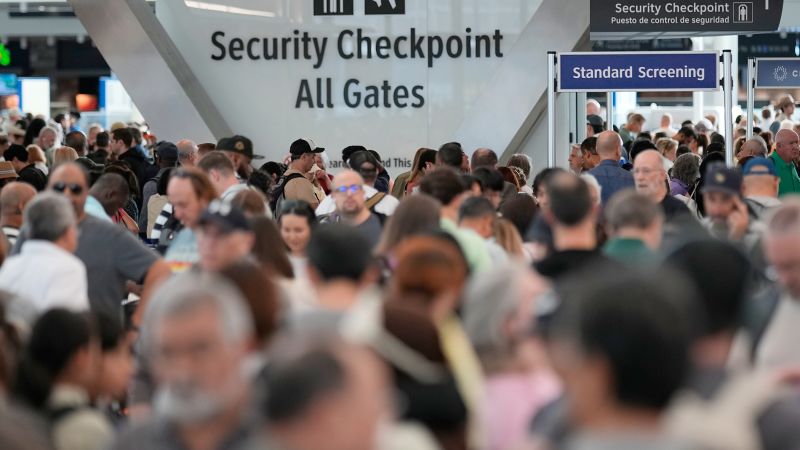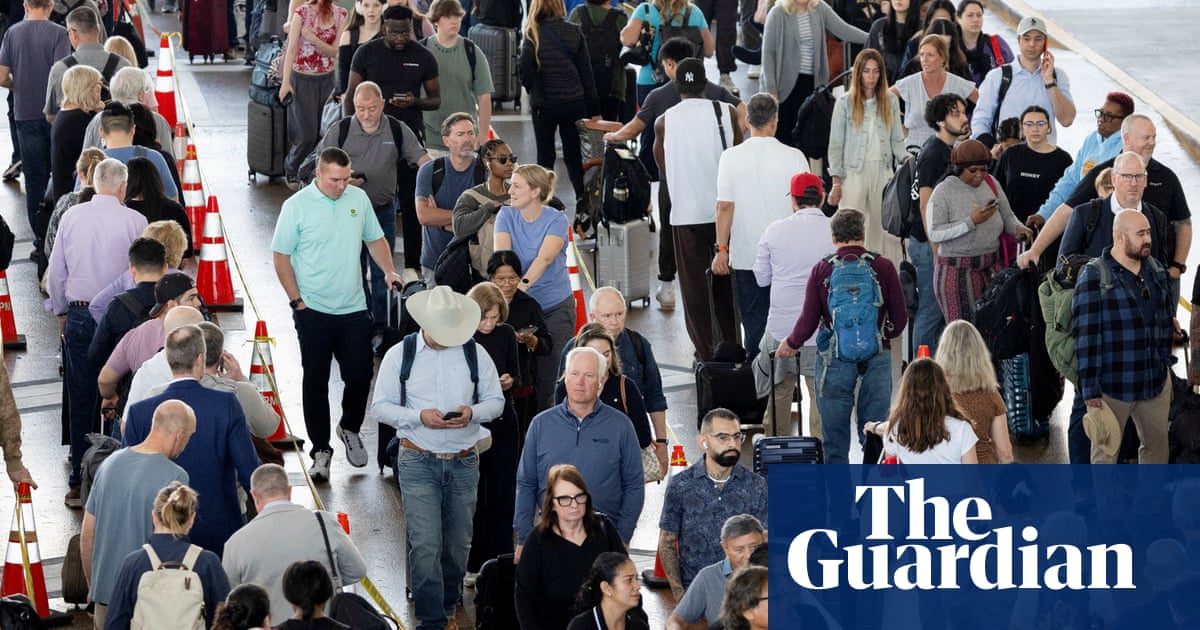
The Transportation Security Administration (TSA) leadership has issued an urgent alert to Congress, confirming operational degradation marked by the “highest wait times in TSA history” concurrent with heightened staff attrition.
This immediate crisis stems from financial distress caused by a protracted partial government shutdown, which resulted in an estimated $1 billion loss in compensation across Department of Homeland Security (DHS) components, directly disincentivizing TSO attendance.
The structural fragility of the screening apparatus is magnified by the mandatory timeline for personnel readiness. The acting TSA head explicitly warned that the four-to-six-month training pipeline for new Transportation Security Officers (TSOs) means current hiring initiatives will not yield fully operational staff until well past the 2026 World Cup.
Systemic Operational Lag vs. Demand Spikes
Agency officials characterize the confluence of staff deficits and the anticipated passenger surge for the 2026 World Cup as a “potential perfect storm,” signaling a failure to maintain mandated baseline operational capacity under predictable demand increases.
The impact transcends traveler inconvenience, imposing tangible economic and social costs, evidenced by documented cases of travelers missing work, connections, and crucial personal events due to security processing failures.
George Bush Intercontinental Airport (IAH) serves as a high-stress indicator, reporting pre-dawn queues extending into subterranean transit tunnels, leading to missed flights and requiring passengers to re-enter security protocols.
The Houston Airport System director confirmed that these severe delays are attributable directly to the security bottleneck, demonstrating that local infrastructure cannot compensate for systemic federal staffing shortfalls.
Externalizing Federal Inefficiency
The persistent checkpoint chaos is compelling a strategic recalibration across U.S. aviation, exemplified by major airports altering their official arrival time guidance. This represents a tacit admission that standard benchmarks (2-hour domestic/3-hour international) are operationally insufficient.
A cohort of 23 major airports, handling an average of 450,000 daily departures, has increased recommended lead times to as much as four hours pre-departure. This adjustment effectively externalizes the cost of federal understaffing onto the traveling public and commercial carriers, increasing terminal saturation.
Inter-Agency Resource Competition
Volatility is compounded by the simultaneous deployment of Immigration and Customs Enforcement (ICE) agents to support secondary operational needs, creating resource competition within already strained security sectors.
Multiple airports experiencing high TSA wait times are concurrently utilizing deployed ICE personnel. This cross-agency reallocation exacerbates the core security staffing deficit, highlighting a governance failure where centralized resource management overlooks synergistic negative impacts when personnel are diverted from primary screening roles.
The Financial Incentive Mechanism of Failure
The financial incentive structure during the shutdown created a rational disincentive for TSOs to report, directly causing the operational collapse. The loss of $1 billion in accrued pay over six weeks directly correlates with immediate staffing availability.
This financial fragility exposes the risk inherent in relying on contingent federal staffing during protracted budgetary disputes. Critically, the four-to-six-month training latency structurally locks in this staffing deficit for the medium term, irrespective of the shutdown’s resolution date.
Strategic Implications for Mass Event Hosting
The 2026 World Cup acts as a definitive stress test that the current security posture is ill-equipped to manage, raising concerns about the federal capacity to guarantee safe, efficient ingress/egress for mass international gatherings.
The inability to rapidly scale TSO capacity due to mandated training timelines exposes a critical strategic gap in national event preparedness. This necessitates evaluating future large-scale events based on demonstrated security throughput reliability.
Airlines and destination economies face increased risk as security backlogs translate directly into missed international connections and diminished reputational standing for gateway cities. The situation forces a trade-off between immediate fiscal adherence and maintaining critical infrastructure readiness.
Accountability and Mitigation Limits
Testimony before Congress formalizes the institutional acknowledgment of failure, shifting the narrative from isolated incidents to systemic vulnerability caused by fiscal policy. This places direct pressure on legislators to resolve funding mechanisms that prevent the furloughing of essential security personnel.
Performance disparities between airports, even those with similar staffing pressures, suggest that local management strategies offer only marginal mitigation against a systemic federal staffing deficit. The chaos at IAH exemplifies a failure in service continuity, creating exponential delay compounding throughout the travel day.
Infrastructure Investment Compromise
Sustained uncertainty regarding security processing times compromises the operational efficiency of airport capital projects designed for specific throughput capacities when the human screening element cannot meet physical parameters.
Airlines may begin incorporating the probability of extended security delays into route planning and pricing models, potentially increasing consumer operating costs. The necessity for airports to double recommended arrival times reduces the available operational window for aircraft turnaround, stressing gate availability and coordination.
The Precedent of Contingency Backfilling
The reliance on ICE agent deployment as an immediate stopgap sets a problematic precedent, suggesting critical security functions can be backfilled by personnel trained for distinct enforcement roles. While addressing immediate needs, this dilutes specialized focus and may complicate long-term compliance auditing.
The documented economic and social disruption provides concrete leverage in future budgetary negotiations regarding DHS funding continuity. The fact that staffing shortfalls persist into the 2026 World Cup cycle confirms the resolution of the immediate shutdown does not fix the underlying operational deficit, demanding a sustained, multi-quarter hiring surge.