A New Dawn for TikTok in the US?
The digital landscape often finds itself at the intersection of innovation, geopolitical tension, and national security. Few narratives encapsulate this complex interplay as vividly as the saga of TikTok in the United States. For months, the popular short-form video platform has been a political football, caught in the crossfire of Washington’s concerns over data privacy and foreign influence.
Today marks a pivotal moment in this ongoing drama, as the TikTok USDS Joint Venture LLC formally announced its establishment. This move, made in apparent compliance with stringent U.S. regulatory requirements, has been unveiled just a day before a crucial deadline set by former President Donald Trump. While the company heralds this as a significant step towards securing its future in the American market, the immediate reactions from some corners of Washington suggest that the path ahead remains far from smooth.
The Formation of TikTok USDS Joint Venture LLC
In a long-anticipated announcement, the TikTok USDS Joint Venture LLC confirmed its formal establishment, signaling a new operational structure designed to address the deep-seated concerns of U.S. policymakers. This entity, which has also revealed its leadership team, is presented as the culmination of extensive negotiations and strategic restructuring aimed at safeguarding American user data and national security interests.
According to the official statement from TikTok USDS Joint Venture LLC, the company was established today, aligning with a framework intended to satisfy specific U.S. regulatory mandates. The urgency of this formalization is underscored by its timing: it arrived just one day before the deadline previously imposed by the Trump administration, a period marked by intense scrutiny and the threat of an outright ban on the platform within the United States.
Addressing the Regulatory Labyrinth
The journey to this joint venture has been fraught with challenges, navigating a complex web of U.S. regulatory requirements. At the heart of these demands lay concerns over the ownership structure of TikTok’s parent company, ByteDance, and the potential for the Chinese government to access the data of millions of American users. U.S. officials had repeatedly voiced fears that such access could pose a significant national security risk, leading to calls for a complete divestiture of TikTok’s U.S. operations from its Chinese parent.
The creation of the TikTok USDS Joint Venture LLC is intended to act as a firewall, theoretically insulating U.S. user data from foreign influence. This structure typically involves a significant degree of American oversight, including independent board members, secure data storage within the U.S., and robust auditing mechanisms. The announcement of its leadership team suggests that these crucial governance components are now in place, at least on paper.
The Congressional Conundrum: A ‘Clean Break’ or Compromise?
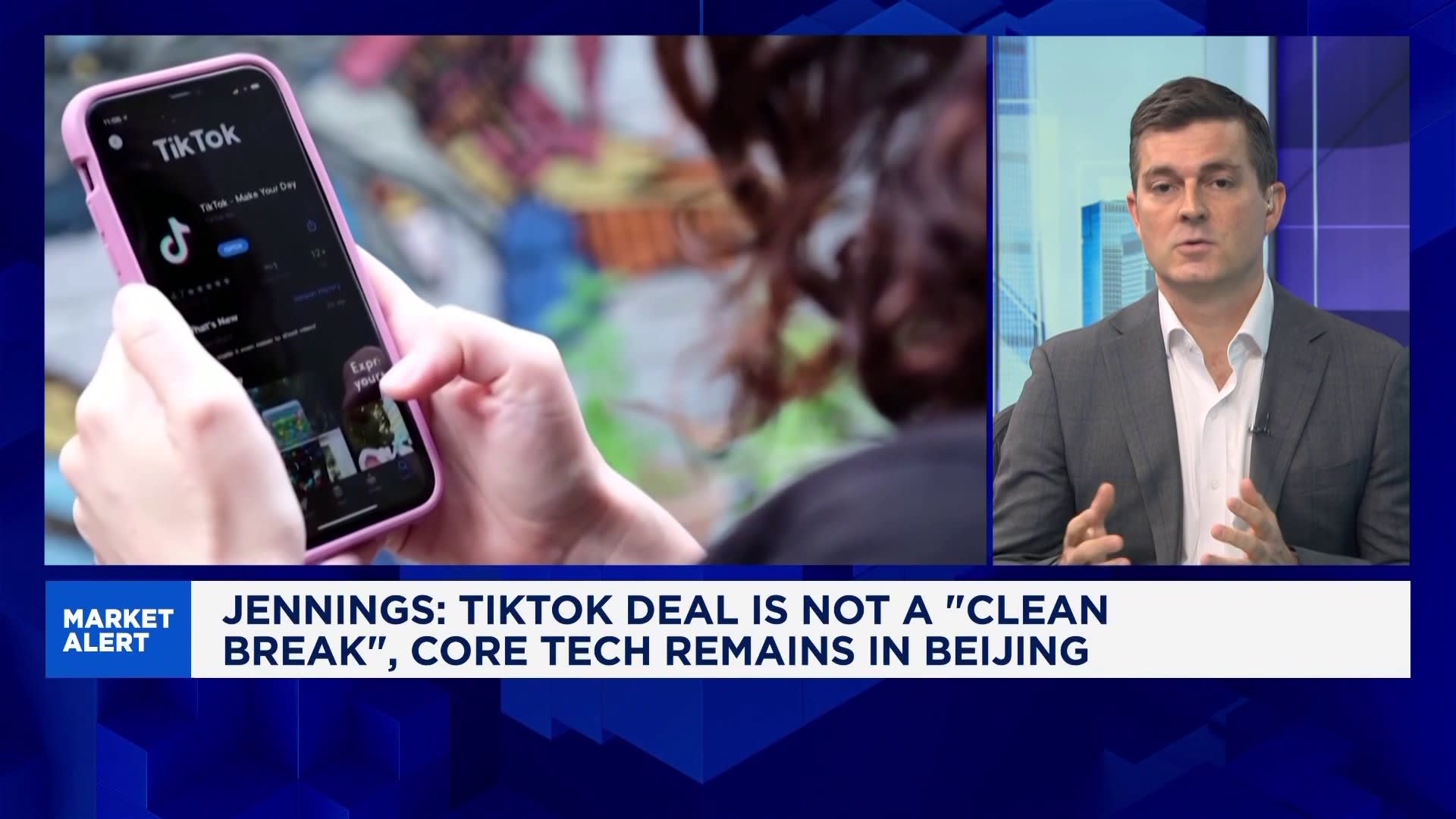
Despite the company’s efforts to meet regulatory requirements, the establishment of the TikTok USDS Joint Venture LLC is not universally seen as a definitive resolution. Clark Jennings, an analyst with Crowell Global Advisors, vocalized a prevailing skepticism from within Washington, stating unequivocally that the joint venture is ‘not the \’clean break\’ Congress wanted.’
Jennings’ assessment highlights a fundamental disconnect between the proposed solution and the desires of many lawmakers. For a significant portion of Congress, a ‘clean break’ would have entailed a full sale of TikTok’s U.S. assets to an American company, completely severing any ties to ByteDance and, by extension, to China. This outright divestiture was viewed as the only foolproof method to eliminate perceived national security risks.
The joint venture model, while introducing U.S. control and data security protocols, still leaves room for questions regarding the ultimate ownership and influence of the Chinese parent company. Critics argue that as long as ByteDance retains a significant stake or operational linkage, the potential for indirect influence or data leakage, however theoretical, persists. This perception fuels the sentiment that the deal represents a compromise rather than the outright solution many in Congress had advocated for.
Setting a Precedent: The Future of Global Tech
Beyond the immediate implications for TikTok, analyst Clark Jennings also raised a crucial question: whether this deal ‘sets a precedent for others.’ This query delves into the broader landscape of global technology and the increasing friction between national sovereignty and the borderless nature of digital platforms.
In an era of escalating tech rivalry and growing concerns over digital sovereignty, the TikTok resolution could indeed become a template for how other foreign-owned tech companies operate in sensitive markets. Governments worldwide are grappling with how to regulate platforms that collect vast amounts of user data, operate across jurisdictions, and can be perceived as tools of foreign influence.
Should the TikTok USDS Joint Venture prove effective in assuaging U.S. concerns without a full divestiture, it might offer a middle ground for other nations seeking to exert control over data within their borders. This could mean more complex hybrid ownership structures, stringent data localization requirements, and heightened transparency demands becoming the norm rather than the exception for international tech giants.
Conversely, if the joint venture model fails to fully satisfy critics or if new security vulnerabilities emerge, it could push regulators towards even more aggressive demands for full divestiture or outright bans, solidifying a trend towards a more fragmented global internet.
The Broader Geopolitical Context
The TikTok saga is not merely a corporate battle; it is a microcosm of the larger geopolitical tensions between the United States and China. Both nations are vying for technological supremacy, and control over critical data infrastructure and popular digital platforms is seen as a key aspect of this competition. The U.S. government’s pressure on TikTok was part of a broader strategy to limit Chinese technological influence, especially in sectors deemed critical for national security.
The establishment of the joint venture, therefore, can be viewed through multiple lenses. For some, it represents a pragmatic solution that allows a widely popular platform to continue operating in the U.S. while ostensibly addressing security concerns. For others, it’s an insufficient measure, a political half-step that fails to fully confront the underlying challenges posed by state-linked companies operating in free markets.
The Biden administration inherited this complex issue and has continued to emphasize the importance of data security and supply chain integrity. While the direct pressure from the Trump era deadlines has passed with the formation of the joint venture, the scrutiny from various government bodies, including the Committee on Foreign Investment in the United States (CFIUS), is expected to persist as the new entity establishes its operational footprint.
User Experience and Data Assurance
For the millions of TikTok users in the United States, the immediate impact of this announcement is likely to be a sense of relief. The threat of the app being banned, which loomed large for months, has now receded, at least for the foreseeable future. This means continued access to the platform that has become a significant part of social interaction, entertainment, and even commerce for many.
However, the establishment of the joint venture also raises questions about data assurance for users. While the company asserts its compliance with U.S. regulatory requirements, the ongoing debate in Washington about whether this constitutes a ‘clean break’ will inevitably influence public perception. Users are increasingly aware of their digital footprints and the importance of data privacy, and the long-term success of TikTok USDS Joint Venture LLC will depend, in part, on its ability to build and maintain trust with its vast user base through transparent and demonstrable data protection practices.
The Road Ahead: Monitoring and Evolution
The formal establishment of the TikTok USDS Joint Venture LLC marks the end of one chapter in TikTok’s tumultuous journey in the U.S., but it undoubtedly signals the beginning of another. The announced leadership team will face the immediate task of operationalizing the complex framework of data security, governance, and regulatory compliance that this venture promises.
Regulatory bodies, including Congress and relevant executive agencies, will undoubtedly maintain a watchful eye on the new entity’s performance. The effectiveness of the new structure in preventing data breaches, ensuring data sovereignty, and resisting potential foreign influence will be continually evaluated. This ongoing scrutiny will be critical in determining whether this joint venture truly fulfills its mandate or if further interventions will be deemed necessary down the line.
As the digital world continues to evolve, the case of TikTok serves as a powerful reminder of the intricate challenges inherent in global technology governance. It highlights the tension between promoting innovation, safeguarding national security, and protecting individual privacy in an increasingly interconnected yet politically fragmented world.
“The formation of this joint venture, while a significant milestone, underscores the enduring challenge of reconciling global digital platforms with national security concerns, leaving many to wonder if this is truly the end of the debate, or merely a new beginning for a different kind of scrutiny.”