The Emergence of Granular Sports Prediction Markets
The landscape of sports engagement is undergoing a profound transformation with the proliferation of sophisticated prediction markets. These platforms, exemplified by recent listings for the 2026 Wimbledon Men’s Singles, move beyond traditional betting to introduce a structured, contract-based approach to forecasting. This shift enables participants to engage with highly specific event outcomes, such as the winner of an individual set, rather than solely the overall match result, institutionalizing event-driven financial instruments within the sports ecosystem through detailed operational rules and resolution mechanisms.
Operational Mechanics and Contractual Frameworks
Central to these evolving markets is the ‘contract,’ a financial instrument tied to a specific outcome. Participants ‘select’ and ‘own’ these contracts, signifying a formal transaction within a regulated or semi-regulated exchange environment. The ability to ‘close your position’ further establishes a secondary market, facilitating dynamic trading and real-time risk management akin to established financial markets. This mechanism enhances liquidity and enables strategic adjustments based on new information or shifting sentiment prior to resolution.
Price Discovery and Market Dynamics in Action
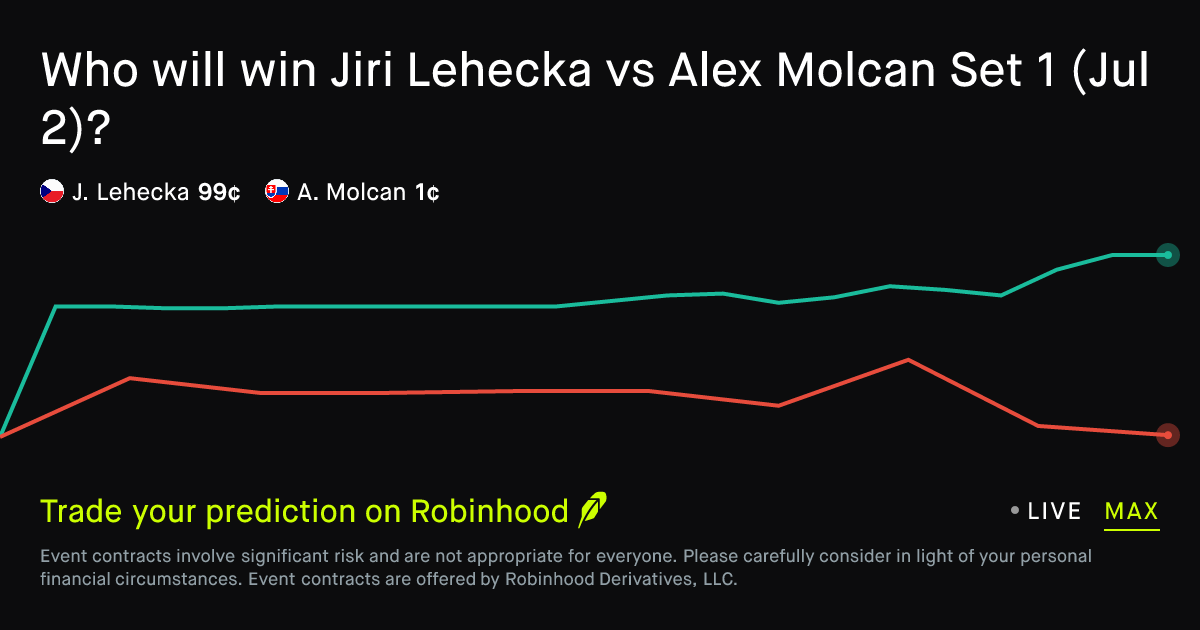
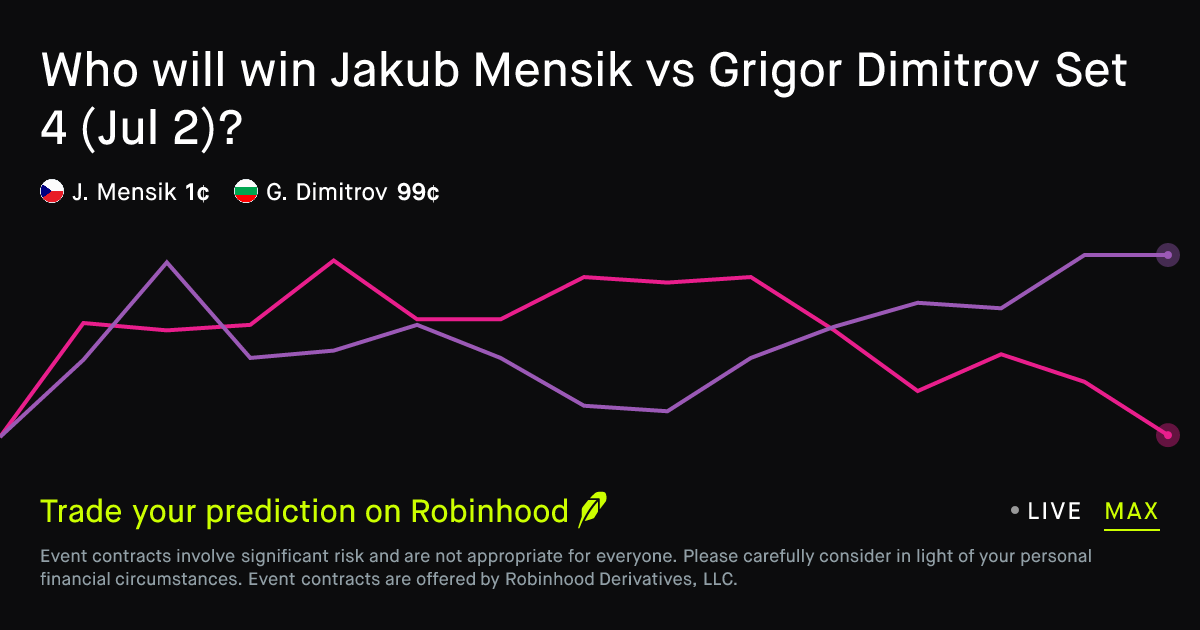
Contract prices, such as 1¢ vs. 99¢ or 46¢ vs. 60¢ splits, directly reflect the market’s collective assessment of outcome probabilities. These values transcend simple odds, representing the perceived worth of an outcome driven by aggregate market intelligence. Such price discovery mechanisms act as a real-time barometer of public sentiment and expert opinion, distilling complex variables like player form, historical performance, and match conditions into quantifiable values. The inherent dynamism of these tradeable prices provides continuous feedback, refining market efficiency.
Robust Risk Mitigation and Contingency Protocols
A defining characteristic of these prediction markets is their comprehensive framework for addressing unforeseen events, critical for maintaining market integrity and participant trust. Explicit rules govern scenarios such as player injury, walkovers, forfeitures, or cancellations before a match commences, ensuring fair resolution or appropriate price adjustments. In cases of postponement or delay, the market’s commitment to remain open for up to two weeks demonstrates a strategic approach to capital management, minimizing disruption for participants while awaiting rescheduled events and reinforcing long-term market stability.
The Exchange’s Discretion and Market Integrity
Rules concerning player retirement introduce a nuanced layer of operational governance, differentiating between outcomes that can be ‘unconditionally settled’ and those requiring discretionary judgment. For the latter, the market resolves to a ‘Fair Market Price,’ determined at the ‘sole discretion of the Exchange.’ This provision underscores the exchange’s critical role as an institutional arbiter, balancing contractual obligations with the complexities of real-world events. Such discretion is paramount for upholding perceived market fairness, preventing disputes, and reinforcing foundational trust mechanisms.
Capital Movement and Participant Incentives
The promise of receiving ‘$1 for every contract you own if your prediction is correct’ establishes a clear financial incentive, attracting capital from individuals leveraging their knowledge or analytical capabilities in sports. The implied volume of traded contracts, suggested by numerical indicators, points to active capital flows that not only fuel market liquidity but also signify the financialization of sports outcomes, converting spectator interest into investable positions.
Strategic Positioning in the Sports Finance Ecosystem
These prediction markets occupy a distinct niche within the broader sports finance ecosystem, differentiating themselves from traditional bookmaking through their contractual nature and emphasis on price discovery. By focusing on granular outcomes like set winners, they cater to a segment of participants interested in higher-frequency trading opportunities and precise event correlation. Integration with major events like Wimbledon lends credibility, positioning these platforms as sophisticated financial instruments appealing to an analytically inclined audience and potentially attracting institutional interest in event-driven derivatives.
The Role of Technology and Data in Market Operations
Advanced technological infrastructure underpins the efficiency and real-time resolution of these markets. The capacity to process transactions, update contract prices, and settle outcomes ‘usually within 1 hour of event resolution’ speaks to robust data feeds and automated systems crucial for high-frequency financial operations. The reliance on precise event data, such as a ‘ball being played’ to signal a match’s official start, highlights the symbiotic relationship between sports data providers and these financial platforms, ensuring market resolution integrity and rapid capital turnover.
Institutional Trust and Regulatory Implications
Detailed and transparent market resolution rules are fundamental to establishing institutional trust in this finance-sports domain. Clear contingency guidelines mitigate ambiguity, providing a predictable framework essential for attracting and retaining capital. While explicit regulatory oversight is not detailed, the structured nature of these ‘exchanges’ and ‘contracts’ implies a trajectory toward greater regulatory scrutiny. The emphasis on ‘fair price’ and the exchange’s discretionary power in complex scenarios suggests an internal governance model designed to preempt external regulatory challenges and ensure market stability.
Competitive Dynamics and Market Differentiation
In a crowded market for sports-related financial engagement, these prediction platforms differentiate through unique product offerings and operational transparency. Their contract-based model and explicit resolution rules appeal to participants seeking a more formalized and less opaque alternative to traditional betting. The focus on specific in-match events provides a competitive edge, catering to specialized analytical approaches and reflecting an evolving understanding of consumer preferences within the broader financialization of sports entertainment, driving innovation in product design and risk management.
The Broader Financialization of Sports Events
The proliferation of these prediction markets signifies a broader trend towards the financialization of sports events, where athletic competitions are increasingly viewed as underlying assets for financial derivatives. This development transforms sports from a purely entertainment spectacle into a domain for capital allocation and risk transfer. This structural shift has profound implications for how sports leagues, teams, and individual athletes are perceived and valued, potentially influencing sponsorship deals, media rights, and player contracts. Quantifying micro-outcomes opens new avenues for economic modeling and investment strategies across the sports industry.
Evolving Participant Engagement and Market Sophistication
The user interface, allowing participants to ‘select a contract’ and ‘get $1 for every contract you own,’ points to a streamlined and accessible engagement model that democratizes access to event-driven financial instruments. The sophistication embedded in the market’s rules, particularly regarding complex scenarios like player retirements, indicates a mature understanding of inherent uncertainties in live sports. This level of detail elevates the platform beyond simple speculation, positioning it as a robust mechanism for collective forecasting and dynamic risk management.
Future Trajectories and Systemic Impact
The continued growth and refinement of these prediction markets suggest a future where sports outcomes are increasingly integrated into global financial systems, offering new asset classes and hedging opportunities. The platforms’ transparency and rule-based nature could establish new industry standards for integrity and operational excellence. Systemic impact extends to data analytics, where aggregated market intelligence could provide invaluable insights into player performance, team dynamics, and event probabilities, influencing strategic decisions within and beyond the sports industry. This convergence of finance, technology, and sports signals a significant evolution in value creation and exchange around athletic competition.