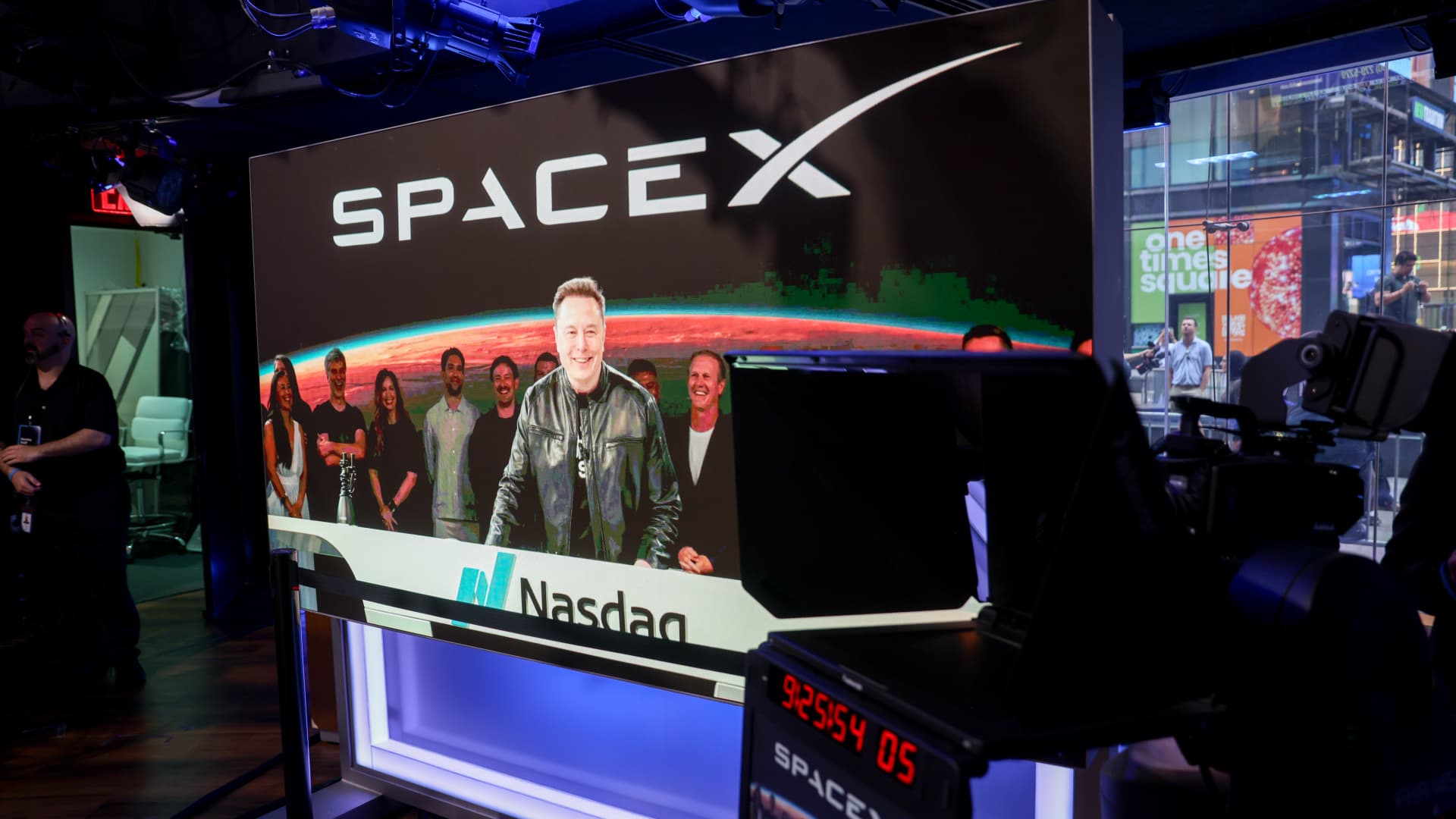
SpaceX’s public market debut has introduced significant price discovery, leading to a sharp 17.2% decline in its stock value during its first full week of trading. This downturn, erasing nearly $500 billion from its peak valuation of $2.5 trillion and bringing it closer to $2 trillion, underscores the risks of narrative-driven valuations in a high-interest-rate environment.
The stock is currently testing the $150 opening price, a critical psychological and technical level. A further fall towards the $135 IPO price could signal challenges for high-profile listings and a potential recalibration of how the market values capital-intensive ventures.
Institutional Debt Demand vs. Equity Volatility
Concurrently with equity market jitters, SpaceX successfully priced a $25 billion bond sale, upsized from $20 billion due to overwhelming demand nearing $90 billion. This substantial debt raise, immediately following its IPO, highlights a divergence: credit investors sought yield from SpaceX’s infrastructure and market dominance, while equity investors grappled with valuation risks.
However, these newly issued bonds have already experienced paper losses of approximately $305 million against U.S. Treasurys, indicating that even robust institutional demand is susceptible to broader market risk repricing.
Wealth Fluctuation and Trillionaire Status
The stock’s volatility directly impacted Elon Musk’s net worth. After briefly becoming the world’s first trillionaire, his wealth has receded to an estimated $946 billion, according to the Bloomberg Billionaires Index. This fluctuation of over $150 billion in less than two weeks demonstrates the sensitivity of his fortune to SpaceX and Tesla’s performance.
Story-Driven Valuations Under Scrutiny
SpaceX’s valuation is increasingly driven by its future potential in areas like satellite internet and interplanetary travel, rather than traditional earnings metrics. Analysts, such as Gil Luria of D.A. Davidson, note that Musk’s ventures trade on anticipated success of future services, making them vulnerable to market sentiment shifts, particularly concerning long-term profitability of capital-intensive technologies like AI.
The 16% single-day drop exemplifies how quickly market sentiment can impact stocks reliant on future growth narratives, especially when macroeconomic concerns arise.
Strategic Capital Raise and Leverage
The dual strategy of an IPO followed by a $25 billion bond issuance suggests a move to build a substantial capital reserve for ambitious projects like Starship and to buffer against market downturns. However, this significant debt, coupled with equity value erosion, intensifies pressure on SpaceX to deliver operational milestones justifying its valuation.
The decision to upsize the bond offering signals management’s prioritization of immediate liquidity over potential interest costs or market signaling concerns, increasing the company’s leverage as its equity base faces public market scrutiny.
Market Contagion and AI Sector Influence
SpaceX’s IPO coincided with a broader reassessment of the technology sector, particularly concerning the high capital outlays for AI development. Skepticism about AI’s path to profitability has extended to other capital-intensive industries like commercial space exploration.
As a public entity, SpaceX is now subject to global liquidity trends and sector-wide sentiment, including the performance of AI-related companies, illustrating a new reality of market contagion for the company.
Institutional Investor Response
Institutional investors are closely monitoring SpaceX’s stock performance, particularly around the $150 and $135 levels. The initial overvaluation concerns, with SpaceX briefly surpassing Amazon and Microsoft in market cap, may lead to further corrections if the company cannot quickly demonstrate tangible financial performance and revenue growth, especially from its Starlink division.
Long-Term Structural Considerations
SpaceX’s first week as a public company highlights the challenges of integrating visionary goals with the quarterly demands of public shareholders and debt covenants. The $305 million in bond losses represents a material concern for future financing needs.
The company must now balance ambitious long-term objectives with the immediate financial realities and market expectations, determining whether it can sustain its valuation amidst institutional skepticism and evolving economic tides. The “Elon Musk premium” offers significant upside but limited downside protection in volatile markets.