The Anatomy of Cronyism: State Capture and Public Resentment
The foundation of Hungary’s illiberal political economy rests upon a system of crony capitalism where state power facilitates private wealth accumulation for a select inner circle. This dynamic has become a central point of public resentment, crystallized by the widely publicized “zebra symbolism.” Recent drone footage showcasing a sprawling residence belonging to Prime Minister Viktor Orbán’s father, complete with extensive amenities, gained immediate traction. The property’s proximity to zebras originating from the neighboring estate of Lőrinc Mészáros, Hungary’s wealthiest individual and a close associate of Orbán, transformed these animals into a potent symbol of perceived systemic corruption. This symbolism, widely adopted in protests and public discourse, highlights the perceived link between political power and private enrichment within the ruling Fidesz party’s inner circle.
This economic structure suggests a model of state capture, where political loyalty and proximity to the ruling elite serve as primary drivers for economic success, potentially bypassing traditional market mechanisms. The concentration of capital in the hands of a small, politically connected group raises questions about the integrity of public procurement processes and the distribution of state resources. When key economic players are also close personal allies of the political leadership, the distinction between public interest and private gain becomes blurred. This institutional arrangement leads to market distortions, reduced competition, and a perception that public policy decisions are influenced more by personal relationships than by economic efficiency or national benefit. The resulting public resentment has created leverage for opposition movements, notably Peter Magyar’s Tisza party, which has gained significant traction by capitalizing on public anger regarding this perceived cronyism and systemic corruption.
Ideological Consolidation through Institutional Erosion
Beyond economic capture, the Orbán regime has systematically targeted institutions to ensure ideological homogeneity and eliminate sources of independent thought. The forced relocation of the Central European University (CEU) in 2019 serves as a critical example of this strategy. Founded by George Soros, the university represented an outward-looking, liberal academic model that sharply contrasted with the government’s nationalist and anti-Soros rhetoric. The government’s actions, which resulted in 90% of CEU’s teaching operations moving to Vienna, effectively eliminated a significant source of independent thought and potential ideological opposition within Hungary’s borders.
This strategic decision demonstrates a clear priority to align educational institutions with state ideology, rather than fostering academic diversity. By removing a prominent liberal university, the government signaled its intent to shape the intellectual landscape and limit the influence of perspectives deemed contrary to its political agenda. This move impacts not only academic freedom but also Hungary’s long-term intellectual capital, potentially leading to brain drain and reduced international academic collaboration. The university’s current state, described as “eerily quiet,” symbolizes the broader shift in the nation’s cultural and intellectual environment under the regime.
The implications of this action extend beyond domestic policy. The endorsement of this crackdown by US Vice President JD Vance suggests a potential alignment of ideological strategies across international borders. Vance’s view that Orbán’s approach should serve as a model for the U.S. frames the suppression of academic institutions not as an isolated incident, but rather part of a broader, internationally recognized political playbook for cultural and institutional warfare. This perspective underscores the regime’s willingness to sacrifice international reputation and academic standing for the sake of ideological control.
Geopolitical Stakes: External Interference and EU Unity
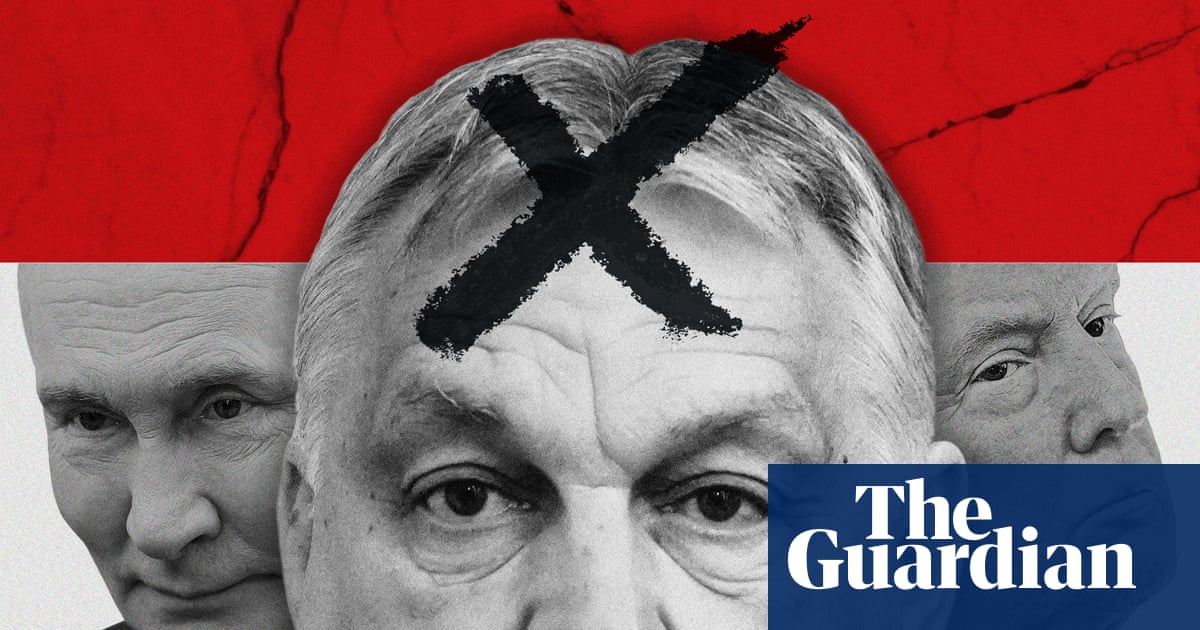
The upcoming legislative elections in Hungary have attracted significant international attention, primarily due to Prime Minister Orbán’s role as Russian President Vladimir Putin’s closest ally within the European Union. The outcome of the election is therefore viewed as a critical test of Russian influence within the EU bloc, with a potential loss for Orbán’s Fidesz party threatening to undermine the Kremlin’s strategic leverage in Brussels. This geopolitical dimension elevates the election from a domestic contest to a high-stakes international event.
The strategic value of Orbán’s alliance to Russia lies in his ability to disrupt EU consensus on key issues, including sanctions against Russia and support for Ukraine. A change in leadership could significantly alter Hungary’s foreign policy alignment, potentially strengthening EU unity against Russian aggression. The Kremlin’s perceived investment in maintaining this alliance is evidenced by reports of extensive interference in the Hungarian campaign, including documented influence operations, disinformation campaigns, and intelligence-linked activities designed to maintain Fidesz control. An internal intelligence report for Russia’s SVR intelligence service, revealed in March, outlined a strategy dubbed “the Gamechanger,” which allegedly included staging an assassination attempt against Orbán. This extreme measure, if accurately reported, highlights the perceived necessity of maintaining Orbán’s position to secure Russian strategic interests. The alleged strategy demonstrates the lengths to which external actors may go to manipulate electoral outcomes and maintain geopolitical leverage, transforming the election into a battleground for international influence.
The Election as a Microcosm of Illiberalism and Geopolitical Competition
The upcoming election represents a critical juncture where domestic discontent, fueled by perceived corruption and ideological consolidation, intersects with high-stakes geopolitical interests. The zebra symbolism, highlighting the wealth accumulation by Orbán’s inner circle, has galvanized public opposition by providing a tangible representation of systemic issues. This domestic pressure creates an opening for challenger Peter Magyar’s Tisza party, which has gained significant traction by capitalizing on public resentment against the incumbent regime’s perceived cronyism.
The strategic suppression of institutions like CEU further reinforces the narrative of ideological consolidation, demonstrating the regime’s commitment to controlling the national narrative and intellectual environment. This action, coupled with the public perception of corruption, contributes to a sense of national drift away from Western liberal values. The election outcome will determine whether Hungary continues on this path of ideological insularity or shifts toward a more open and integrated European model.
The confluence of these factors makes Hungary’s election a pivotal event for both domestic accountability and international relations. The outcome will not only determine the future direction of Hungary’s political economy—whether it continues to prioritize cronyism or moves toward greater transparency—but also significantly impact the balance of power within the European Union regarding Russia. The election serves as a microcosm of broader global trends where domestic political struggles are increasingly intertwined with geopolitical competition and external interference.