
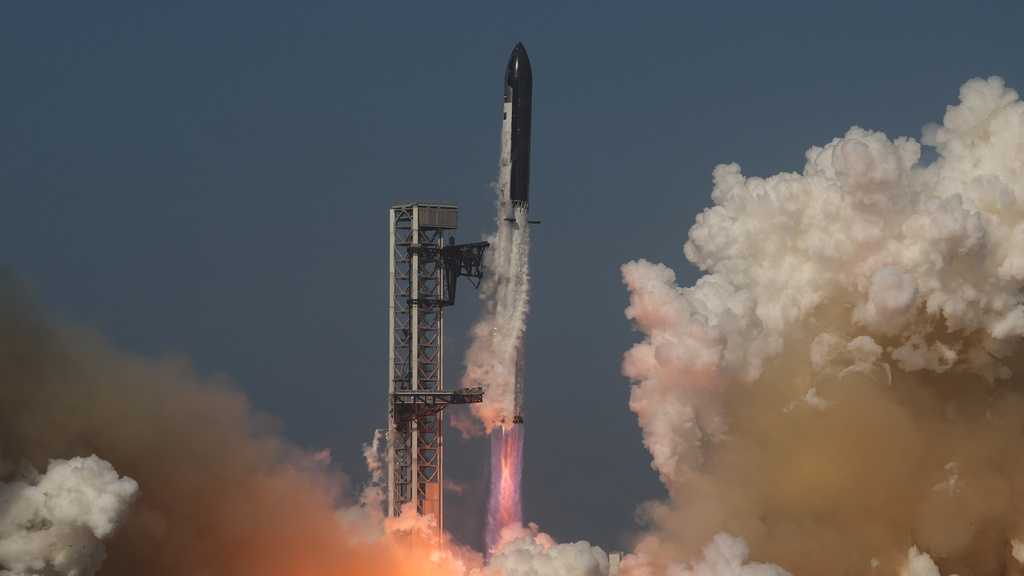
The Federal Aviation Administration (FAA) has imposed a formal administrative hold on SpaceX’s Starship launch operations, halting preparations for Flight 13. This regulatory action follows a preliminary assessment of the Flight 12 test flight on May 22, 2026, which triggered a mandatory, supervised mishap investigation. The decision underscores the systemic friction between SpaceX’s iterative, rapid-prototyping development model and the rigorous safety and compliance mandates enforced by federal regulatory bodies.
The Regulatory Framework of FAA Mishap Investigations
The FAA’s determination that the Flight 12 launch resulted in a mishap is grounded in specific administrative criteria under federal aviation regulations (14 CFR Part 450). A mishap is formally defined by parameters including any launch or reentry that deviates from the planned flight profile or fails to achieve nominal recovery. By classifying the off-nominal performance of the Super Heavy booster as a mishap, the FAA has initiated a legal protocol that temporarily suspends SpaceX’s launch license for the Starship program.
Under this legal framework, SpaceX must conduct the investigation under direct FAA oversight. The federal agency retains final approval authority over the investigative report, root-cause analysis, and all proposed corrective actions. Consequently, the schedule for Flight 13 is strictly gated by SpaceX’s ability to satisfy these federal compliance standards and implement verifiable engineering modifications to mitigate identified failure modes.
This administrative pause demonstrates how federal oversight acts as a critical institutional gatekeeper for commercial aerospace expansion. While SpaceX’s philosophy accepts in-flight failures to accelerate hardware development, regulators must prioritize public safety and systemic risk mitigation. This structural separation of priorities ensures that commercial launch cadences do not bypass rigorous flight safety verification protocols.
Telemetry and Propulsion: Analyzing Booster 19’s Anomalies
The technical core of the FAA mishap investigation focuses on the propulsion and structural performance of Super Heavy Booster 19 during the May 22 test flight. During the powered ascent phase, one of the booster’s thirty-three Raptor V3 engines experienced an off-nominal anomaly. This premature shutdown introduced asymmetrical thrust dynamics, challenging the vehicle’s guidance, navigation, and control (GNC) systems during a high-dynamic-pressure phase of flight.
Following stage separation, the flight profile dictated that Booster 19 execute a precise boostback burn to target a controlled splashdown area in the Gulf of Mexico, rather than returning to the Starbase launch tower. However, the cumulative performance deficits from the engine anomaly prevented the vehicle from executing the landing burn and subsequent attitude adjustments nominally. The booster failed to achieve the deceleration required for a soft water landing, resulting in a high-velocity impact.
Analyzing high-frequency telemetry from the Raptor V3 engines and the structural response of Booster 19 is the immediate priority for the joint SpaceX and FAA investigative team. Isolating the root cause of the propulsion failure is critical to preventing cascading subsystem failures on subsequent flights. The findings of this technical audit will directly dictate the hardware and software modifications required for the booster assigned to Flight 13.
Litigation and Socioeconomic Dynamics in the Rio Grande Valley
Simultaneously, SpaceX is facing acute legal opposition from the community surrounding its Starbase launch facility in Boca Chica, Texas. A detailed 59-page civil lawsuit has been filed on behalf of nearly 80 homeowners in the Rio Grande Valley, alleging that high-energy acoustic propagation and ground vibrations from Starship launches have caused systemic structural damage to their properties. This litigation introduces significant financial and reputational exposure for the aerospace firm.
The legal dispute is intensified by the socioeconomic contrast of the region. Brownsville and the broader Rio Grande Valley represent some of the lowest-income census tracts in the United States. The tension between a highly capitalized aerospace company conducting experimental test flights and a vulnerable local population alleging property damage has drawn intense public and legal scrutiny. Plaintiffs argue they are bearing the physical and economic externalities of commercial space exploration.
The outcome of this lawsuit could establish critical legal precedents regarding tort liability, property rights, and nuisance claims adjacent to active commercial spaceports. A ruling against SpaceX could result in substantial compensatory damages and impose restrictive operational constraints. Such a precedent would force the commercial space industry to reassess the physical buffer zones required to operate super-heavy-class launch vehicles near municipal areas.
Cross-Range Risks: Impacting the Florida Expansion
The regulatory and legal hurdles emerging in Texas are directly impacting SpaceX’s strategic expansion at the Kennedy Space Center (KSC) in Florida. The company is actively constructing a second Starship launch pad at Launch Complex 39A to establish a high-cadence operational site. However, the documented structural and environmental anomalies in Texas have amplified public and regulatory scrutiny in Brevard County regarding the potential impacts of the mega-rocket on the Space Coast.
Brevard County residents and environmental advocacy groups are closely monitoring the Texas property damage litigation. Concerns regarding acoustic energy, structural vibrations, and concrete spallation have led to demands for more rigorous Environmental Impact Statements (EIS) under the National Environmental Policy Act (NEPA). This growing local resistance could result in administrative delays, zoning challenges, and stricter mitigation requirements for Florida launch operations.
Furthermore, any prolonged grounding of the Starship fleet due to the FAA’s Texas investigation bottlenecks the deployment of the Florida infrastructure. Without a certified, flight-ready vehicle configuration, capital expenditures at Launch Complex 39A remain underutilized. This operational delay threatens not only SpaceX’s commercial satellite deployment timelines but also its contractual commitments to institutional partners, including NASA’s Artemis program.
Systemic Realities of the Modern Commercial Space Era
The convergence of the FAA’s grounding order and the Texas class-action lawsuit highlights a broader systemic challenge facing the global space industry. The scaling of super-heavy-lift launch vehicles demands unprecedented physical space, regulatory adaptability, and community tolerance. As launch vehicles increase in thrust and mass, the traditional boundaries between industrial launch complexes and civilian populations are becoming increasingly strained.
This friction underscores the delicate regulatory balance the FAA must maintain between fostering aerospace innovation and protecting public welfare. While excessive bureaucratic delays risk national competitiveness, premature launch approvals compromise public safety and environmental integrity. The resolution of the Flight 12 mishap investigation will serve as a regulatory benchmark for how these competing priorities are balanced in the modern spaceflight era.
Ultimately, these dual pressures will compel SpaceX to refine both its engineering tolerances and its community relations strategies. To sustain its projected launch cadence, the company must prove it can mitigate the physical externalities of its launches while meeting strict federal safety guidelines. The coming months will determine whether the Starship program can successfully adapt to these structural constraints or if regulatory and legal barriers will dictate a more conservative developmental timeline.
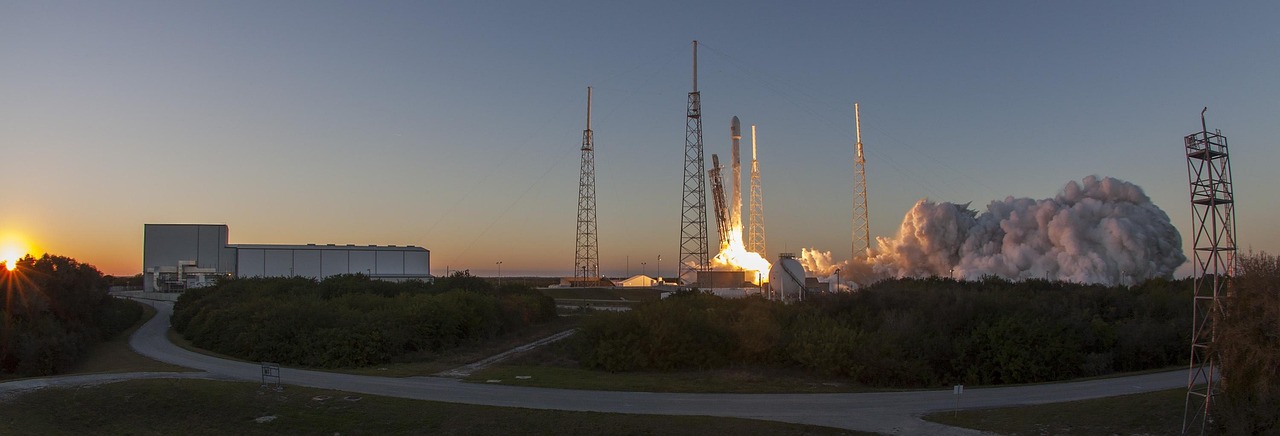
Photo by viktorleon960 on Pixabay.