Legal Precedent: The $14 Million Verdict and Franchisor Vicarious Liability
A Brevard County jury has awarded $14 million to Brandy Buckley, following a 2018 incident where metal-contaminated ice cream purchased from a Bruster’s Ice Cream franchise in Palm Bay led to catastrophic physical trauma. This verdict is legally significant not merely for its scale, but for its application of the ‘agency theory’ to bypass the traditional liability shield that separates national franchisors from the negligence of independently owned units.
By establishing that the franchisor maintained sufficient control over the franchisee’s operational standards, branding, and safety protocols, the legal team successfully argued for vicarious liability. This outcome signals an aggressive shift in personal injury litigation, targeting the substantial assets of national corporations rather than the limited insurance limits of local operators.
Operational Forensics: High-Volume Environments and Quality Control Failures
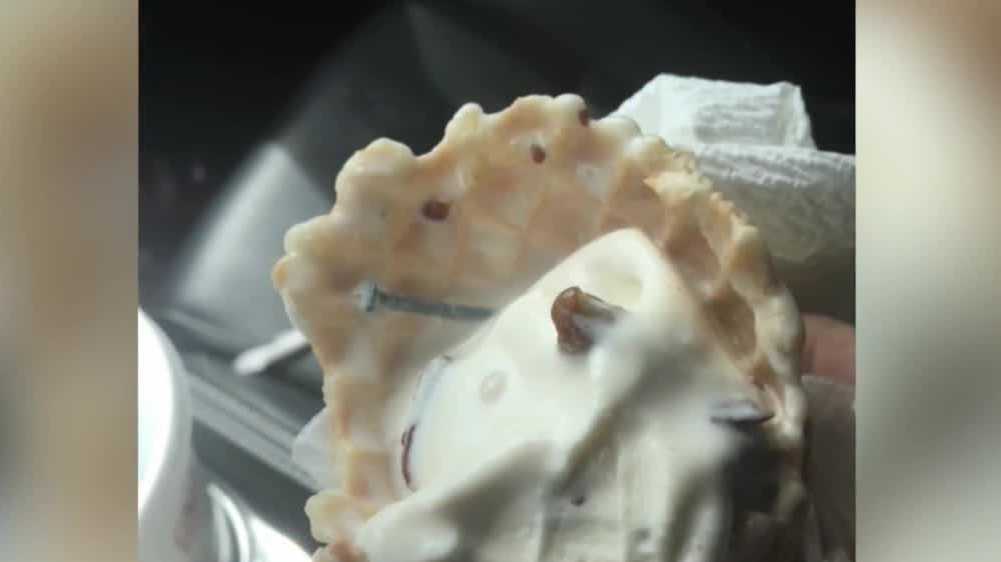
The contamination occurred at a Malabar Road drive-thru, an environment where service speed often creates friction with rigorous quality inspection. Court records indicate the product contained two nails and multiple metal fragments. The butter pecan flavor profile proved hazardous as the texture of the nuts masked the presence of foreign objects during ingestion.
The presence of industrial hardware within a retail food product suggests a dual failure: a breach in the supply chain’s material integrity and a breakdown in on-site preparation safety. For the QSR (Quick-Service Restaurant) industry, this highlights the ‘control paradox’—the more a franchisor mandates specific equipment and processes to ensure consistency, the more vulnerable they become to claims of an agency relationship under the law.
Clinical Pathology and Permanent Disability
The physiological trajectory of the plaintiff involved acute internal trauma leading to long-term systemic complications. Following emergency surgical extraction of the metal fragments, the plaintiff developed portal vein thrombosis—blood clots in the primary vessel supplying the liver. This condition necessitated aggressive medical intervention, including an ablation procedure that ultimately resulted in permanent infertility.
The $14 million award accounts for both quantifiable economic damages and non-economic losses, specifically the deprivation of reproductive capacity and the requirement for lifelong medical monitoring. The severity of the downstream medical effects transformed a localized food safety lapse into a high-stakes corporate liability event.
Strategic Implications for the Franchise Business Model
This verdict necessitates an immediate recalibration of risk management for national brands. Historically, the franchise model relied on legal insulation provided by independent ownership; however, this case demonstrates that integrated branding and strict corporate oversight can serve as the bridge for liability. Corporations must now balance the benefits of brand uniformity against the risk of legal exposure via the agency theory.
Furthermore, the insurance landscape for the food and beverage sector is likely to see a shift toward more stringent audit requirements. Insurers may demand the implementation of advanced detection technologies, such as industrial-grade X-ray or metal detection systems at the point of sale, to mitigate the risk of high-value litigation resulting from foreign object contamination.