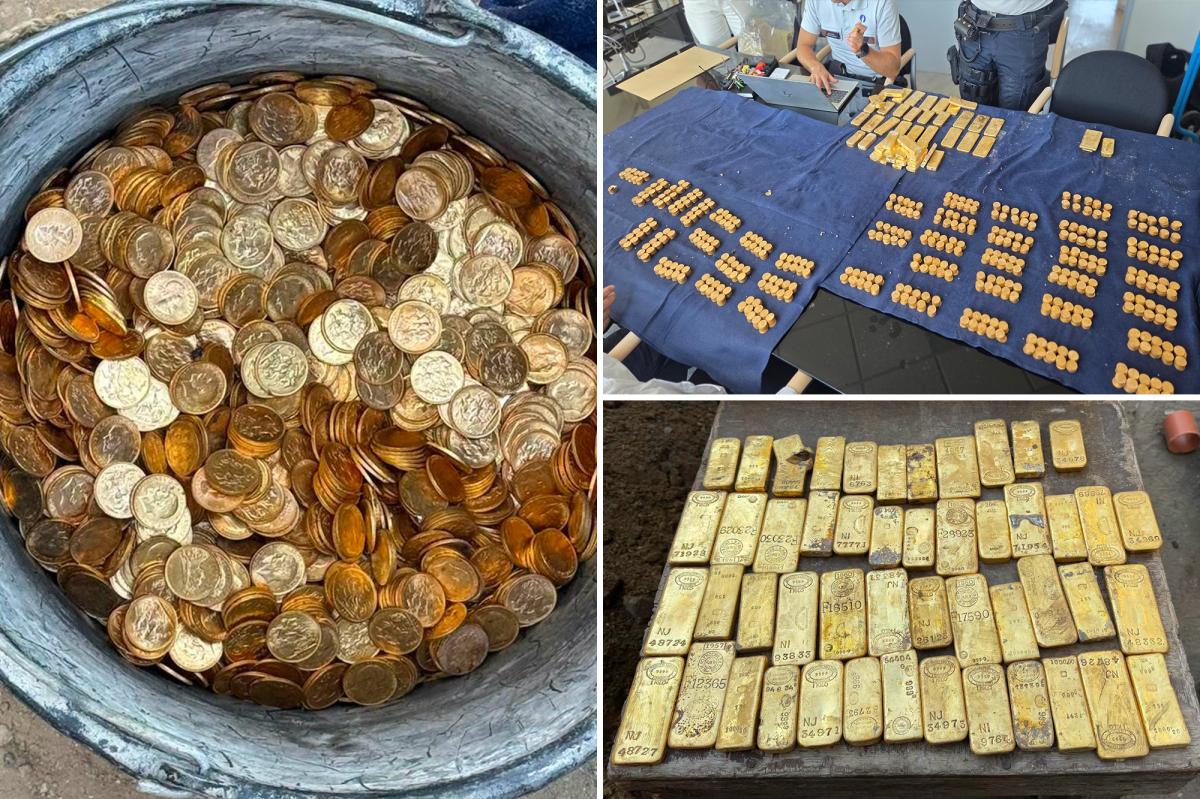
Belgian Builders Unearth €9 Million Gold Hoard During Routine Renovation
In East Flanders, Belgium, a routine construction project to install new sewage pipes in a cellar led to an extraordinary discovery: a gold hoard valued at approximately €9 million (£7.6 million). The significant find was concealed within the property’s walls, turning a mundane renovation into an event with substantial financial and legal implications.
The discovery has immediately prompted questions of ownership. Potential claimants include the construction workers who made the find and the local charity that owns the property. Belgian police have launched a formal investigation and have secured the site, moving the discovered gold to a protected location. Public access to the area has been restricted to preserve the integrity of the investigation.
Initially, the 18-year-old student worker on the crew mistook the gold for common one-euro coins due to the challenging conditions and proximity of the items. The presence of a gold nugget among the coins quickly alerted the team to the exceptional nature of their find, prompting them to contact the authorities.
Site manager Mario described the crew’s disbelief as they uncovered not only coins but also gold bars. The incident, which occurred in Sint-Gillis-Dendermonde, approximately 40 minutes from Brussels, highlights the potential for hidden assets within urban infrastructure projects. The deliberate concealment of the gold, potentially over many decades, is suggested by its location during excavation for a sewer system.
With an estimated value exceeding $10 million USD, this discovery ranks among notable instances of unexpected wealth unearthed during construction. Such finds invariably trigger complex legal disputes, often governed by treasure trove laws that vary globally. These laws typically consider factors like finder’s intent, duration of concealment, and land ownership status.
Belgian law, similar to many European jurisdictions, provides specific frameworks for handling discovered treasures. These legal provisions aim to balance the rights of the finder, the property owner, and the state, potentially leading to asset division or forfeiture, depending on the circumstances and historical significance of the find.
The property owner’s status as a local charity adds a layer of complexity. Charities, while serving public benefit mandates, must adhere to strict financial stewardship. The disposition of such a significant asset would likely undergo thorough scrutiny to ensure compliance and maximize benefit for their mission.
The swift action by police to secure the scene and the gold is standard protocol in cases involving substantial monetary discoveries. This measure is crucial for preventing potential looting, tampering with evidence, and safeguarding public safety.
The narrative of the find, from initial misidentification by a young worker to the site manager’s confirmation of the hoard’s magnitude, underscores the serendipitous nature of such discoveries. The mention of “33 years in co” by the site manager, though incomplete, hints at a potentially long-term concealment, raising further questions about the gold’s origins.
For the construction company, the discovery presents both reputational opportunities and potential liabilities, depending on contractual agreements and the investigation’s outcome. This event may influence risk management protocols and due diligence practices for future projects, particularly involving older properties.
While unlikely to cause global market fluctuations, the discovery serves as a potent reminder of gold’s enduring value as a tangible asset, often held outside traditional financial systems. The media’s extensive coverage reflects a public fascination with treasure stories, potentially influencing public perception and the resolution of ownership disputes.
The legal process will likely involve a detailed examination of Belgian civil law regarding property and found items, distinguishing between a ‘treasure trove’ of unknown origin and more recent, traceable ownership. The human element, exemplified by the student worker’s experience, adds a profound dimension to this story of unexpected fortune.
This discovery may prompt reassessment of risk management and surveying techniques in the construction and renovation industry, particularly for historically significant sites. The charity faces strategic decisions on how best to leverage these assets to further its mission, navigating considerable public interest.
The police warning against site visits is a critical measure to prevent potential public disorder and ensure the investigative process remains undisturbed. The transformation of a mundane task into an extraordinary event, often framed colloquially as ‘turning crap into gold,’ underscores the dramatic potential of unexpected wealth.
The resolution of this case will involve expert legal and financial counsel to navigate valuation, taxation, and distribution. Ultimately, the Belgian gold hoard discovery offers a compelling case study at the intersection of construction, law, and unexpected wealth, with its outcome anticipated to set legal precedents in Belgium regarding treasure finds and property rights.