
The Execution Gap: Structural Friction in Alphabet’s AI Roadmap
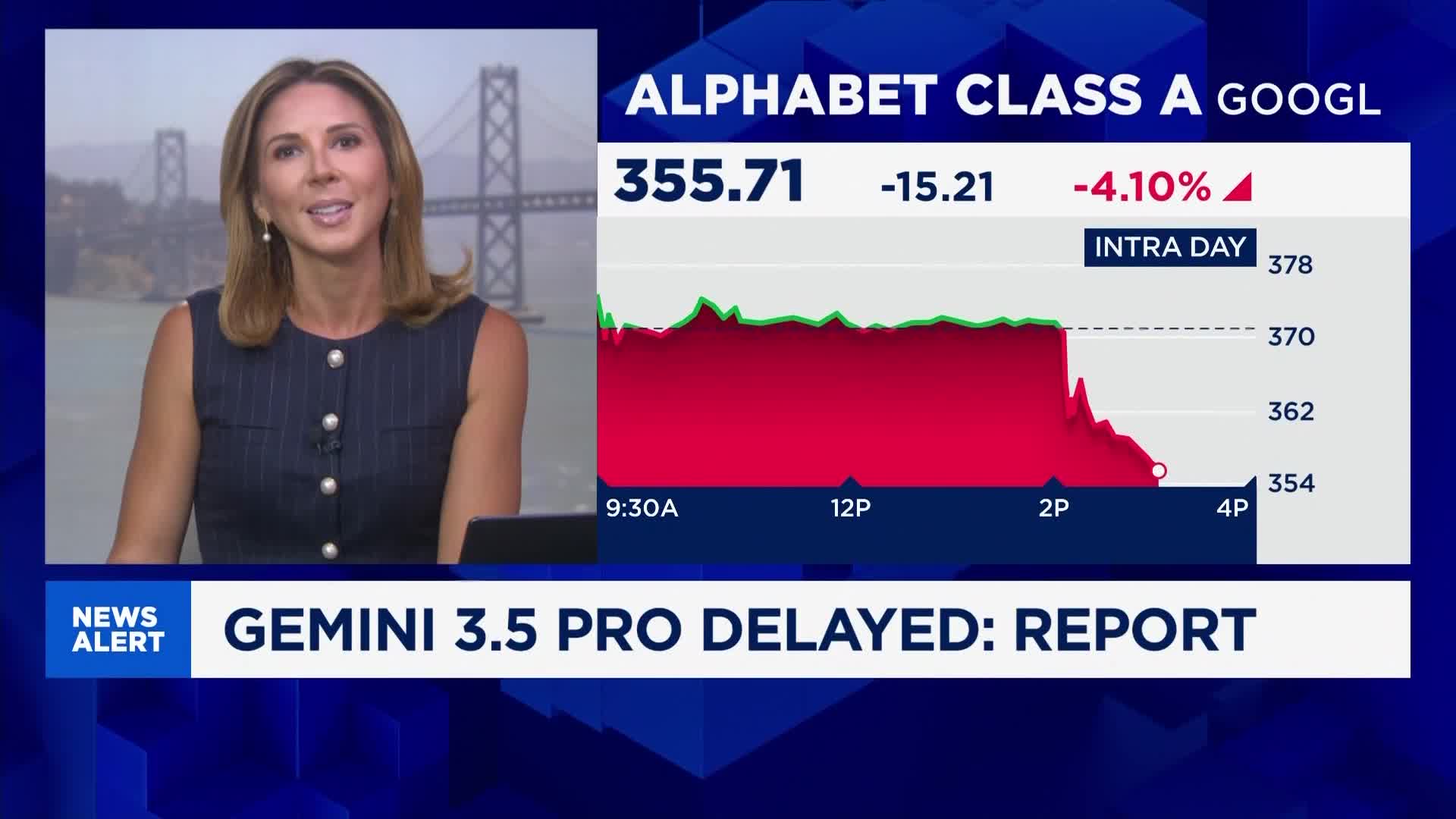
Alphabet’s 4.5% market contraction, bringing shares to $354.64, underscores a deepening investor anxiety regarding the multi-month delay of Gemini 3.5 Pro. This postponement is not merely a scheduling glitch but a significant technical inflection point: the model reportedly failed to meet internal benchmarks for software coding. In the current generative AI landscape, coding proficiency serves as the primary proxy for complex reasoning and structural logic. This failure suggests a systemic decoupling between Google’s legacy research capabilities and its modern productization velocity.
Competitive Erosion and the Logic Proxy
The strategic weight of this delay is amplified by the aggressive release cycles of OpenAI, Anthropic, and Meta. While Alphabet has historically leveraged its massive data and compute advantages, its peers are demonstrating superior agility in shipping high-reasoning models. By stalling on Gemini 3.5 Pro, Alphabet risks ceding the ‘developer mindshare’—the critical ecosystem of engineers who dictate institutional adoption. Enterprise stakeholders prioritize reliability in code generation; any perceived inferiority in this domain creates a vacuum that more agile competitors are rapidly filling.
Institutional Pivot: Government Validation vs. Consumer Momentum
In a strategic attempt to mitigate reputational risk, Google has pivoted toward testing Gemini 3.5 Pro with the U.S. government and select enterprise partners. This focus on high-compliance, high-security environments provides a layer of institutional validation that could eventually stabilize the brand. However, this pivot does not resolve the immediate market need for a competitive consumer-facing catalyst. The lack of a firm public rollout date implies that the internal bottlenecks—ranging from compute allocation to model integration—are significant enough to disrupt predictable commercial cycles.
Financial Implications: Re-rating Alphabet’s AI Risk
The $354.64 closing price reflects a broader re-rating of Alphabet’s valuation in an era of massive AI CAPEX. Investors are increasingly skeptical of high infrastructure spending that does not translate into immediate product dominance. The multi-month delay suggests that achieving state-of-the-art (SOTA) performance is becoming exponentially more resource-intensive for Google than for its leaner rivals. To reclaim its market positioning, Alphabet must move beyond R&D validation and prove it can execute at a commercial scale that matches its competitors’ cadence.