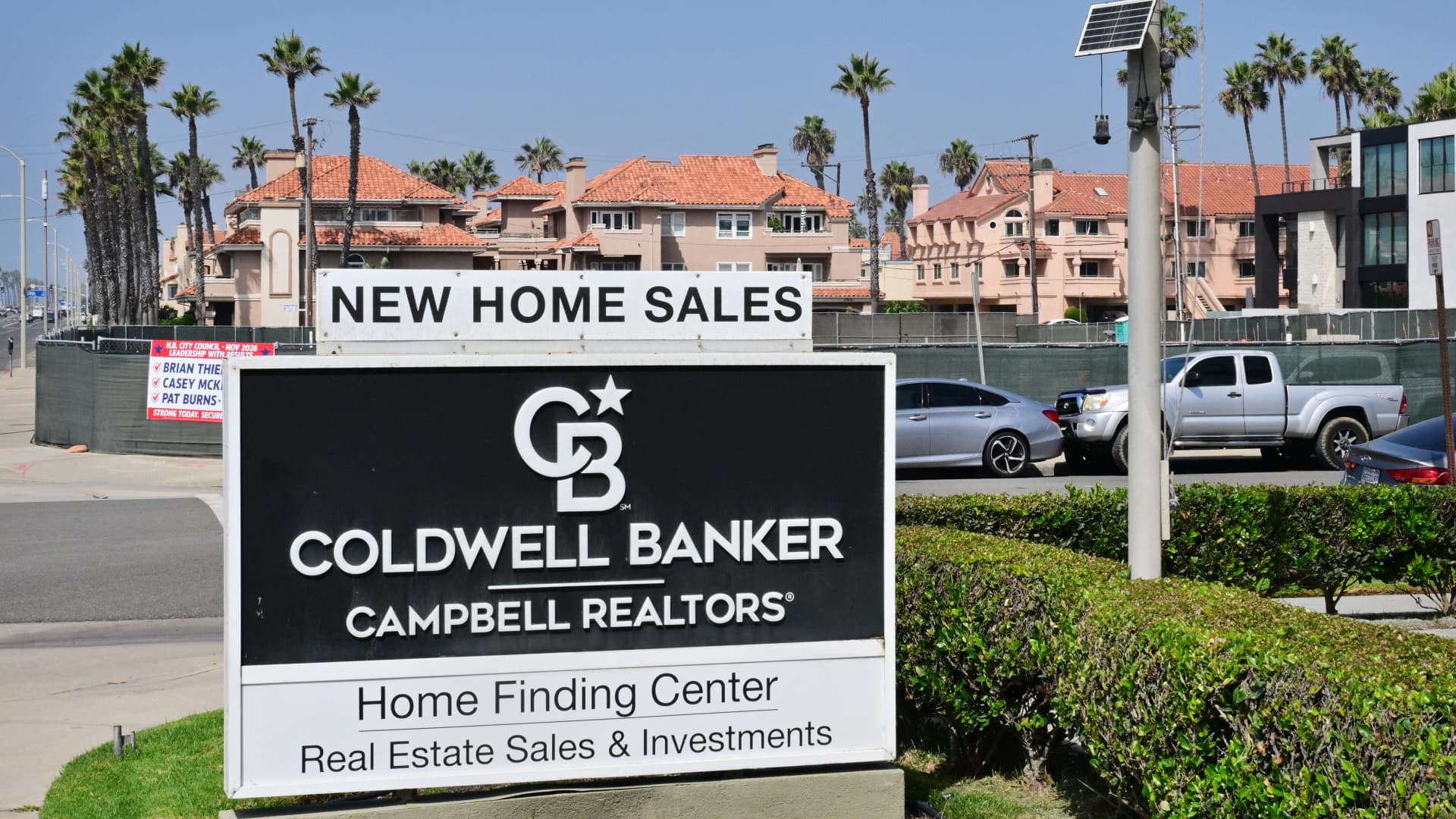
Mortgage Rates Reach Multi-Year Highs, Dampening Housing Market Activity
The average contract interest rate for 30-year fixed-rate mortgages has surged to 7.49%, its highest level in nearly three years. This escalation, accompanied by an increase in points to 0.84, significantly impacts homeownership affordability and the viability of refinancing for a broad demographic.
These elevated borrowing costs present substantial financial barriers for prospective homebuyers. They exacerbate existing inflationary pressures that have already strained household budgets, rendering home purchases unattainable for many individuals, particularly given persistently high housing prices.
Refinance Demand Collapses Amidst Rising Rates
Demand for mortgage refinances has experienced a sharp decline, falling 8% week-over-week and standing 56% below year-ago levels. This significant reduction is a direct consequence of the escalating interest rate environment, which erodes the financial incentive for homeowners to renegotiate their existing loans.
With current rates approximately one percentage point higher than the previous year, the pool of homeowners who can benefit from refinancing has shrunk considerably. This has driven refinance applications to their lowest point in years, effectively halving the pace seen historically.
Home Purchase Applications See Consistent Decline
Overall mortgage application volume decreased by 4.2% week-over-week, indicating a sustained downturn in housing market activity. Purchase applications specifically declined 2% week-over-week, representing a 15% reduction from the same period last year.
The combination of elevated mortgage rates and high housing prices creates a dual barrier for potential buyers. This situation forces many to postpone or abandon homeownership aspirations, impacting both individual financial planning and broader real estate market dynamics.
Bond Market Influence on Lending Costs
The performance of bond markets is a pivotal factor influencing mortgage rates, with yields directly correlating to consumer borrowing costs. Fluctuations in bond yields, driven by economic indicators and monetary policy expectations, translate into tangible shifts in mortgage interest rates.
As bond yields rise, mortgage lenders typically increase their rates to maintain profitability and manage risk. This direct transmission mechanism means that broader financial market movements have an immediate impact on the accessibility and affordability of real estate.
Strategic Implications for Lenders and Homebuilders
The sustained rise in mortgage rates poses a strategic challenge for mortgage lenders, who face reduced origination volumes for both new purchases and refinances. This necessitates a recalibration of business models, potentially shifting focus towards servicing existing portfolios or exploring alternative lending products.
Homebuilders are also exposed to these market shifts. A decline in buyer demand can lead to slower sales cycles and inventory build-up, potentially prompting adjustments in construction strategies, pricing, and marketing efforts to align with a more constrained consumer environment.
Consumer Behavior and Market Expectations
For consumers, the current mortgage rate environment can transform the aspiration of homeownership into a financial impossibility. The desire for specific lifestyle choices, such as walkability and community access, is directly impeded by prohibitive borrowing costs.
This sentiment reflects a broader shift in market expectations, with potential buyers reassessing their financial capacity and timelines. The prolonged period of high inflation and subsequent rising interest rates is fostering a more conservative approach to major financial decisions, including real estate acquisition.
Broader Economic Context and Inflationary Pressures
The current mortgage rate situation is unfolding within a broader economic context of persistent inflation, which has eroded household purchasing power. The rising cost of borrowing exacerbates the impact of increased prices for goods and services, creating a challenging economic landscape.
This environment suggests that the Federal Reserve’s monetary policy actions, aimed at curbing inflation, are having a discernible impact on credit markets. Higher interest rates are a direct consequence of these policy interventions designed to moderate economic activity and stabilize prices.
Impact on Housing Market Liquidity and Transaction Volume
The significant drop in mortgage application volume directly translates to reduced liquidity in the housing market. Fewer transactions mean less activity for real estate agents, appraisers, title companies, and ancillary services supporting property sales.
This contraction can lead to longer listing times for properties and potentially exert downward pressure on home price appreciation or even trigger price corrections in certain markets, demonstrably slowing the velocity of real estate transactions.
Long-Term Implications for Housing Affordability
If current mortgage rate trends persist, the long-term implications for housing affordability are substantial. A generation of potential first-time homebuyers may face increasing difficulty entering the market, potentially altering demographic patterns of homeownership.
Furthermore, the reduced incentive for refinancing means fewer existing homeowners can lower their monthly payments or access home equity. This can impact consumer spending and investment decisions, as a significant portion of household wealth is tied up in real estate.
Competitive Landscape for Mortgage Providers
Current market conditions are likely to intensify competition among mortgage providers, particularly those reliant on refinance business. Lenders must differentiate through service, product innovation, or competitive pricing to capture a shrinking pool of purchase loan originations.
This environment may also drive consolidation within the mortgage industry, as smaller or less capitalized firms struggle with reduced volume and increased operational costs. Strategic partnerships or mergers may become more prevalent as companies seek economies of scale and broader market reach.
Government and Regulatory Considerations
The sustained high cost of borrowing and its impact on housing affordability may attract scrutiny from policymakers and regulatory bodies. Discussions surrounding housing policy, interest rate effects, and consumer protection could intensify as the market adjusts.
While direct intervention in mortgage rates is complex, policymakers may explore measures to support housing access or mitigate the effects of high borrowing costs on vulnerable populations. The interplay between monetary policy, housing markets, and broader economic stability remains a key focus.
Car Loan Market Mirroring Mortgage Trends
The “sticker shock” extends beyond mortgages, affecting other significant borrowing activities such as car loans. This suggests that the rising cost of capital is a pervasive issue across multiple consumer credit sectors.
Higher interest rates on auto loans translate to increased monthly payments for vehicle purchases, potentially dampening demand in the automotive sector as well. Consumers may opt for less expensive vehicles, delay purchases, or explore alternative transportation methods.
Economic Indicator Sensitivity
The mortgage market’s sensitivity to interest rate changes makes it a key economic indicator. The consistent decline in application volumes serves as a leading signal for a broader slowdown in consumer spending and real estate investment.
Financial institutions closely monitor these trends to forecast future revenue streams and manage risk exposure. The current data indicates a contractionary phase in the housing sector, with ripple effects likely across the economy.
Historical Context of Interest Rate Cycles
The current surge in mortgage rates is part of a recurring cycle in interest rate environments, often influenced by central bank policies aimed at managing inflation. Periods of low rates typically stimulate borrowing and asset appreciation, while rising rates moderate economic activity.
Understanding these historical patterns is crucial for assessing the current situation not as an anomaly, but as a predictable outcome of monetary policy adjustments. The duration and magnitude of this rate cycle will determine its long-term impact on the housing market and the broader economy.
Capital Markets and Investor Sentiment
The bond market’s influence on mortgage rates means that investor sentiment and capital flows are critical. Increased demand for bonds, often driven by a search for yield or perceived safety, can push yields down and subsequently mortgage rates. Conversely, a bond sell-off drives yields and rates higher.
The current upward trend in mortgage rates suggests a market environment where investors demand higher compensation for lending, potentially due to inflation expectations or risk premiums. This sentiment directly impacts the cost of capital for real estate transactions and influences financial institutions’ strategic decisions.
Operational Adjustments for Mortgage Originators
With refinance volumes significantly reduced, mortgage originators must adapt their operational strategies. This may involve reallocating resources from refinance processing to purchase loan origination, requiring different marketing and underwriting approaches.
Furthermore, lenders might explore product diversification, such as offering adjustable-rate mortgages (ARMs) or specialized loan programs, to attract borrowers sensitive to fixed-rate costs. The emphasis will likely shift towards efficiency and customer acquisition in a more challenging sales environment.
Impact on Real Estate Investment Strategies
For real estate investors, higher borrowing costs alter the calculus for property acquisition and development. The return on investment (ROI) for rental properties and fix-and-flip projects becomes more sensitive to financing expenses.
This could lead to a slowdown in speculative real estate investment and a greater focus on properties with strong immediate cash flow potential or those in markets with robust underlying demand. The cost of capital is a primary determinant of investment feasibility in the current climate.
Consumer Confidence and Future Market Outlook
The persistent “sticker shock” associated with borrowing can erode consumer confidence in major financial commitments. When the cost of essential purchases like homes and cars becomes prohibitively high, it can lead to a general retrenchment in spending.
This cautious consumer sentiment, if sustained, could signal a prolonged period of reduced activity in interest-rate sensitive economic sectors. The outlook for the housing market will heavily depend on the trajectory of interest rates and broader economic conditions influencing consumer willingness to take on debt.