
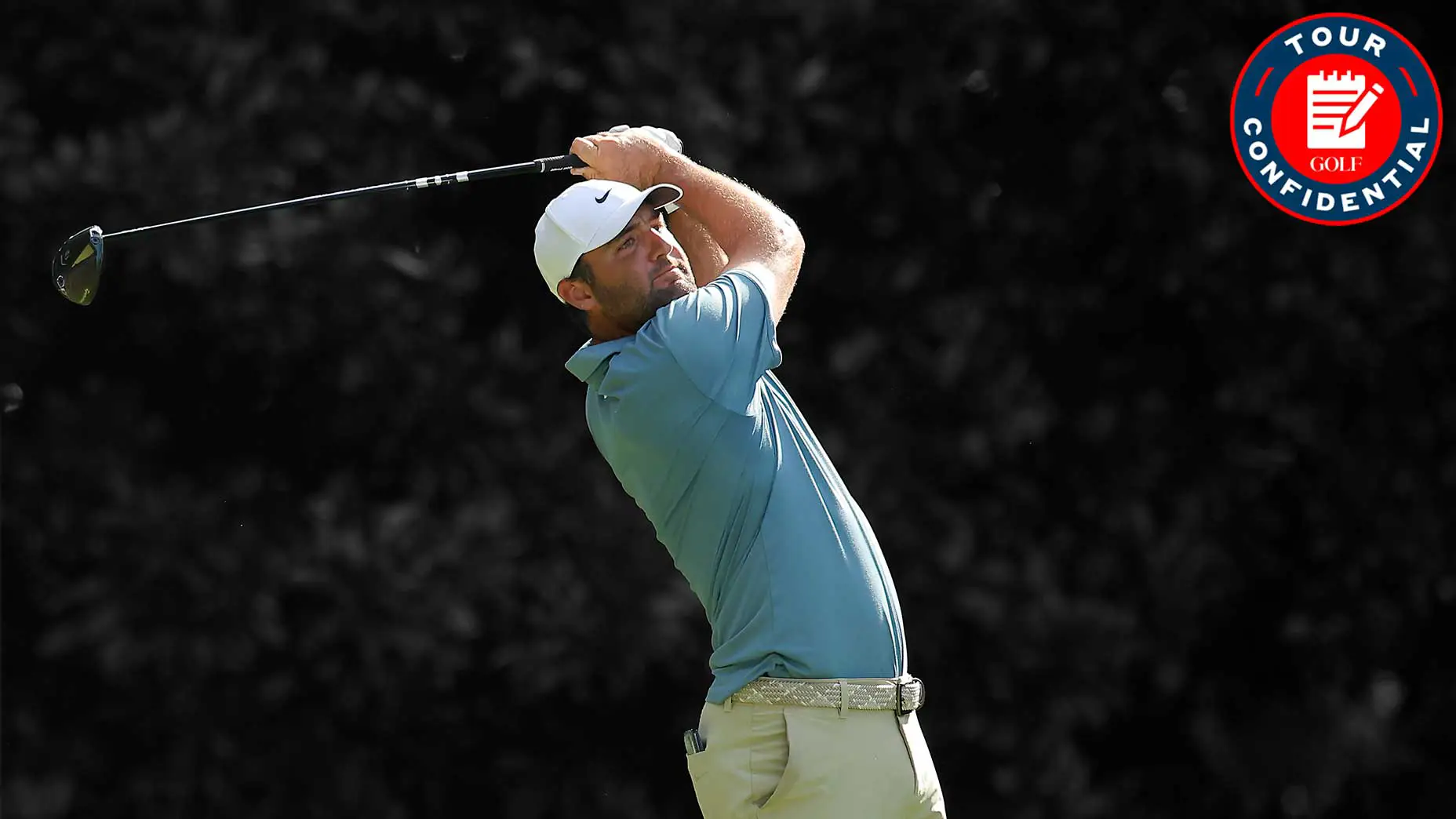
Scottie Scheffler’s Tour Championship Victory: A Deep Dive into Financial and Strategic Implications
Scottie Scheffler secured the season-ending Tour Championship on Sunday at East Lake, marking his third victory of the 2026 season. This capstone achievement, which saw him overcome a three-stroke deficit after 54 holes, culminated in a substantial $10 million first-place prize, reasserting his position as the sport’s top-ranked player.
Financial Dynamics and Player Value
The substantial $10 million first-place prize at the Tour Championship is not merely a payout; it’s a strategic pillar of professional golf’s economic model. This significant incentive profoundly influences player strategy and elevates competitive intensity throughout the entire season, driving consistent excellence towards the FedEx Cup finale. This capital injection underscores a robust financial ecosystem, fueled by media rights, global sponsorships, and event revenues, acting as a performance leverage mechanism that attracts and retains top-tier talent. For Scheffler, this sum solidifies financial security and extends career longevity, potentially shaping future investment and off-course strategic planning. Critically, it augments his market value, reinforcing appeal to endorsement partners seeking alignment with a proven champion at the sport’s zenith.
Competitive Prowess and Media Narratives
Scheffler’s come-from-behind victory at East Lake contrasts sharply with a previous dominant eight-shot win earlier in the season, as highlighted by editorial commentary. This distinction illuminates diverse facets of competitive prowess: demonstrating resilience under pressure versus overwhelming superiority. Both are strategically valuable for a top-ranked athlete, with the Tour Championship win emphasizing mental fortitude and tactical adjustments crucial for long-term success. This diversity in winning styles enriches his competitive profile, resonating with varied fan bases and media. Golf writers’ debates on which win was ‘best’ or whether the Tour Championship ‘salvaged’ a major-less season reveal the intricate narrative construction within sports media. This editorial framing significantly molds public perception, impacting how a player’s annual performance is judged by stakeholders. The sport’s emphasis on consistent ‘wins’ as a primary success metric underscores commercial drivers, maintaining a player’s relevance, marketability, and media presence, which are vital for sustained career viability, even amidst discussions of major championship droughts.
Strategic Importance of Ranking and Tour Structure
Maintaining the No. 1 ranking, especially through a season-ending victory like the Tour Championship, carries substantial strategic weight beyond immediate prize money. It directly influences future tournament seeding, amplifies media visibility, and unequivocally establishes a player as a benchmark of competitive excellence. The Tour Championship, as the apex of the FedEx Cup playoffs, epitomizes the tour’s competitive structure, deliberately incentivizing sustained high-level performance throughout the season. This structured progression, culminating in a high-stakes finale, is a strategic choice by tour organizers to maximize fan engagement and competitive drama. The substantial financial rewards directly mirror the commercial success and appeal of this institutional framework. The media’s active role in dissecting player performance, evidenced by editorial commentary, is intrinsically linked to the sport’s cultural and commercial vitality, continually shaping narratives of rivalries, achievements, and legacies. For sponsors, Scheffler’s consistent top-ranking presence and win record translate into invaluable brand exposure and positive association, offering a reliable platform to a global audience. These strategic implications extend to his management team, who adeptly leverage such victories to secure favorable endorsement deals and manage public relations, fostering a virtuous cycle of performance and commercial opportunity.
Balancing Legacy and Consistency
The narrative of a ‘major-less season in three years’ for a top-ranked player introduces a nuanced perspective on career evaluation. While major championships are often deemed the ultimate benchmark for historical legacy, consistent tour victories and a season-ending championship, such as Scheffler’s, demonstrate an equally valuable form of dominance and strategic consistency. This highlights the dual objectives for elite golfers: balancing major title pursuits for legacy with consistent tour wins for financial reward and ranking stability. The Tour Championship victory strategically mitigates the narrative void that the absence of a major title might otherwise create.
Broader Economic and Industry Impact
Beyond individual earnings, high-profile events like the Tour Championship exert a significant regional economic footprint, boosting tourism, hospitality, and employment in host cities such as Atlanta. Scheffler’s consistent success elevates the competitive landscape, compelling peers to refine their strategies, which in turn enhances entertainment value for spectators and broadcasters, fueling demand for media rights and sponsorships. This elite performance cycle powers professional golf’s commercial engine.
For players, navigating a long season to achieve peak performance, culminating in a Tour Championship victory, exemplifies successful complex strategic execution. The media’s intense scrutiny, often framing a season as needing to be ‘salvaged’ even for a top player, underscores high expectations and can influence player psychology and strategic choices.
Institutionally, professional golf tours strategically position marquee events like the Tour Championship, with its elevated prize money and season-ending drama, as cornerstones for creating compelling narratives around star players. This ensures global audience relevance and secures future media and sponsorship revenues crucial for sustained growth.
A world No. 1’s sustained performance also inspires youth development and future generations, demonstrating the tangible rewards of dedication. Commercially, Scheffler’s visibility directly translates into increased consumer interest and sales for his affiliated equipment and apparel brands.
The professional golf structure, through its points systems and tiered events, is a meritocracy that rewards consistent performance, making the Tour Championship the ultimate validation. Ongoing editorial discussions, acting as a crucial feedback loop, continually shape public perception, adding analytical depth to player motivations, strategic choices, and the evolving competitive landscape. This also influences the global distribution of talent, as players gravitate toward tours offering lucrative opportunities, impacting international competitive balance.
The FedEx Cup and its culminating Tour Championship are strategically paramount to professional golf’s institutional design, providing a high-stakes, clear conclusion to the regular season that maintains competitive tension.
Ultimately, Scottie Scheffler’s victory at the Tour Championship transcends a mere tournament win. It is a multi-layered event with profound operational, financial, strategic, and media implications, resonating across the player’s career, the tour’s economic health, and the broader golf industry. Insights from editorial commentary, while not definitive, highlight the continuous professional discourse on player performance and career narratives. Details on other source topics, like ‘captain’s picks galore’ and ‘Good Good-Callaway fallout,’ remain outside the scope of this analysis.

Photo by Henry_Bell on Pixabay.