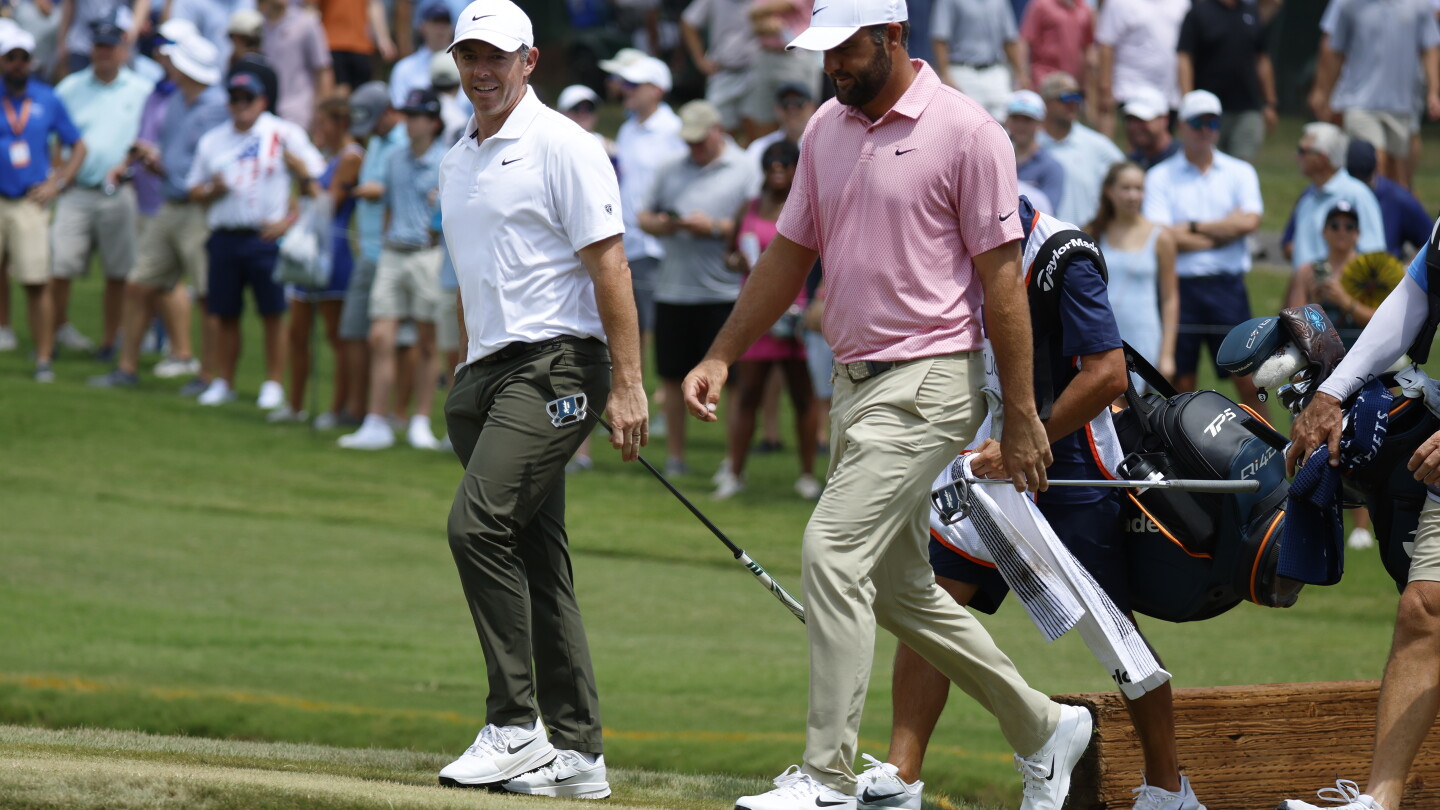
Scheffler’s Rise and the Enduring Legacy of Woods
Scottie Scheffler’s dominant run, amassing 21 victories and four major championships since February 2022, naturally invites comparisons to Tiger Woods. However, Woods’ benchmark of 82 PGA Tour wins and 15 major titles remains a significant indicator of his career’s historical depth, a standard Scheffler has yet to reach statistically.
The financial dynamics of professional golf have undergone a dramatic transformation. Scheffler is now poised to overtake Woods on the PGA Tour’s all-time career money list, trailing by a mere $609,000. This narrowing gap is directly attributable to the exponential increase in prize money and lucrative endorsement opportunities available in recent years, fundamentally altering the financial trajectory for top-tier players.
Scheffler himself acknowledges the qualitative difference, stating he is not yet at Woods’ level. This sentiment reflects the profound impact Woods had on elevating the sport’s competitive intensity and the overall standard for athletic performance and mental fortitude, a paradigm that continues to influence current generations of golfers.
Financial Milestones and Evolving Competitive Landscape
Scheffler’s approaching financial milestone is contextualized by his performance at the 2023 Tour Championship. A 12th-place finish earned him $426,250, bringing his official PGA Tour earnings to $120,390,661, placing him narrowly behind Tiger Woods’ record of $120,999,166, set on February 13, 2000.
Scheffler’s recent eight-shot victory in Memphis also saw him displace Rory McIlroy from the second position on the all-time earnings list. This strategic shift highlights a dynamic competitive environment where established stars face increasing pressure from resurgent or emerging talent, directly impacting career accolades and financial standing.
The season-ending Tour Championship itself represents a significant financial event, featuring a $40 million purse with a $10 million prize for the winner. Even a solo second-place finish is valued at $5 million, underscoring the substantial capital flow at golf’s highest level and the potential for dramatic shifts in career earnings within a single tournament.
The Escalating Economics of Modern Professional Golf
Scheffler’s current earning trajectory, exceeding $20 million for the fourth consecutive year, complemented by a $23 million FedEx Cup bonus, exemplifies the escalating financial rewards in contemporary professional golf. This economic boom is fueled by increased media rights valuations, major sponsorship deals, and the strategic expansion of tournament purses, reshaping the sport’s financial model.
The disparity between current prize structures and those of Tiger Woods’ peak earning years is a critical factor in understanding the changing landscape of career earnings. While historical win-loss records remain a primary measure of legacy, financial metrics are increasingly influenced by prevailing economic conditions, marketability, and the sport’s commercial expansion.
For players like Scheffler and McIlroy, surpassing Woods’ earnings record signifies more than statistical achievement; it reflects their contemporary market value and dominance in an era of unprecedented financial growth. This financial parity, or superiority, achieved with fewer wins, redefines what it means to be at the pinnacle of the sport today.
Strategic Implications and Competitive Benchmarks
Scheffler’s proximity to Woods’ earnings record, combined with his consistent major championship performances, positions him as a central figure in the ongoing narrative of golf’s greatest players. The financial benchmark is a significant, yet singular, facet of a broader competitive legacy that includes major championships and sustained excellence.
The narrative surrounding Scheffler’s pursuit of Woods’ records is amplified by golf’s robust media ecosystem, which thrives on such comparisons and milestones. This creates a strategic imperative for players to not only perform but also to engage with these narratives, thereby enhancing their personal brand and marketability.
The strategic decisions of players, their management, and tour organizers are increasingly shaped by these evolving financial and competitive benchmarks. The pursuit of records, whether in wins, majors, or earnings, influences player motivation, tournament scheduling, and the overall strategic direction of professional golf as a global enterprise.
Woods’ Enduring Influence and Scheffler’s Perspective
Scheffler’s recollection of a specific moment with Tiger Woods at The Masters in 2020 offers a personal glimpse into Woods’ legendary competitive intensity and its impact on Scheffler’s own approach. This anecdote, shared during media availability before the Tour Championship, underscores the psychological influence Woods continues to exert on his peers.
The story, detailing Woods’ reaction to a critical on-course situation, genuinely surprised Scheffler, illustrating the extraordinary focus and competitive drive that defined Woods’ career. This personal reflection highlights the intangible qualities contributing to a legendary status, extending beyond mere statistical achievements.
Scheffler’s admission that he learned competitive instincts and intensity by observing Woods signifies a cultural transmission of excellence within the sport. This acknowledgment of mentorship, even at a distance, highlights the enduring impact of Woods’ legacy and his role in shaping the competitive mindset of subsequent generations of golfers.
The Tour Championship’s Financial Significance
As the culmination of the FedEx Cup playoffs, the Tour Championship represents a critical juncture for both financial and competitive positioning. The substantial prize money ensures the event remains a focal point for players aiming to solidify their season’s achievements and career standing.
For Scheffler, a strong performance at the Tour Championship is not solely about securing the FedEx Cup title but also about potentially crossing the significant financial threshold set by Tiger Woods. This dual objective adds a layer of strategic importance to his participation, influencing his approach to the final rounds.
Rory McIlroy’s position in the standings, with the potential to surpass both Scheffler and Woods in career earnings depending on final outcomes, further emphasizes the volatility and high stakes of the season-ending event. This competitive interplay among top earners creates a compelling narrative for fans and stakeholders, showcasing the continuous evolution of golf’s financial hierarchy.
Market Dynamics and Player Valuation in Modern Golf
The escalating prize money and bonuses in professional golf mirror a broader trend of increased commercialization and media valuation within the sports industry. This environment enables players like Scheffler to amass significant wealth in shorter timeframes compared to previous eras, even with fewer career victories.
Player valuation is no longer solely tied to tournament wins but also encompasses marketability, social media presence, and the ability to attract lucrative sponsorships. Scheffler’s consistent elite performance and major championship victories have solidified his status as a highly valuable asset in the modern sports economy.
The financial gap between current prize structures and those of Tiger Woods’ prime years is a crucial factor when analyzing the shifting dynamics of career earnings. This divergence necessitates a nuanced approach when comparing achievements across different generations, recognizing the profound influence of economic factors on financial success.
Broader Industry Impact and Future Trajectories
The financial achievements of golfers like Scheffler have ripple effects across the entire golf industry, influencing equipment manufacturers, apparel brands, and course developers. Increased player earnings contribute to greater consumer spending and investment in the sport, fostering a cycle of sustained growth.
The strategic decisions of major golf tours, including the PGA Tour and LIV Golf, are significantly influenced by the financial incentives available to players. Competition for talent and the allocation of resources are directly linked to the ability to offer lucrative prize money and endorsement opportunities.
As Scheffler continues his elite-level performances, his impact on the sport’s financial trajectory and competitive landscape will be closely observed. His journey towards surpassing Woods’ earnings record serves as a powerful indicator of the evolving economic power and strategic priorities within professional golf.
The Psychological Edge and Competitive Instincts
Scheffler’s admiration for Tiger Woods transcends financial metrics, focusing on the intangible aspects of competitive drive and mental fortitude. The story of Woods’ actions at The Masters, which genuinely surprised Scheffler, points to a legendary level of intensity.
This psychological dimension is paramount in professional sports, where the ability to perform under pressure can be the decisive factor between victory and defeat. Scheffler’s learning derived from observing Woods highlights the crucial transmission of this mental skill set across generations of athletes.
The concept of competitive instincts, as learned from Woods, suggests fundamental principles of mental preparation and execution that endure across eras. Scheffler’s acknowledgment of this influence underscores the lasting impact of Woods’ approach to the game, shaping not only his own career but the competitive ethos of the sport itself.
Conclusion: A New Era of Golf Economics
Scottie Scheffler’s pursuit of Tiger Woods’ career earnings record is more than a statistical chase; it symbolizes a transformed economic landscape in professional golf. The sport’s amplified commercial appeal and the strategic expansion of prize money have unlocked unprecedented financial opportunities for elite athletes.
While Woods established an unparalleled standard for on-course achievement, Scheffler’s ascent highlights the evolving metrics of success in the modern era, where financial accumulation is increasingly intertwined with competitive dominance. This dynamic redefines how legacies are perceived and how the sport itself is valued by all stakeholders.
The ongoing narrative of Scheffler’s performance and financial milestones will continue to be a significant driver of interest and discussion within the golf world, underscoring the intricate interplay between athletic prowess, economic growth, and the enduring legacy of the sport’s greatest figures.