Institutional Diplomacy and the Commercial Social Contract
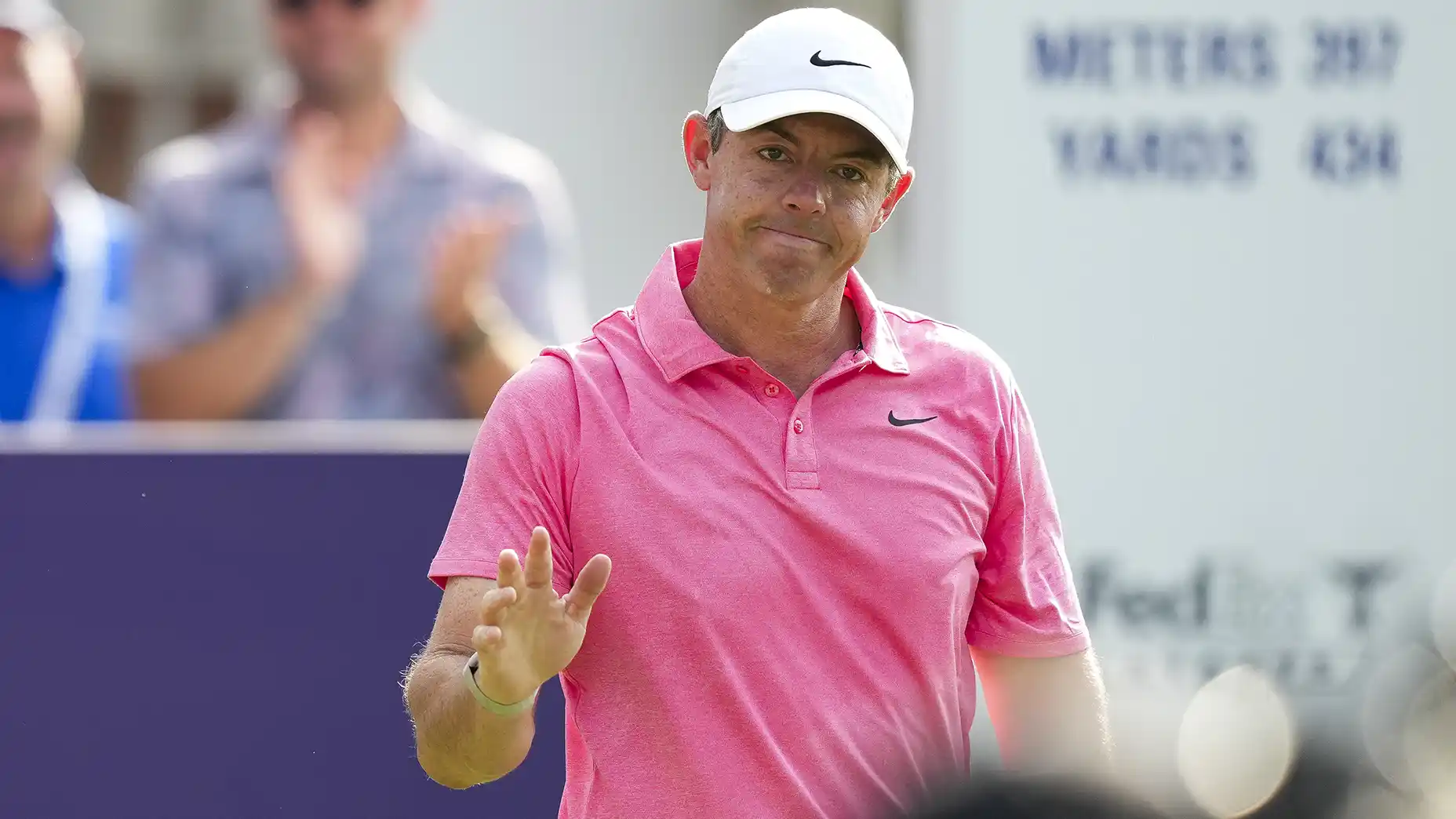
Rory McIlroy’s commitment to the 2026 FedEx St. Jude Championship signals a sophisticated recalibration of his role as the PGA Tour’s primary institutional steward. By reversing his previous season’s decision to skip the playoff opener, McIlroy is addressing a dual mandate: bolstering the commercial viability of the FedEx Cup and fulfilling the informal social contract between the Tour’s elite tier and its title sponsors. His presence at TPC Southwind serves as a critical stabilization mechanism for a postseason structure that increasingly depends on the visibility of its marquee assets to justify its premium broadcast and sponsorship valuations.
Technical Periodization: Mitigating Performance Decay
Beyond the political optics, McIlroy’s participation is a calculated exercise in technical periodization. Following the Open Championship on July 19, a second consecutive absence from the St. Jude Championship would have resulted in a 28-day competitive vacuum. In the hyper-refined environment of elite golf, such a hiatus risks performance atrophy—specifically the erosion of tournament-specific cognitive focus and short-game calibration. By choosing to compete in Memphis, McIlroy is utilizing the 70-player field as a high-stakes laboratory to resolve technical inefficiencies before the field contracts to the top 50 at the BMW Championship.
The Level-Playing-Field Paradigm at East Lake
The 2026 postseason is defined by the most radical structural shift in the FedEx Cup’s history: the elimination of the ‘Starting Strokes’ handicap at the Tour Championship. This transition to a pure gross-score format at East Lake Golf Club fundamentally devalues regular-season points accumulation in favor of immediate, late-summer momentum. The ‘Fleetwood Precedent’—referring to Tommy Fleetwood’s breakthrough victory—has proven that under the new logic, the 30th seed possesses the same mathematical probability of success as the top seed upon arrival in Atlanta. Consequently, McIlroy’s strategy has shifted from protecting a ranking to optimizing his competitive peak.
The 70-50-30 Funnel: High-Variance Strategic Incentives
The progressive narrowing of the field creates a tiered pressure gradient. For McIlroy, currently positioned 12th, the St. Jude Championship is not a survivalist struggle but a calibration exercise. However, the removal of the safety net for the finale means that stars like Scottie Scheffler and Matt Fitzpatrick can no longer rely on a regular-season cushion. This creates a high-variance environment where the strategic premium is placed on ‘peaking’ rather than ‘consistency.’ McIlroy’s early entry into the playoff rotation is a hedge against this volatility, ensuring he enters the final sprint with the requisite competitive reps to exploit a wide-open field.
Market Volatility and Broadcast Narratives
The ‘level playing field’ format introduces a layer of unpredictability that benefits broadcast partners and betting markets by enhancing the ‘sleeper’ narrative. For the PGA Tour, this is a calculated risk: while it may manufacture immediate drama, it risks alienating fans who prize season-long excellence. McIlroy’s full-playoff participation acts as a hedge for the organization, ensuring that even if the format produces an unexpected winner, the Tour’s most marketable figure remains at the center of the narrative arc throughout the three-week duration.