SSC Napoli has reached a decisive inflection point where its legacy of fiscal conservatism directly clashes with the strategic imperative for elite European success. For over two decades, the club has operated under a model of ‘virtuous management’—a self-sustaining financial framework that prioritized solvency over aggressive capital expenditure. Under President Aurelio De Laurentiis, the club has achieved a valuation between one and two billion euros despite a personal capital injection of only 16.65 million euros, a feat of financial engineering rare in modern football.
The Strategic Pivot: Deficit Spending for Glory
The club now contemplates an operational transition into a deficit-spending phase, colloquially referred to as the ‘red balance.’ This shift represents a calculated gamble: intentionally sacrificing immediate financial stability to fund the acquisition of top-tier talent. The pursuit of a Champions League title is no longer framed as mere sporting ambition; it is an industrial strategy to elevate the Napoli brand from a regional power to a global commercial institution.
This pivot carries inherent institutional risks, including potential regulatory friction and future financial penalties. However, the ownership appears to have concluded that the brand equity generated by a European title—and the subsequent increase in international broadcasting leverage and sponsorship value—outweighs the costs of administrative fines. It is a departure from organic growth in favor of high-leverage expansion.
Technical Pragmatism and Operational Friction
The appointment of Massimiliano Allegri signals a hard shift toward competitive pedigree over aesthetic philosophy. Allegri’s pragmatic, result-oriented approach aligns with the club’s ‘win-now’ mandate. Yet, this new technical era is already facing operational friction caused by Napoli’s traditional ‘sell-to-buy’ market policy. The recent loss of key targets like the defender Gila to AC Milan illustrates the disadvantage of fiscal hesitation in a hyper-competitive transfer market.
To realize its ambitions, the executive branch must decouple its acquisition strategy from asset liquidation. Relying on prior sales for liquidity creates a lag that allows rivals with more aggressive capital structures to secure primary targets. For the Allegri era to succeed, the club must evolve its market agility to match its tactical demands.
The Centenary: Bridging Legacy and Valuation
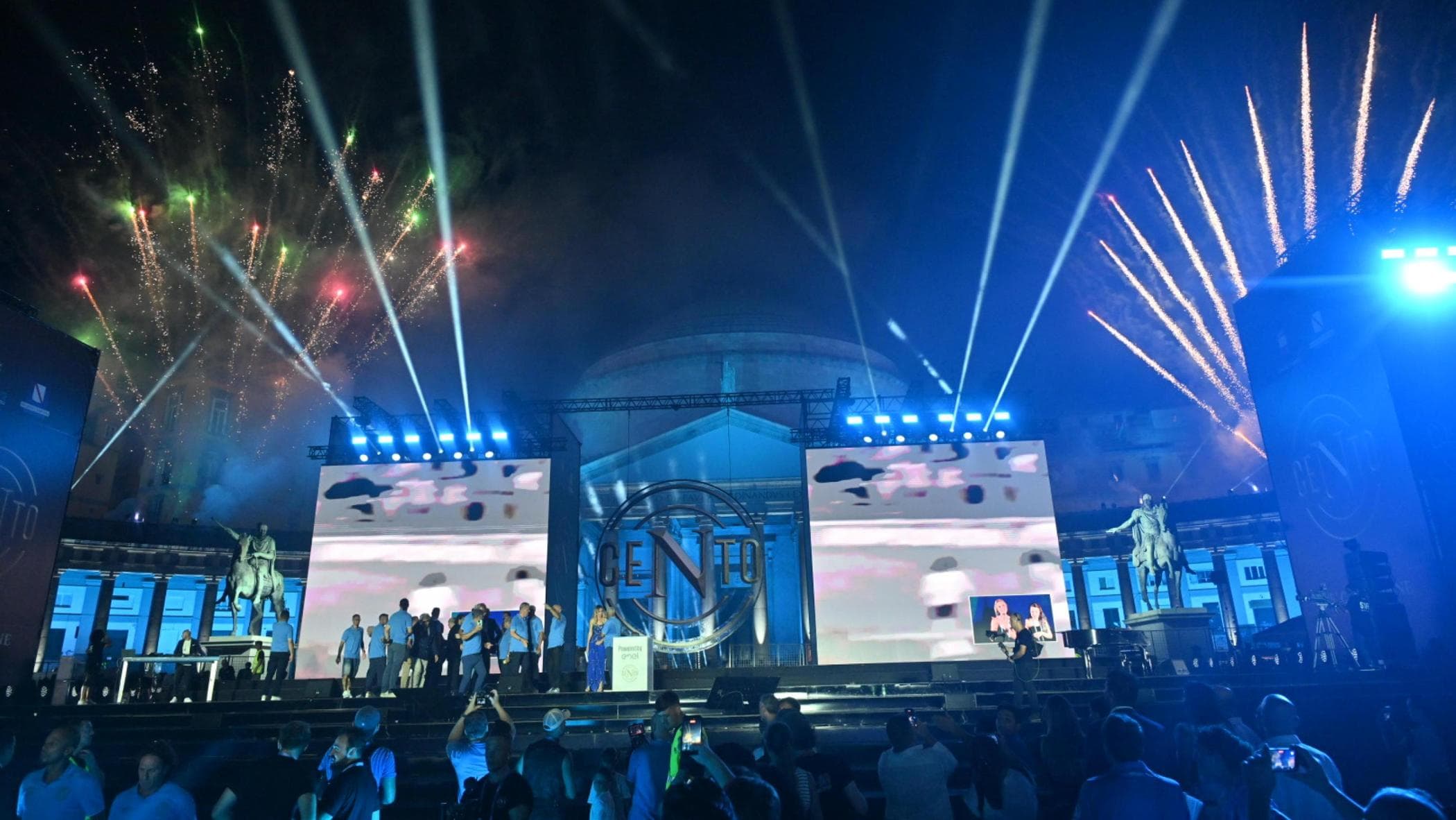
The Centenary celebrations at Plebiscito and Rotonda Diaz served as a sophisticated marketing exercise, integrating the club’s historical identity with its future commercial goals. By involving local government and club ‘Legends’ like Alemao and Gianni Improta, De Laurentiis has secured the institutional and emotional backing required for this high-risk expansion phase.
Ultimately, Napoli is attempting to surpass the achievements of the Ferlaino era. While the 1989 UEFA Cup remains the club’s high-water mark, the current strategy targets a higher echelon of prestige. The decision to risk the balance sheet for the ‘dream’ marks the final stage of Napoli’s evolution from a rescued bankruptcy to a potential global footballing hegemon.