United’s A321XLR Strategy: Transforming Economy Plus for Enhanced Profitability and Passenger Experience
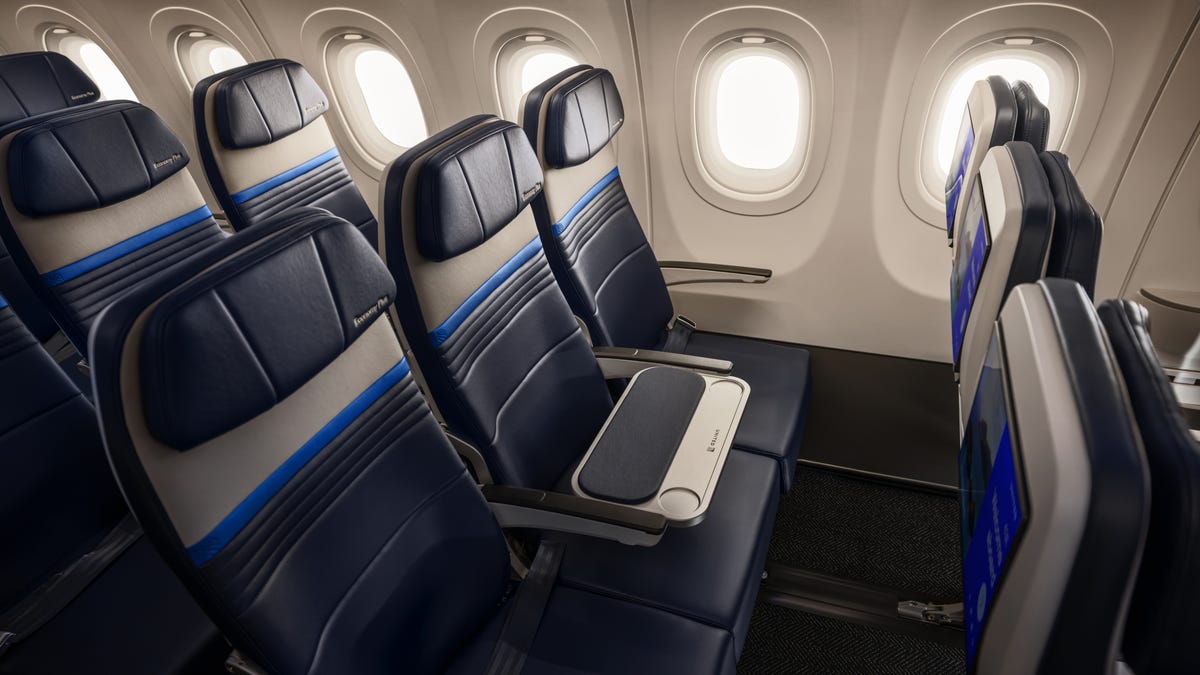
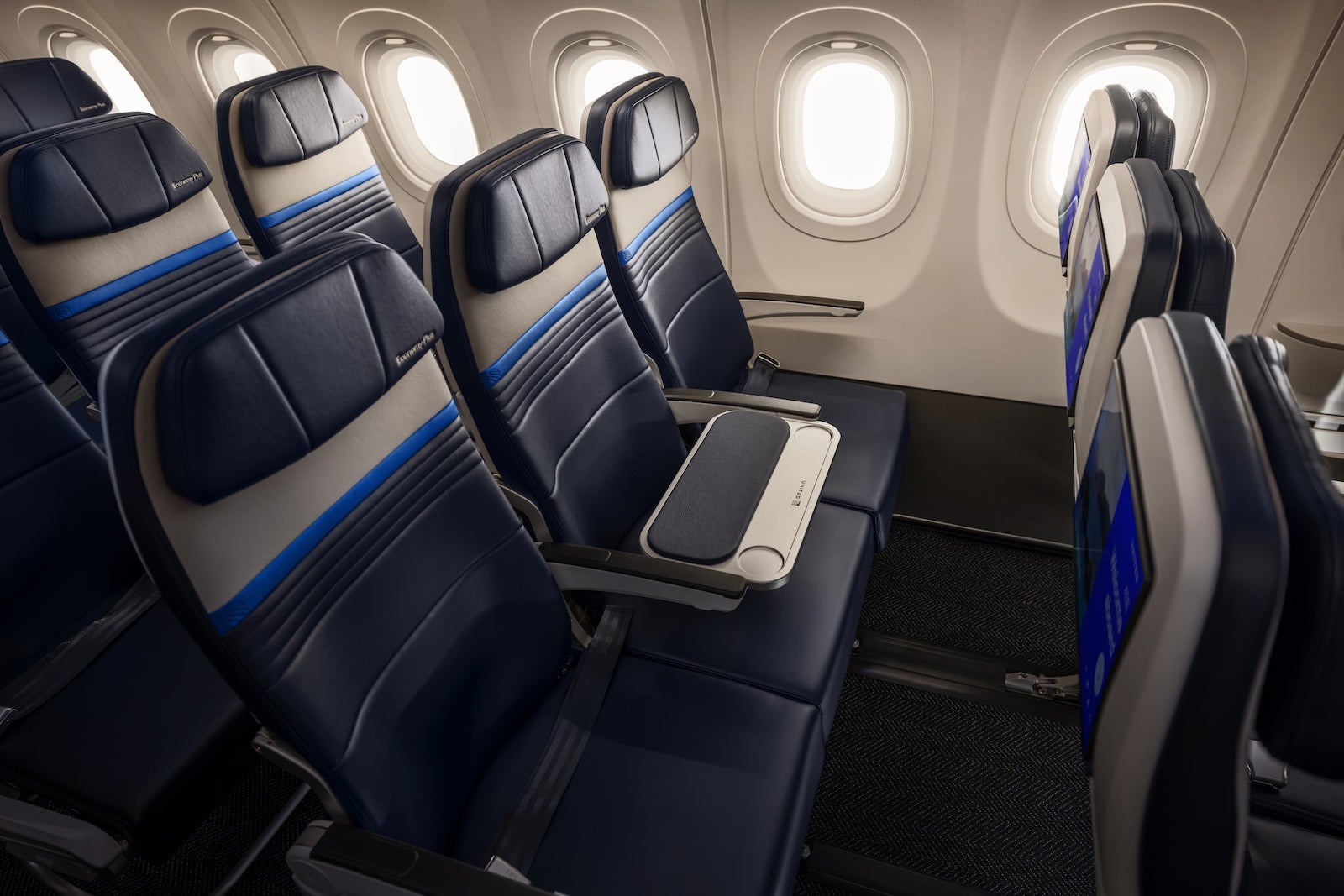
United Airlines is set to revolutionize its Economy Plus cabin on the upcoming Airbus A321XLR fleet through an innovative seating configuration. This strategic enhancement, a first for a U.S. carrier, involves repurposing the traditional middle seat in select rows into a fixed shared table. This design aims to provide significantly augmented personal space and comfort for adjacent passengers on longer international narrowbody routes, simultaneously pursuing dual objectives: elevating the customer experience and optimizing operational efficiencies for increased profitability.
A321XLR: A Platform for Holistic Cabin Innovation
The introduction of this specialized Economy Plus configuration coincides with the anticipated debut of United’s 50 Airbus A321XLR aircraft, slated to enter service later this year. These long-range, single-aisle jets are pivotal to United’s evolving network strategy, particularly for expanding transatlantic point-to-point routes from the East Coast to Europe. Beyond the Economy Plus innovation, the A321XLRs will feature new Polaris business-class suites with sliding privacy doors and a dedicated premium economy cabin. This comprehensive “nose-to-tail” investment underscores United’s strategic commitment to enhancing passenger experience across all service tiers, aligning with its objective of offering diverse, value-driven choices. Executive Vice President and Chief Commercial Officer Andrew Nocella emphasized this holistic fleet upgrade, positioning the A321XLR as a showcase for integrated, modern cabin design.
Economic Model: Maximizing Yield and Operational Efficiency
United’s innovative seating concept represents a multi-faceted economic strategy. By converting a potential revenue-generating middle seat into a premium amenity, the airline effectively monetizes additional personal space, a growing demand driver for comfort on extended flights. This strategy enhances ancillary revenue potential, allowing United to command a higher premium for its “Economy Plus Seats With Extra Elbow Room” than a standard middle seat would generate, thus optimizing revenue per available seat mile (RASM) within this cabin segment.
Crucially, this cabin redesign also facilitates a reduction in the required number of flight attendants for these specific aircraft configurations. This operational adjustment directly translates into significant cost savings through optimized crew scheduling and reduced labor expenditures per flight, thereby lowering the aircraft’s overall cost per available seat mile (CASM). This dual approach of increasing revenue potential while simultaneously decreasing operational costs presents a compelling model for enhanced profitability and shareholder value, demonstrating shrewd resource allocation in a capital-intensive industry.
Competitive Edge and Long-Haul Narrowbody Market Positioning
As the inaugural U.S. carrier to adopt this “blocked middle seat” model, United gains a distinct competitive advantage in the premium economy segment. This differentiation allows the airline to attract a specific cohort of passengers who prioritize comfort and space on long-haul narrowbody flights, potentially shifting market share from competitors offering standard economy configurations. This move signals United’s proactive approach to cabin innovation, setting a new benchmark for passenger amenities within the Economy Plus category and potentially influencing competitor responses across the U.S. and transatlantic markets.
The A321XLR is central to the ongoing transformation of long-haul air travel, enabling airlines to operate transatlantic and other extended routes with more fuel-efficient, single-aisle aircraft. United’s strategic deployment of these jets, coupled with innovative cabin configurations, optimizes their utility for these specific market segments. By offering a differentiated product, United aims to maximize the commercial viability of its long-range narrowbody operations, competing effectively on routes traditionally served by larger, wide-body aircraft and potentially opening new point-to-point markets with superior product offerings.
Strategic Adaptation of ‘Eurobusiness’ and Targeted Passenger Segmentation
The concept of a blocked middle seat, often incorporating a table, is a well-established practice in European short-haul business class cabins, colloquially known as ‘Eurobusiness.’ United’s adaptation of this model for its Economy Plus offering on transatlantic routes represents a strategic localization of a proven concept for a different market segment and route profile.
United’s implementation distinguishes itself by explicitly offering enhanced legroom—a feature often absent in standard European business class configurations that primarily block the middle seat. This nuanced approach aims to deliver a superior hard product in terms of physical space, without the elevated catering or lounge access typically associated with full business class. This granular segmentation targets travelers willing to pay a premium over standard economy for increased personal space and comfort on extended international journeys, yet who may not require or afford a business or premium economy suite. This effectively creates a distinct tier within the economy cabin, optimizing yield per square foot of cabin space by catering to evolving passenger preferences for privacy and personal area.
Regulatory Compliance and Operational Synergies
Any modification to aircraft cabin configurations, particularly those impacting crew requirements, must strictly adhere to national and international aviation safety regulations. Regulatory bodies, such as the Federal Aviation Administration (FAA) in the U.S., mandate specific staffing levels based on aircraft type, passenger capacity, and emergency evacuation procedures. United’s implementation of a reduced flight attendant model on the A321XLRs, enabled by the blocked middle seat, would have undergone rigorous review and approval processes to ensure compliance, prioritizing passenger safety alongside operational efficiency.
Furthermore, the decision to reduce flight attendant staffing introduces a dimension of labor relations and operational planning. While the source documentation does not detail specific union negotiations, such alterations typically involve careful consideration of existing labor agreements. Airlines must navigate these complexities to ensure operational efficiencies are achieved without compromising safety standards or employee morale, requiring meticulous planning for crew training, scheduling, and adherence to all applicable aviation authority guidelines.
Future Outlook and Industry Benchmarking
United’s exploration of potentially offering these innovative seating configurations on other aircraft types in the future signals a broader strategic shift. Should the A321XLR implementation prove successful in terms of passenger uptake and financial returns, this ‘blocked middle seat’ concept could be scaled across other long-haul or even medium-haul aircraft within its fleet. Such an expansion would have significant implications for cabin design standards across the industry, potentially prompting other airlines to consider similar innovations. The success of this model could redefine expectations for economy class comfort and further drive the trend of unbundling and premiumization within standard cabins, shaping the future landscape of airline product offerings.
Strategic Innovation in a Dynamic Market
United Airlines’ strategic move with its A321XLR cabin design reflects the dynamic and constantly evolving economics of the air travel industry. By leveraging new aircraft technology and creative cabin configurations, United addresses specific passenger needs for enhanced comfort while simultaneously improving operational efficiency. This initiative exemplifies how carriers are adapting to the competitive landscape and shaping future trends in premium economy offerings, balancing customer expectations with the imperative to optimize costs and maximize revenue streams.