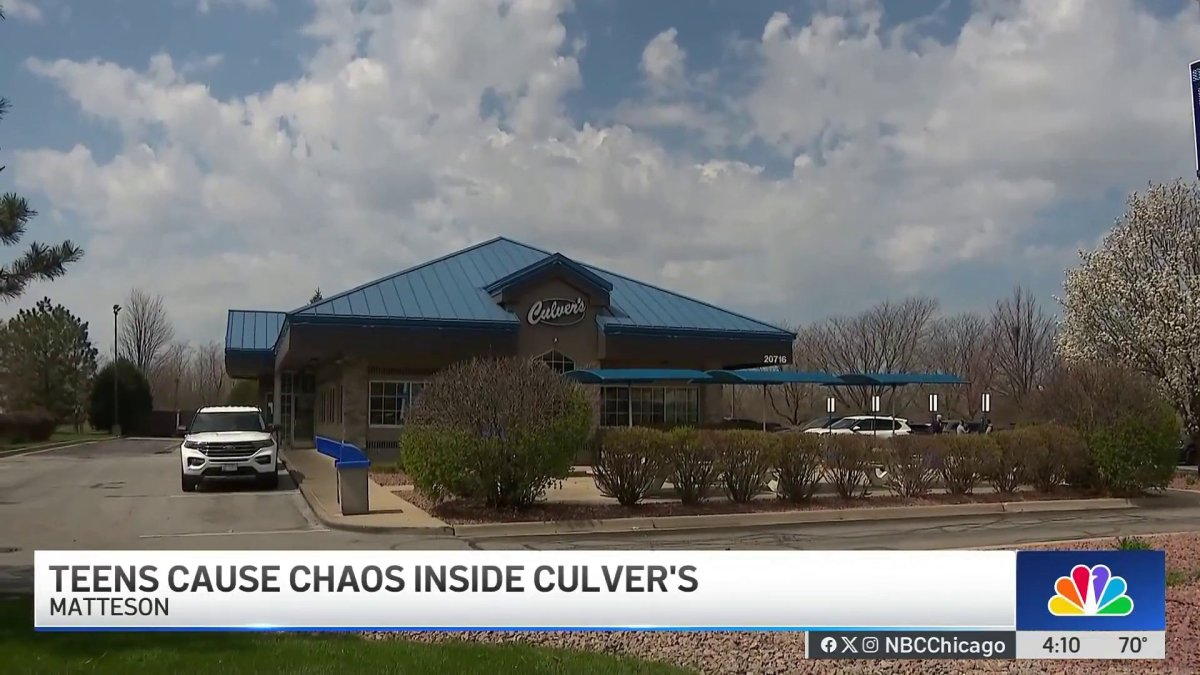
Operational Degradation and Financial Strain: A Franchise’s Breaking Point
The Matteson Culver’s franchise, led by owner Dawndria Murray, experienced a sustained erosion of its operational integrity due to persistent youth misconduct. Over several months, incidents—including food fights, restroom vandalism, and general disruptive behavior—escalated, culminating in tangible operational costs and systemic inefficiencies. These behavioral externalities directly impacted the restaurant’s unit economics and brand promise.
The chronic diversion of staff from core duties (customer service, food preparation) to managing unruly patrons, extensive cleanup, and addressing property damage led to quantifiable reductions in service quality and employee morale. This reallocation of labor hours, coupled with unforeseen expenditures for increased cleaning supplies and repairs, directly diminished the franchise’s operational efficiency and profitability. Such a decline threatened the essential family-friendly ambiance cultivated by the Culver’s brand, risking customer churn, negative word-of-mouth referrals, and a direct impact on long-term market share in a competitive suburban environment.
Strategic Digital Intervention: Leveraging Social Media for Accountability
Facing escalating operational challenges and a perceived inadequacy of traditional intervention methods, Dawndria Murray strategically deployed social media. Her decision to publish surveillance footage, alongside a direct appeal to parents, represented a calculated shift from internal crisis management to public accountability. This digital intervention aimed not at individual shaming but at mobilizing community oversight and parental engagement, reframing a localized business issue into a broader civic dialogue.
The subsequent viral dissemination of Murray’s message underscored social media’s potent amplifying effect in contemporary local business management. This public appeal transcended conventional communication channels, reaching a significantly wider audience beyond the immediate customer base to encompass the wider community and, critically, the parents of the implicated teenagers. This broad digital reach was instrumental in catalyzing the “surprising response” from parents, demonstrating the efficacy of public pressure as a mechanism for addressing persistent behavioral externalities.
This strategic utilization of digital platforms highlights an evolving paradigm in small business crisis resolution. While carrying inherent reputational risks, Murray’s targeted communication demonstrated how direct stakeholder engagement via social media can accelerate conflict resolution by bypassing traditional intermediaries, establishing a direct conduit between the business’s grievances and responsible parties.
Shifting Dynamics: Parental Accountability and Consequence Implementation
The “unexpected response” from parents, culminating in apologies and offers of restitution, signifies a critical recalibration of stakeholder dynamics and individual incentives. Prior to Murray’s viral post, the persistent misconduct suggested a disconnect in parental awareness or perceived accountability. The public appeal effectively bridged this gap, introducing a layer of social and reputational pressure that compelled active parental engagement and corrective action.
For the involved parents, the public exposure of their children’s actions, even without explicit identification, likely triggered concerns regarding family reputation, community standing, and potential legal or financial liabilities for property damage. This newly introduced external pressure served as a powerful incentive, transforming passive awareness into proactive intervention. The resulting apologies and offers of reparations are tangible outcomes of this re-incentivization, demonstrating a recognition of responsibility and a commitment to address the behavior.
The incident also recalibrated incentives for the teenagers themselves. The explicit ban from the restaurant, a direct consequence of their behavior and the owner’s public appeal, established a clear boundary and a tangible repercussion. This operational measure, reinforced by parental intervention, serves as a significant deterrent against future disruptions, both at this specific establishment and potentially influencing conduct in other public commercial spaces.
Franchise Implications: Brand Integrity, Financial Health, and Systemic Learnings
Beyond immediate operational costs, the sustained disruptive behavior carried significant financial repercussions for the Matteson Culver’s franchise. Customer deterrence due to an unpleasant dining environment directly translates into lost revenue streams, impacting daily sales figures and overall profitability. For a franchise, consistent revenue is paramount for meeting royalty fees, operational expenses, and target profit margins, making such disruptions a direct threat to long-term financial viability and unit economics.
The potential for brand dilution and long-term reputational erosion, even from localized incidents, poses a strategic challenge for national franchise systems like Culver’s. While the Matteson location operates independently, its performance and public perception contribute to the broader brand equity. Negative associations, even if geographically isolated, can subtly influence consumer perception across the wider network, potentially impacting future expansion, franchisee relations, or customer loyalty in adjacent markets.
This incident underscores the inherent tension within a franchise model: maintaining corporate brand standards at the local level under diverse operational conditions. The corporate entity relies on franchisees to uphold brand reputation and customer experience, yet local owners bear the direct burden of day-to-day challenges. The resolution of such issues, therefore, becomes a matter of shared interest, potentially influencing corporate support mechanisms, training guidelines, or proactive franchisee assistance in managing community relations.
Broader Societal Context: Youth Behavior and Commercial Public Spaces
The events at the Matteson Culver’s highlight a broader societal challenge concerning the appropriate utilization of public commercial spaces by youth. Fast-casual restaurants, often serving as accessible “third spaces” for teenagers post-school, navigate a complex dilemma: balancing the desire to be a community hub with the imperative to maintain order and a positive experience for all patrons. This dual functionality necessitates clear behavioral boundaries and consistent enforcement.
This situation compels businesses to reassess their role in fostering responsible youth engagement within their establishments. While providing safe spaces for young people is generally desirable, the incident suggests a perceived gap in conventional oversight mechanisms. It points to a need for proactive strategies, potentially including clearer posted rules, enhanced staff training in de-escalation, or community outreach programs designed to foster mutual respect and shared responsibility for public decorum.
From an institutional perspective, the incident reflects a societal recalibration where traditional oversight may prove less effective, necessitating novel approaches. The reliance on social media to directly engage parents indicates a perceived void in conventional channels for addressing youth misconduct in public settings. This evolution requires businesses, parents, and community leaders to collaboratively redefine expectations and responsibilities for maintaining civility in shared commercial environments.
Media Amplification and Post-Crisis Adaptation: Lessons in Resilience
The reporting by NBC 5 transmuted a localized business dispute into a widely recognized narrative, demonstrating the significant role of traditional media in amplifying stories originating on social platforms. This media amplification not only broadened the reach of Murray’s message but also framed the incident within a larger public discourse about parental responsibility, youth behavior, and the operational challenges confronting small businesses. Traditional media’s involvement validated the seriousness of the situation, lending further weight to Murray’s appeal and its resolution.
For the Culver’s brand, navigating the reputational implications of such an incident becomes a critical exercise in crisis communication. While the owner’s actions were problem-solving, the public nature of the complaint and subsequent media coverage placed the brand under scrutiny. Effective reputational management in these scenarios involves demonstrating support for franchisees, reinforcing core brand values, and articulating broader strategies for community engagement that extend beyond isolated incidents, ensuring brand equity preservation.
The incident serves as a salient case study in the rapid convergence of social media virality and traditional news cycles. A local business owner’s personal digital appeal quickly gained mainstream attention, illustrating how swiftly narratives can form and propagate. This dynamic necessitates that businesses, particularly those with a distributed franchise model, develop robust, agile communication strategies to anticipate and respond to such shifts in public attention, ensuring consistent messaging and proactive brand protection. The long-term operational recalibration will likely involve implementing revised internal protocols for managing disruptive groups, enhanced staff training, and fostering proactive relationships with local schools or youth organizations to build community bridges and mitigate future risks.