
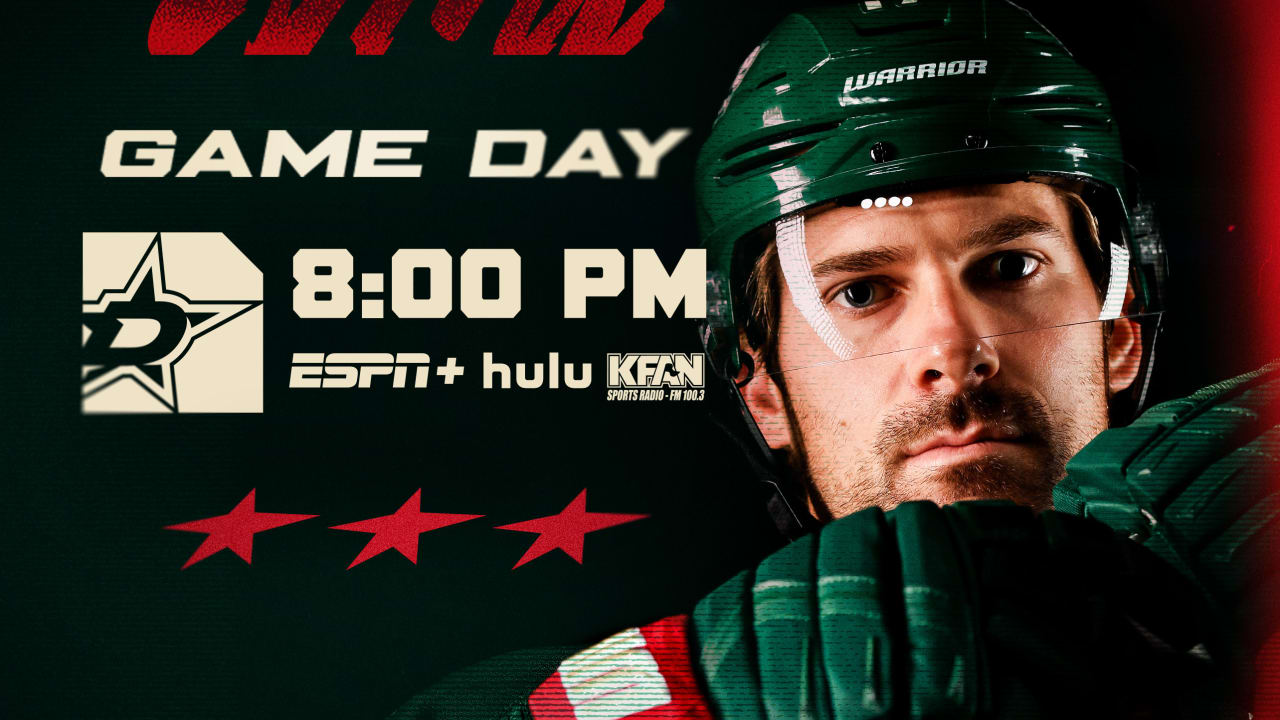
Tactical Disruption: The Heiskanen Vacuum and Defensive Volatility
The strategic equilibrium of the 2026 Central Division playoff bracket was fundamentally altered during the final regular-season engagement between the Dallas Stars and Minnesota Wild. Miro Heiskanen, the lynchpin of the Dallas blue line, exited following a first-period collision with Ryan Hartman. This lower-body injury introduces a high-leverage variable into a matchup where home-ice advantage is currently decided by a negligible margin. Heiskanen’s absence forces an immediate redistribution of high-leverage minutes, stressing a defensive corps that maintains a league-leading 2.69 goals-against average (GA/GP) compared to Minnesota’s 2.82.
Special Teams Delta and Power Play Regression Risks
Heiskanen serves as the primary quarterback for a Dallas power play operating at a 28.7% efficiency rate. This 3.9% advantage over Minnesota’s 24.8% unit is the Stars’ most significant offensive differentiator. Without Heiskanen’s elite puck distribution and zone-entry capabilities, Dallas risks a regression toward the league mean, effectively neutralizing their greatest tactical edge. Conversely, the penalty kill units remain statistically stagnant, with Dallas (80.8%) holding a marginal lead over Minnesota (79.1%), suggesting that special teams outcomes will hinge on individual skill replacement in the top pairing.
Possession Metrics and Faceoff Dominance
Dallas holds a commanding 51.7% to 46.6% lead in faceoff efficiency, a 5.1% disparity that typically ensures superior puck possession. However, the loss of a transition specialist like Heiskanen complicates the conversion of these won draws into offensive zone time. Minnesota’s physical approach, exemplified by the Hartman hit, appears to be a calculated effort to disrupt the Stars’ fluidity. If Dallas cannot find a secondary engine to facilitate zone exits, their possession advantage may become localized in the defensive zone, increasing the workload on a goaltending tandem that must now compensate for a thinned defensive rotation.
Minnesota’s Strategic Pivot: Roster Aggression and Momentum
While Dallas manages medical uncertainty, the Wild have aggressively reconfigured their roster for postseason attrition. The acquisition of Bobby Brink from Philadelphia in exchange for David Jiříček represents a shift toward immediate scoring depth over long-term defensive development. Combined with the addition of veteran Nick Foligno, Minnesota has optimized its lineup to exploit defensive gaps. The departure of Vinnie Hinostroza and the consolidation of prospects in the AHL emphasize Minnesota’s focus on a battle-ready active roster capable of challenging Dallas’s identical 3.29 goals-per-game output.
Projected Playoff Implications
The medical status of Heiskanen will likely dictate the betting favorites for this first-round series. From an institutional perspective, the loss of a 50-point defenseman compromises not only tactical flexibility but also the financial incentives tied to home-ice advantage. Should Heiskanen’s injury persist into the postseason, the Stars must accelerate the development of their AHL pipeline to bridge the 0.13 GA/GP gap that currently separates them from Minnesota. The 2026 Stanley Cup Playoffs now begin under a cloud of medical and strategic uncertainty for the Central Division’s most disciplined roster.
Photo by Northern_Punkie on Pixabay.