Strategic Geographic Diversification: The Las Vegas Pivot
The 2026 NCAA Men’s Ice Hockey Championship, scheduled for April 9 and 11, signals a critical evolution in the collegiate athletic association’s event strategy. By hosting the Frozen Four at Las Vegas’s T-Mobile Arena for the first time, the NCAA is moving beyond traditional regional strongholds into a premier global entertainment hub. This transition is a calculated effort to optimize commercial scalability, leverage high-volume tourism, and engage a broader demographic of stakeholders within a non-traditional hockey market.
The Professional Nexus: Vertical Integration of Talent
The tournament has transitioned into a primary scouting crucible for the National Hockey League. With a high concentration of drafted prospects and a projected first-round selection for the 2026 NHL Draft, the Frozen Four functions as a high-stakes showcase for individual professional leverage. The rapid integration of collegiate athletes into NHL rosters—often immediately following the tournament—underscores the NCAA’s role as a mature development pipeline. This professionalization of the collegiate game shifts institutional focus toward pro-style systems that prioritize mental fortitude and situational execution under peak media scrutiny.
Institutional Legacies and Competitive Parity
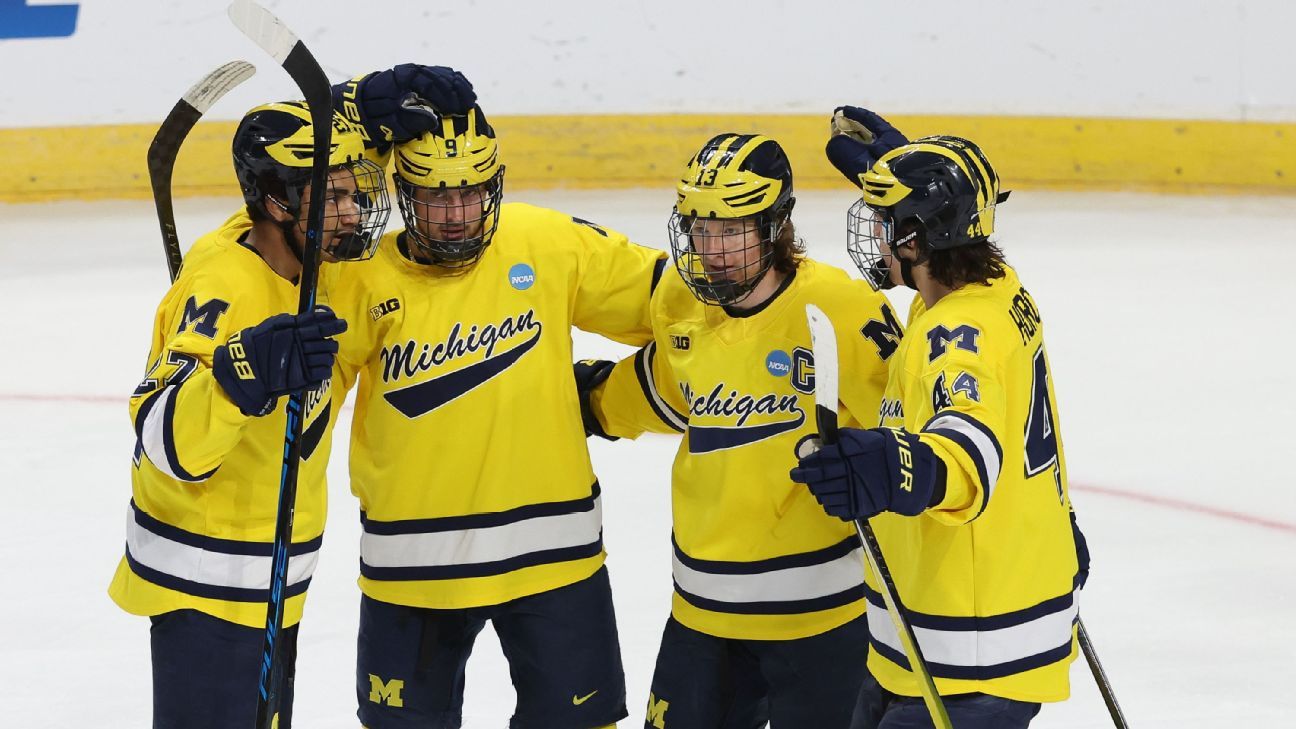
The 2026 field highlights a tension between historical dominance and emerging program momentum. The Michigan Wolverines enter as the No. 1 overall seed, utilizing a high-end recruitment model to pursue their first title since 1998. Conversely, Denver University represents the gold standard of institutional consistency, holding a record ten national championships. This landscape is further complicated by the rise of programs like Western Michigan—the 2025 defending champions—illustrating a closing gap in competitive parity where strategic coaching and defensive systems can disrupt established hierarchies.
Media Rights and Multi-Platform Monetization
The broadcasting framework for the 2026 championship reflects the necessity of multi-channel distribution in the digital era. With national coverage on ESPN2 and expanded accessibility via the ESPN App and Fubo TV, the NCAA is maximizing media rights valuation through diverse consumption touchpoints. This ecosystem, supported by radio syndication through Westword One Sports, ensures comprehensive market penetration, providing sponsors and advertisers with peak engagement during the tournament’s phased elimination format.
Economic Implications for the Host Ecosystem
Hosting the Frozen Four provides Las Vegas with a measurable surge in high-value sports tourism. The influx of collegiate fanbases, professional scouting departments, and national media personnel generates significant downstream revenue for the hospitality and retail sectors. For the NCAA, the success of this event in Las Vegas will serve as a proof-of-concept for future championship placements in metropolitan hubs, balancing the prestige of amateur athletics with the economic requirements of modern sports entertainment.