NASA Verifies Meteor Event Over Northeast US with Detailed Trajectory Analysis
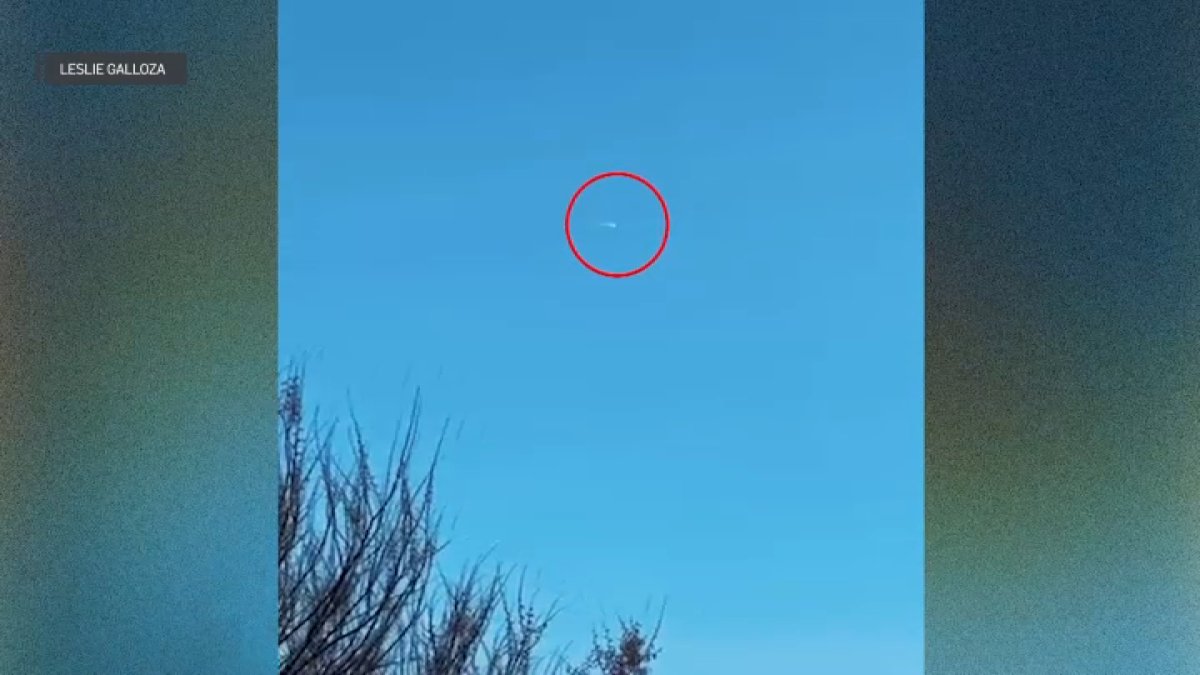
NASA has confirmed that a bright fireball observed across five Northeastern states on April 7th was a meteor. The event, occurring around 2:34 p.m. ET, prompted over 200 eyewitness reports from Connecticut, Delaware, New Jersey, New York, and Pennsylvania, as cataloged by the American Meteor Society (AMS).
NASA’s detailed analysis of observational data and eyewitness accounts established the meteor’s entry point approximately 48 miles above the Atlantic Ocean, off the coast of Mastic Beach on Long Island, New York. This initial observation point precisely defines the object’s atmospheric entry trajectory.
The meteor traversed 117 miles through the upper atmosphere at an estimated speed of 30,000 miles per hour before disintegrating. This considerable velocity and distance highlight the energetic nature of the event and the object’s rapid descent.
The disintegration occurred approximately 27 miles above Galloway Township, New Jersey, north of Atlantic City. This final observation point provides critical data for understanding the object’s fragmentation process and its ultimate fate within Earth’s atmosphere.
The AMS compilation of over 200 reports underscores the widespread nature of the sighting, essential for accurately triangulating the meteor’s path and confirming its atmospheric trajectory. Such widespread observations are invaluable for scientific analysis.
This event aligns with a discernible pattern of extraterrestrial material entering Earth’s atmosphere, with such sightings occurring with increasing frequency. These occurrences drive ongoing scientific interest in near-Earth objects (NEOs) and their potential atmospheric impacts.
NASA’s analysis methodology, integrating eyewitness testimony with instrumental data, exemplifies the agency’s approach to tracking and characterizing transient atmospheric phenomena. This process leverages a distributed network of observers and reporting mechanisms to construct a comprehensive understanding of such events.
The strategic implications for space agencies involve refining detection algorithms and observational networks to improve the monitoring and prediction of smaller celestial bodies. Understanding the frequency and characteristics of meteoric events contributes to broader astrodynamics research and planetary defense strategies.
This confirmed sighting provides empirical data that can be used to calibrate simulations, enhancing the accuracy of future predictions regarding the behavior of incoming space debris and natural celestial objects. This improves predictive models for atmospheric entry and disintegration.
The competitive landscape among space agencies is partly defined by their capacity for rapid and accurate analysis of such phenomena. Demonstrating proficiency in event characterization, as NASA has done, reinforces an institution’s standing and its contribution to global space situational awareness.
The downstream consequences of confirmed meteor events extend to public engagement and education in STEM fields. The visual spectacle of a fireball, coupled with scientific explanation, inspires interest in astronomy, physics, and related disciplines.
Furthermore, consistent reporting by entities like the AMS highlights the value of citizen science initiatives. These programs utilize public observation to gather complementary data, expanding the scope of astronomical observation.
The institutional response to a confirmed meteor sighting involves disseminating accurate information. NASA’s confirmation validates initial observations, providing a scientifically grounded explanation and mitigating misinformation.
The analysis of a single meteor event contributes to a larger dataset underpinning significant scientific endeavors, informing the allocation of resources for understanding potential extraterrestrial threats and scientific exploration.
Strategic decision-making for space agencies is influenced by cumulative data from numerous meteor events, aiding in prioritizing resources for tracking larger, potentially hazardous asteroids based on typical composition, velocity, and disintegration patterns.
Performance leverage is measured by the accuracy and speed with which such events are identified, tracked, and explained. Swift and precise confirmation enhances the credibility and operational effectiveness of involved scientific bodies.
Information from events like this can be shared internationally, contributing to a global understanding of NEO activity and fostering cooperative research efforts, reflecting a subtle competitive dynamic focused on shared knowledge.
The public visibility generated by a widely observed event highlights the ongoing work of organizations like NASA and the AMS, potentially translating into increased support for their missions.
The continuous monitoring and analysis of NEOs, including smaller meteoric bodies, necessitate sustained funding for observational infrastructure and research personnel. Data from such events justify resource allocation.
The operational framework for tracking meteors involves an integrated approach combining ground-based observatories, satellite surveillance, and public reporting networks, demonstrating the efficacy of this system.
The imperative for NASA and similar agencies is to maintain and enhance observational capabilities to accurately characterize incoming objects, contributing to a comprehensive understanding of the space environment.
The scientific return on investment is realized through the continuous improvement of scientific understanding and predictive capabilities. Each analyzed event refines analytical tools and techniques.
The competitive environment encourages innovation in observational technology and data analysis, with agencies demonstrating greater efficiency gaining advantages in scientific discovery and communication.
The exposure of scientific findings to a global audience via clear reporting, exemplified by NASA’s confirmation, builds trust and encourages further scientific engagement.
The study of meteors contributes to both scientific breakthroughs and the mitigation of existential risks, justifying capital investment in space programs.
The successful analysis of this event demonstrates progress in overcoming operational challenges in astronomical observation, such as weather interference and data processing, through technological advancements.
Understanding the composition and origin of meteoric material extends to the broader scientific quest to understand solar system formation, with each event offering a unique sample of extraterrestrial material.
The greater the accuracy of an event’s characterization, the more it contributes to fundamental scientific knowledge. This defines performance leverage in the study of meteors.
The competitive drive within scientific disciplines spurs more rigorous and innovative research. The study of meteors benefits from this environment, pushing the boundaries of knowledge about celestial objects.
The reporting of events like this fosters transparency in scientific research, which is vital for public appreciation and support, making fireball sightings an effective tool for public outreach.
The ongoing study of meteors exemplifies the long-term perspective required for capital investment in space science, with returns often measured in decades.
The ability of scientific institutions to respond effectively to unpredictable celestial events, as demonstrated by NASA, is a key indicator of institutional strength and operational resilience.
The detailed analysis of phenomena like meteors directly serves the strategic objective of advancing human knowledge, offering invaluable insights into the fundamental processes of the cosmos.
Scientific discoveries and technological advancements stemming from meteor research are critical outcomes, defining the ultimate performance leverage in this domain.
The competitive nature of scientific inquiry ensures research remains at the forefront of innovation, with ongoing observation and analysis of meteors being part of this dynamic process.
The exposure of scientific findings to the public provides a crucial feedback loop, informing societal priorities and supporting continued research efforts, with widespread interest in fireball sightings underscoring this connection.
The study of meteors, as a continuous and informative endeavor, plays a vital role in the ecosystem of comprehensive space observation and research, justifying the significant capital required.
The successful confirmation of the April 7 meteor event is a testament to the robustness of the operational framework for astronomical observation, a complex interplay of technology, human expertise, and collaborative networks.
The consistent study of meteors provides a foundational dataset for understanding our cosmic neighborhood, shaping the strategic direction of space agencies through the accumulation of data from various celestial phenomena.
The refinement of scientific understanding and predictive capabilities, crucial for both exploration and planetary defense, is the performance leverage derived from such events.