Alaska Airlines Accelerates Global Expansion with Hawaiian Assets: A ‘Fast-Follower’ Strategy
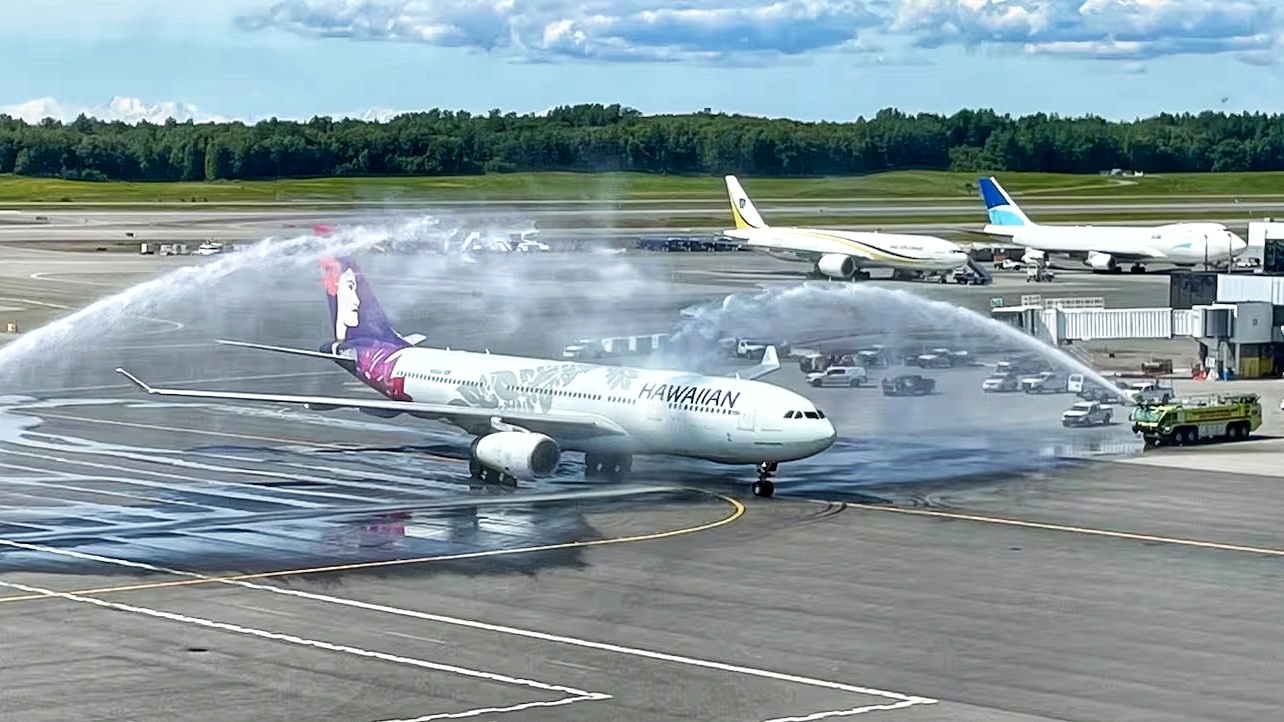
Alaska Airlines has initiated its long-haul international expansion by debuting a new business class experience, leveraging existing hard product assets from Hawaiian Airlines’ fleet. This strategic maneuver accelerates Alaska’s transformation from a strong regional carrier into a major global competitor on the West Coast. By integrating the lie-flat suites from Hawaiian’s 787 aircraft, Alaska bypasses the multi-year development cycle typically required for new cabin design and installation, allowing for rapid deployment of long-haul service to Europe and Asia.
This acquisition exemplifies a ‘fast-follower’ strategy in a capital-intensive industry. The core hard product—the physical suites—were originally designed for Hawaiian nearly a decade ago. The source notes that while Hawaiian’s vision for a premium cabin was ahead of its time, the airline ultimately lacked the financial scale and network density to fully monetize its innovation. Alaska’s move effectively validates Hawaiian’s strategic vision while providing Alaska with a proven, ready-made premium asset without incurring initial development costs and implementation risks.
Hard Product Leverage vs. Soft Product Differentiation
Alaska’s strategy hinges on a clear separation between hard product and soft product. While the physical suites remain consistent with Hawaiian’s original design, Alaska focuses on differentiating the soft product—the service, dining, and amenities—to establish its unique brand identity. This approach allows Alaska to quickly establish a premium offering without incurring the high capital expenditure associated with developing a new hard product from scratch.
The differentiation strategy utilizes specific, regionally aligned amenities to appeal to its target demographic. By introducing Filson bedding and amenity kits, Salt & Straw sundaes, and chef-curated meals by Brady Ishiwata Williams, Alaska replaces Hawaiian’s island-centric identity with a new narrative aligned with its Pacific Northwest roots. This focus on high-quality, regionally recognized partners creates an authentic premium experience that distinguishes Alaska from legacy competitors like Delta and United, even while utilizing a physical product developed by another airline.
Competitive Implications in the West Coast Market
Alaska’s expansion into long-haul international routes, particularly from Seattle, directly challenges the established dominance of legacy carriers in this critical market. The source notes Alaska’s ambition to become “Seattle’s new leader in international travel,” directly confronting Delta Air Lines, which has heavily invested in Seattle-Tacoma International Airport (SEA) as its primary transpacific gateway. Alaska’s new service to destinations like Rome and London, combined with its robust domestic network, positions it as a formidable competitor for high-yield international traffic.
Membership in the oneworld alliance is central to this competitive strategy. By expanding its international reach, Alaska strengthens the alliance’s overall position on the West Coast. This creates a more robust alternative to the Star Alliance and SkyTeam networks, which have historically dominated transpacific and transatlantic routes from major West Coast hubs. The ability to connect passengers to over 900 worldwide destinations through oneworld significantly enhances Alaska’s value proposition for corporate and premium leisure travelers.
Operational Integration and Fleet Strategy
The integration of Hawaiian Airlines’ 787 aircraft into Alaska’s fleet presents both operational challenges and strategic opportunities. While integrating a new aircraft type requires investment in pilot training, maintenance infrastructure, and supply chain adjustments, acquiring these specific aircraft provides immediate access to long-range capabilities. The rapid deployment timeline for these international routes underscores the urgency of Alaska’s strategic shift and its commitment to maximizing yield from new routes by appealing to high-value business travelers.
For stakeholders, this strategic move signals a commitment to high-growth, high-yield international markets. For oneworld alliance partners, Alaska’s enhanced international network strengthens the alliance’s position on the West Coast. For competitors like Delta and United, this move necessitates a re-evaluation of their competitive strategies in the Seattle market. The successful execution of this strategy will determine whether Alaska can effectively transition from a strong regional carrier to a truly global player, leveraging the strategic assets acquired from Hawaiian Airlines.