
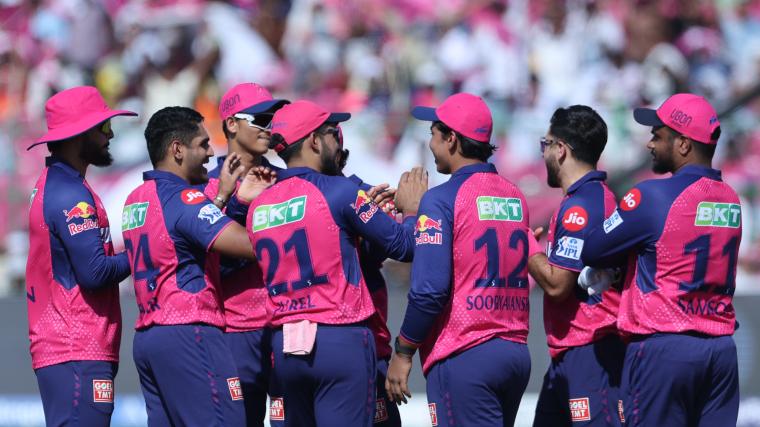
The 2026 Indian Premier League (IPL) season, marking the tournament’s 19th iteration, signals institutional maturity and strategic complexity. The structure emphasizes legacy leverage, centered around Royal Challengers Bengaluru (RCB) entering as first-time defending champions, altering the league’s psychological and commercial equilibrium.
RCB’s transition from perennial challengers to defending champions imposes a unique strategic burden: shifting from aspirational recruitment to defensive retention. This success elevates the scrutiny on their operational blueprint, testing their capacity for sustained peak performance under title-defense pressure.
Administratively, the decision to segment ten franchises into two groups based on historical title accumulation creates distinct competitive clusters designed to balance legacy dominance with parity maintenance. Group A is characterized by high density of historical success, featuring five-time winners Chennai Super Kings (CSK) and three-time winners Kolkata Knight Riders (KKR). The path through Group A inherently demands superior tactical consistency due to this concentration of championship DNA.
The strategic friction in Group A is amplified by the inclusion of single-title holders RCB and Rajasthan Royals (RR), alongside title-less Punjab Kings (PBKS). This forces direct confrontations between established dynasties and highly valued, yet unfulfilled, franchises. Every intra-group fixture carries disproportionate weight for validation, particularly for PBKS seeking their inaugural championship.
Group B is structurally anchored by the five-time champion Mumbai Indians (MI). This group mixes established dynasties with modern, data-driven expansion teams: single-title winners Sunrisers Hyderabad (SRH) and Gujarat Titans (GT). Delhi Capitals (DC) and Lucknow Super Giants (LSG), both consistent challengers without titles, complete the group, setting up a narrative tension between old guard stability and modern tactical innovation.
MI’s placement in Group B defines the group’s competitive viability and broadcast value. Conversely, the mandate for GT and LSG is to disrupt the centralized narrative through superior roster management and innovative, data-informed strategies to challenge the established order.
The tournament’s concluding timeline in May is fiscally calibrated. This timing maximizes peak domestic viewership and aligns the high-value knockout stages with sponsors’ key fiscal reporting periods. This scheduling leverage demonstrates the BCCI’s control over the international cricket calendar, securing a vital window.
The aggressive pursuit of the North American market, evidenced by focused US and Canadian broadcast strategies, highlights the IPL’s maturation into a year-round global brand, seeking high-disposable-income demographics beyond its traditional base.
The title-weighted grouping system functions as a mechanism for narrative sustainment across the long season. By distributing the most successful entities, the league mitigates the risk of early saturation and ensures competitive tension remains high, directly correlating sustained viewership with advertising revenue projections.
For RCB, 2026 is critical for brand consolidation, translating their recent title into sustainable commercial advantage and avoiding the post-championship performance slump historically seen elsewhere.
CSK and MI, in separate groups, are locked in a race for ultimate historical supremacy. Their strategic focus will likely involve expedited squad rejuvenation and integrating younger talent to secure long-term viability, maximizing the potential for a lucrative final clash.
KKR in Group A functions as a critical ‘swing factor.’ With three titles, their performance will dictate playoff qualification pathways, positioning them as a gatekeeper against the title-chasing entities in that cluster.
In Group B, the dynamic between SRH’s traditional discipline and GT’s modern balanced approach will test which franchise philosophy best adapts to the 2026 competitive environment.
The three title-less franchises—PBKS, DC, and LSG—face existential pressure. In a maturing, high-valuation league economy, their 2026 performance is crucial for satisfying ownership mandates and securing future strategic positioning.
The operational scale of the 19th edition underscores the BCCI’s institutional strength in managing complex logistics, which underpins the league’s high valuation for global capital investment.
Success in 2026 will pivot on marginal gains derived from advanced data analytics and real-time tactical adaptation, now a baseline requirement for title contention.
The fragmented global broadcast model targeting US/Canada consumption caters to diverse platform usage, offering sponsors broader demographic activation opportunities.
The structural integrity of the IPL—balancing format consistency with narrative reinvention via systems like title-based grouping—secures its status as the apex of the global cricket economy heading into its third decade.
The outcomes of the 2026 season will directly influence the upcoming cycle of media rights valuations and expansion slot capitalization, cementing the 19th edition as a critical juncture in the evolution of high-value sports entertainment.

Photo by muralinath on Pixabay.