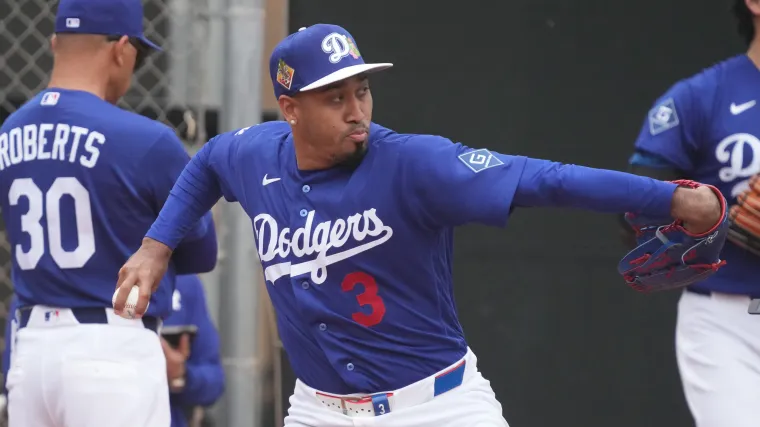
The 2026 MLB landscape has been fundamentally reshaped by the Los Angeles Dodgers’ aggressive consolidation of elite talent, most notably the strategic acquisition of former New York Mets closer Edwin Díaz. By securing Díaz on a three-year, $60 million contract, the two-time defending champions have moved beyond traditional roster building into a phase of asymmetric financial warfare. This signing addresses the marginal volatility inherent in high-leverage scenarios, effectively insulating a championship-caliber roster against late-inning variance.
Capital Allocation and Market Benchmark Disruption
The Dodgers’ procurement of Díaz follows the record-breaking signing of Kyle Tucker—a four-year, $240 million deal that reset the industry’s Average Annual Value (AAV) expectations. By deploying over $20 million annually for a reliever, Los Angeles has prioritized strikeout-dense efficiency over cost-effective committee approaches. This move not only bolsters their own bullpen depth but serves as a tactical strike against a direct National League rival, the New York Mets, by stripping them of their most dependable late-game asset.
This financial offensive suggests a widening gap in market leverage. While the Mets attempted to retain Díaz, they were ultimately outmaneuvered by the Dodgers’ superior organizational momentum and willingness to sustain high AAV benchmarks for specialized roles. This investment is justified by the postseason necessity of a ‘shutdown’ closer, where the psychological and statistical value of a sub-2.00 ERA pitcher provides a significant deterrent to opposing lineups.
Advanced Metrics and Operational Synergy
Díaz enters the 2026 campaign following a 2025 season defined by elite peripherals: a 1.63 ERA and a 38% strikeout rate. Despite a suppressed save total in New York—largely a byproduct of limited opportunities—his underlying efficiency remains the gold standard for high-leverage relievers. In Los Angeles, Díaz transitions to a target-rich environment where a potent offense and a rotation led by Yoshinobu Yamamoto are projected to generate a higher volume of save situations.
The operational logic here is bat-miss ability. A 38% strikeout rate minimizes ball-in-play variance, which is critical in the high-stakes environment of Dodger Stadium. Analysts from MLB.com overwhelmingly predict Díaz will lead the National League in saves, a projection predicated on the synergy between his individual dominance and the Dodgers’ organizational capacity to maintain leads through the eighth inning. This move represents the final structural piece in a bullpen designed to eliminate the ‘one-inning failure’ risk that has historically plagued deep postseason runs.
Branding Synergy and the ‘Narco’ Phenomenon
Beyond the diamond, the acquisition of Díaz is a masterstroke in brand integration. The migration of his iconic entrance theme, ‘Narco’ by Blasterjaxx and Timmy Trumpet, to Chavez Ravine transforms the ninth inning into a premium entertainment asset. This cultural transition, heavily covered by outlets like NBC Los Angeles, enhances the Dodgers’ broadcast value and fan engagement metrics. By co-opting one of baseball’s most recognizable atmospheric rituals, the Dodgers have further solidified their status as the premier destination for both performance excellence and sports spectacle.
Institutional Stability and Future Trajectory
The three-year duration of Díaz’s contract ensures institutional stability through the peak window of the Ohtani-Betts-Yamamoto era. For the Mets, the departure of Díaz creates a structural void that necessitates a complete re-evaluation of their bullpen hierarchy. For the broader MLB market, the Dodgers’ activity in 2026 establishes a new blueprint: the hyper-concentration of established, high-velocity talent to mitigate the inherent unpredictability of the sport. As the season approaches, the focus remains on whether any National League contender can match this level of comprehensive roster optimization.