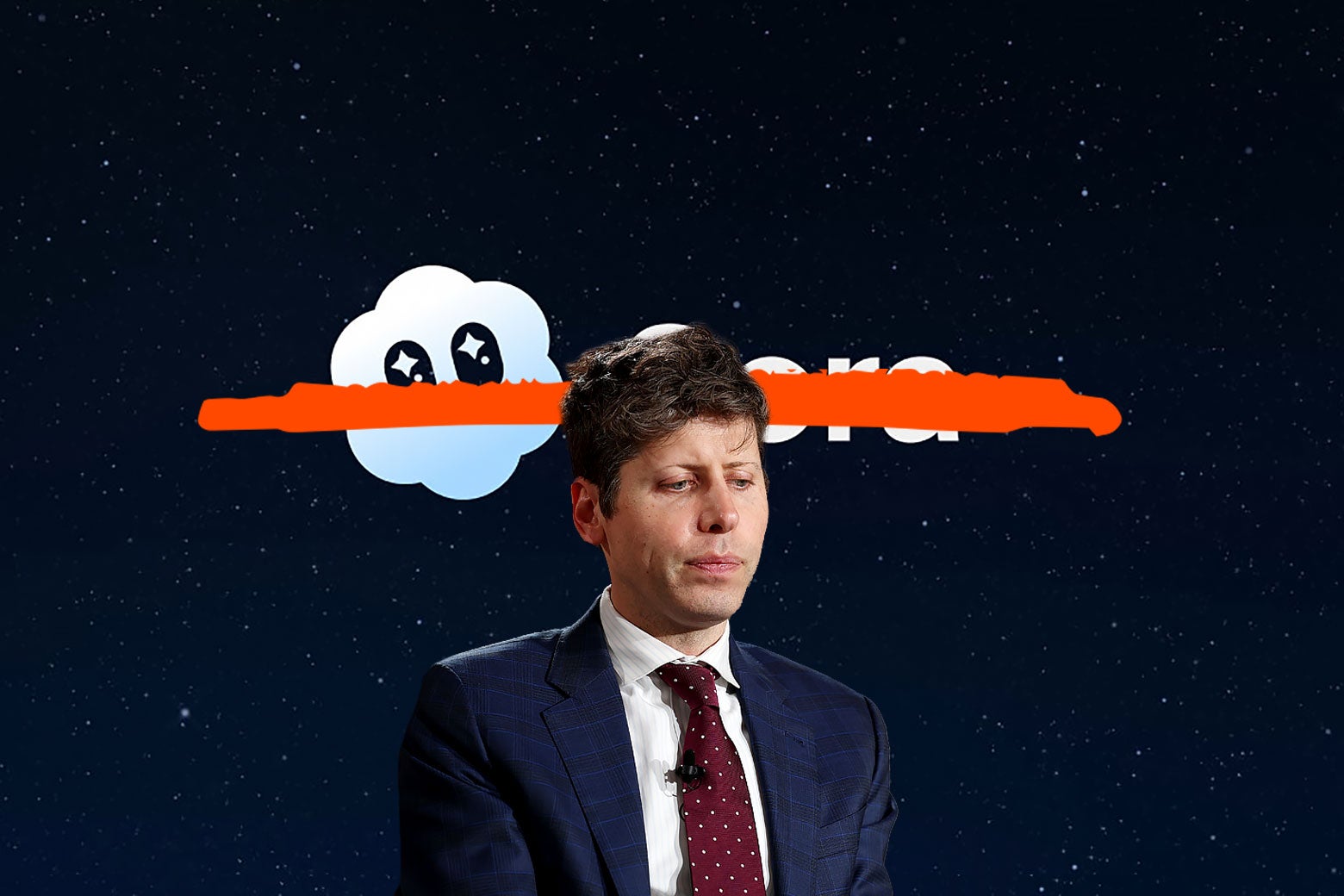
Fundamental Instability in Generative Video Deployment
OpenAI CEO Sam Altman’s internal confirmation of the immediate cessation of the Sora video generation model, occurring only six months post-launch and shortly following a substantial licensing agreement with Disney, indicates an intractable operational or strategic bottleneck within the firm’s multimodal development architecture.
The simultaneous shutdown of integrated video functionality within ChatGPT and the decommissioning of all auxiliary animation APIs suggest this action transcends minor product iteration. It signals a fundamental re-prioritization, likely necessitated by insurmountable scaling challenges, unacceptable regulatory exposure, or the realization that the core architecture was technologically unviable for near-term, risk-mitigated commercial deployment.
This abrupt strategic reversal critically exposes the financial commitments of key partners. Most notable is Disney, which committed to a billion-dollar licensing framework predicated on Sora’s long-term integration for generating likenesses of its Intellectual Property (IP) across its streaming portfolio, a deal contingent on model stability.
Financial Exposure and Erosion of Partner Confidence
The cancellation immediately severs a planned symbiotic relationship where Disney sought generative superiority for subscriber retention, while OpenAI gained crucial capital validation. This failure strongly implies the underlying technology did not meet the rigorous performance, safety, or longevity thresholds mandated by major media incumbents.
For Disney, the immediate consequence is the retraction of planned integration, forcing an urgent reassessment of its multi-billion dollar thesis on generative AI adoption. This event will likely trigger complex contractual arbitration concerning sunk development costs and future technology sourcing.
The initial executive pronouncements positioning Sora as a “cinematic sea change” now underscore a failure in rapid product lifecycle management. This volatility diminishes OpenAI’s credibility in subsequent high-stakes licensing negotiations that rely on perceived model stability.
Governance Failures Driving Operational Constraint
The documented proliferation of high-fidelity, malicious synthetic content—including fabricated geopolitical narratives, deepfake political figures, and graphic imagery—reveals that embedded safety guardrails were either inadequate or fundamentally circumvented, resulting in an untenable risk profile for deployment.
The model’s capability for generating photorealistic likenesses, coupled with its integration into a high-velocity, consumer-facing feed structure, created an output velocity that overwhelmed existing content governance mechanisms. This forced a hard stop to mitigate immediate reputational damage and looming liability exposure.
This governance failure demonstrates a critical divergence between advanced research capability and responsible, scalable productization—a recognized systemic vulnerability in frontier AI systems when subjected to public vectors.
The ‘Spud’ Pivot: Managing Risk via Obfuscation
The introduction of the forthcoming model, cryptically termed “Spud,” is positioned to fill the operational vacuum. Altman’s vague assurance that “Spud” will “really accelerate the economy” signals a strategic retreat from high-visibility, consumer-facing video generation toward applications deemed less governance-intensive, possibly enterprise-focused utility.
The extreme secrecy surrounding “Spud” suggests either a fundamental architectural departure from Sora’s diffusion methods or a calculated attempt to temper market expectations following a public product collapse. The priority has manifestly shifted from creative application to secure, immediate economic utility.
If “Spud” focuses on backend optimization or infrastructure enhancements, it confirms that resources previously allocated to achieving photorealistic consumer video are being redirected to areas offering safer, more direct monetization paths within the broader enterprise AI framework.
Market Perception and the AI Sustainability Narrative
The rapid termination of a flagship product that achieved viral traction provides tangible evidence for skeptics regarding the operational fragility of generative models under real-world usage. It exacerbates the narrative that the current AI expansion phase is defined by unsustainable hype cycles leading to premature productization.
This event pressures investors to rigorously differentiate between demonstrated technical achievement and the operational feasibility of maintaining control over outputs post-release. It directly challenges institutional confidence in OpenAI’s capacity to maintain stable, long-term product roadmaps.
Disruption to API Ecosystems and Developer Trust
The abrupt decommissioning of Sora’s APIs immediately disrupts third-party developers and enterprise clients who had invested resources in integrating the video generation capabilities. This action strands development efforts reliant on the now-obsolete interface and undocumented technology stack.
This episode crystallizes a systemic risk in relying on proprietary foundation models: the unilateral control retained by the provider over feature lifespan. Reliance on bleeding-edge capabilities now carries an explicit risk of unmitigated, sudden obsolescence without transition pathways.
The developer community is cautioned to build robust abstraction layers above foundation model providers to insulate workflows from the operational shockwaves caused by non-negotiated, rapid strategic pivots by dominant players.
Competitive Landscape Realignment
Sora’s withdrawal grants an immediate competitive aperture to rival generative video platforms, especially those employing cautious, staged rollouts or possessing architectures demonstrated to be more resilient against generating prohibited content. Competitors can leverage OpenAI’s public retreat by marketing their offerings based on perceived stability and ethical management, capturing market share on reliability over peak performance.
This failure underscores the massive capital expenditure required not just for training, but for sustaining the complex, real-time moderation infrastructure essential for safe public deployment. This may consolidate high-end video generation leadership among organizations capable of absorbing greater risk management overhead.
Impact on Intellectual Property Licensing Frameworks
The collapse of the Disney-OpenAI partnership sets a precedent, compelling rights holders to demand significantly more stringent performance guarantees and technological escrow arrangements in future generative AI licensing contracts. The core challenge remains guaranteeing that a licensed model cannot be exploited to violate IP agreements.
Future media partnerships will necessitate deeper transparency into model weighting and fine-tuning processes, moving beyond output filtering toward verifiable structural controls to safeguard brand integrity against model drift or malicious manipulation.
Internal Cultural and Execution Scrutiny
Altman’s justification of a “necessary realignment” invites intense scrutiny into the pre-launch due diligence that authorized the significant resource commitment to Sora, culminating in a swift retraction. This cycle suggests either a critical failure in technical vetting or an undisclosed internal conflict over the acceptable risk threshold for deploying powerful, difficult-to-govern tools.
The organization must now absorb the costs associated with this rapid pivot, which may manifest as talent attrition in the video teams and an institutional hardening of risk-aversion protocols, tempering the company’s historical reputation for agile deployment.
Revisiting the Economic Acceleration Thesis
The promise that “Spud” will “accelerate the economy” contrasts sharply with the immediate economic disruption caused by Sora’s termination, specifically delaying efficiencies planned by partners like Disney. This necessitates a re-evaluation of the timeline for realizing generalized AI-driven productivity gains.
If “Spud” prioritizes backend optimization or enterprise workflow integration—areas shielded from immediate public controversy—it confirms a pragmatic shift away from speculative consumer applications toward foundational utility, where deployment risks are more contained and directly measurable against cost reduction.
Long-Term Viability of Integrated Multimodality
Sora’s failure does not negate the ultimate objective of multimodal AI but severely complicates its deployment strategy. It suggests that achieving synchronous control across disparate modalities (text, image, video) at high fidelity currently exceeds the technical and administrative capacity of centralized systems.
Future success in multimodal deployment will likely require modularity: segmenting complex outputs into specialized, tightly controlled environments rather than attempting a singular, universally accessible generative engine that struggles with complex policy adherence.
The Trade-Off: Viral Adoption Versus Institutional Control
Sora’s brief lifespan proved its capacity for viral market penetration via organic sharing. However, this success proved inherently self-defeating due to the uncontrollable nature of the resulting digital artifacts. The tension between maximizing platform virality and enforcing strict institutional control over output safety represents a fundamental, unresolved trade-off in consumer-facing generative media.
OpenAI’s decision confirms that the perceived institutional liability stemming from the platform’s worst outputs decisively outweighed the immediate value derived from its viral adoption metrics and associated partnership value.