
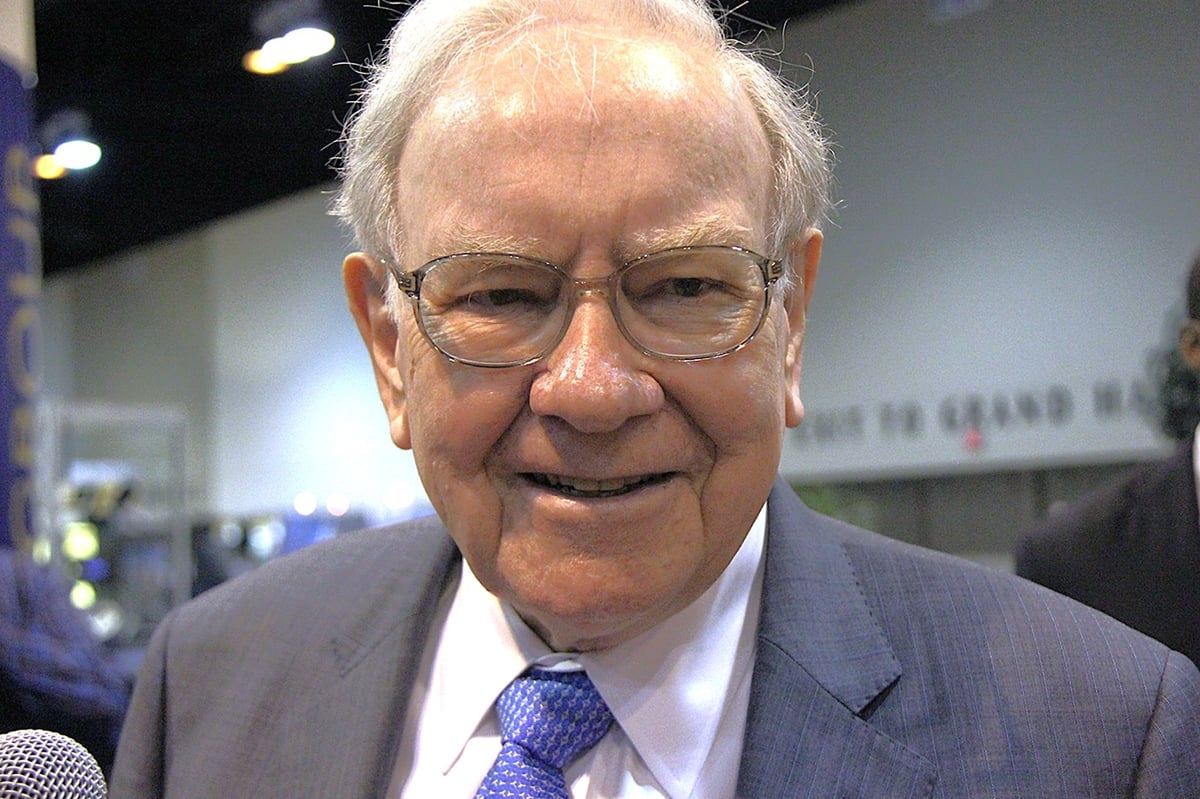
The 2025 retirement of Warren Buffett transitioned Berkshire Hathaway from a founder-centric vehicle into an institutionalized powerhouse defined by codified capital allocation. As the 2026 market faces a severe software sector valuation recalibration, the conglomerate’s adherence to ‘moat-driven’ fundamentals serves as a critical stabilization mechanism. This strategic continuity mitigates the volatility inherent in the post-Buffett era, emphasizing cash-flow durability over speculative growth.
Systemic Resilience During the 2026 Software Rout
The 2026 software rout has exposed the frailty of high-multiple firms lacking tangible unit economics. In contrast, Berkshire’s portfolio—refined through decades of rigorous filtering—remains insulated via high-conviction positions in consumer-facing enterprises with significant pricing power. This defensive posture is not merely a legacy preference but a deliberate institutional response to the current capital flight toward quality and operational transparency.
By prioritizing businesses capable of sustaining dividend growth while navigating tech-sector contractions, Berkshire signals a preference for ‘structural alpha.’ This approach provides a psychological and financial floor for shareholders, proving that the organization’s core philosophy—valuing durable competitive advantages—remains intact despite the leadership transition. The 2026 environment validates this selective framework, as investors seek refuge from the erosion of software-as-a-service (SaaS) multiples.
Apple: The Hegemonic Anchor of the Portfolio
Apple continues to function as Berkshire’s primary structural hedge, characterized by a unique synthesis of premium hardware and high-margin recurring services. The iOS ecosystem, encompassing approximately 2.5 billion active devices, creates a formidable switching-cost barrier. This installed base facilitates a captive revenue model that is increasingly decoupled from traditional hardware upgrade cycles, providing a buffer against the broader tech downturn.
Financially, Apple’s shift toward service-oriented revenue has transformed its margin profile, allowing for a 12-year streak of dividend increases. For Berkshire, this consistent capital return represents the ideal realization of Buffett’s original thesis: a business that requires minimal capital expenditure relative to its massive cash-flow generation. In 2026, Apple’s ability to maintain buybacks and dividends amidst sector volatility reinforces its status as a core defensive asset.
The AI Opportunity and Edge-Computing Dominance
In 2026, Apple is uniquely positioned to capitalize on ‘Edge AI’—the integration of artificial intelligence directly into the device hardware. Unlike competitors burdened by astronomical cloud infrastructure costs, Apple leverages its 2.5 billion devices as distributed processing nodes. This allows for the deployment of AI-enhanced features that protect user privacy while driving high-margin App Store and subscription engagement.
This strategic leverage differentiates Apple from pure-play software firms vulnerable to the 2026 rout. By embedding AI into the fabric of the iOS user experience, Apple creates new monetization layers without expanding its customer acquisition costs. For Berkshire Hathaway, this technological evolution justifies the ‘forever’ holding period, as the ecosystem’s utility scales vertically through software innovation rather than horizontally through speculative expansion.
Long-Term Value Creation and Market Consequences
The institutionalization of Berkshire’s investment principles ensures that the organization remains focused on multi-decade value creation. The 2026 software correction has recalibrated market expectations, favoring companies with proven ‘brand power’ and fiscal discipline—qualities Apple exemplifies. This shift reinforces the relevance of the value-investing model in a post-founder landscape.
Ultimately, the success of Berkshire Hathaway in 2026 hinges on its largest holdings’ ability to manage operational constraints while scaling innovation. Apple’s dual-threat capability—as both a consumer staple and a technological innovator—remains the linchpin of the portfolio. As the market moves forward, the synergy between Berkshire’s disciplined capital management and Apple’s ecosystem dominance will likely define the benchmark for resilience in a volatile global economy.

Photo by rjcoates on Pixabay.