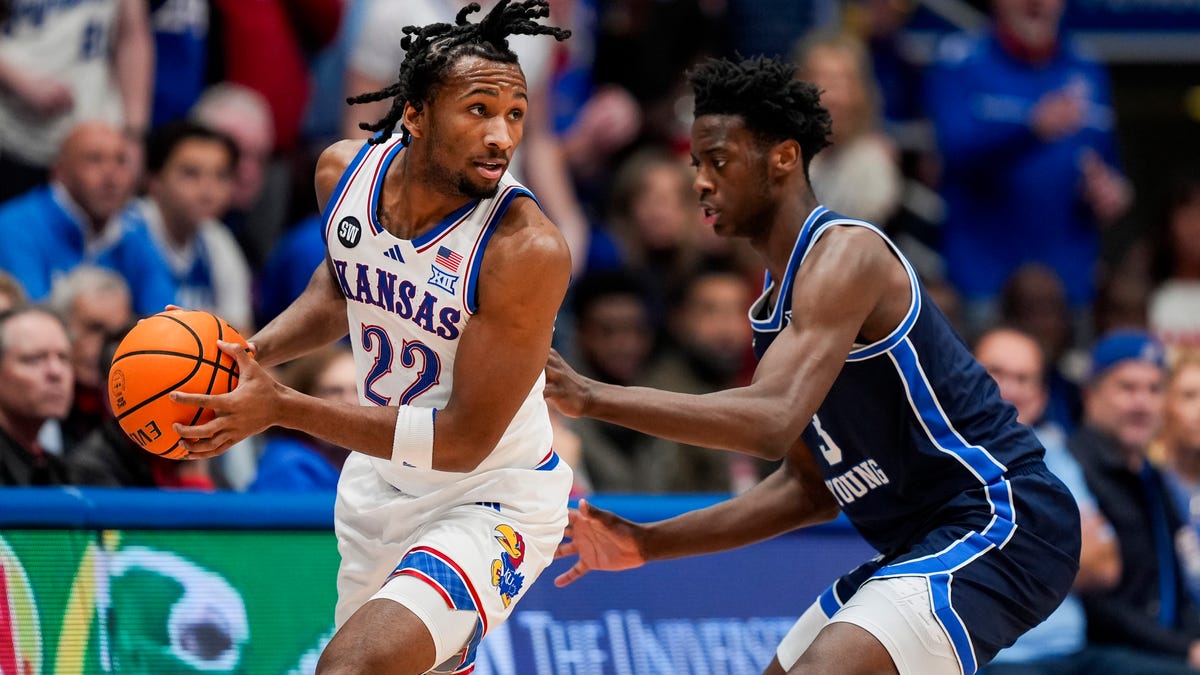
The emerging consensus solidifying around the trio of Darryn Peterson, AJ Dybantsa, and Cameron Boozer for the 2026 NBA Draft represents a critical inflection point for NBA franchises navigating the 2025-26 season. The perceived stability of this top tier is now actively influencing organizational decision-making regarding asset allocation and competitive timelines, signaling an accelerated commitment to rebuilding.
Strategic Implications of Consensus Certainty and Accelerated Tanking
The clear identification of a franchise-altering ceiling in these three prospects provides executives with a concrete baseline for evaluating current roster construction deficiencies. This certainty has directly catalyzed heightened ‘tank mode’ behaviors across the league.
Front offices are demonstrating an elevated tolerance for short-term competitive underperformance, operating under the premise that the projected Return on Investment (ROI) for securing a top-three pick in 2026 substantially outweighs immediate season costs. This reflects a high degree of faith in the predictive scouting models for this specific class.
Talent Profiling and Archetypal Value within the Apex
The established hierarchy features distinct skill profiles, demanding tailored team-building alignments:
- AJ Dybantsa: Valued highly for elite athleticism and raw scoring potential, drawing comparisons to high-ceiling creators like Tracy McGrady, despite current noted deficiencies in handle or perimeter shooting consistency. This emphasizes the NBA premium placed on translatable physical tools.
- Darryn Peterson: Profile centers on a natural, more immediate offensive scoring impact capability.
- Cameron Boozer: Represents a high-IQ, versatile archetype adaptable across diverse offensive schemes.
This diversity allows executives to move beyond generic positional needs toward securing specific functional requirements dictated by pre-existing roster gaps.
Roster Fluidity and Franchise-Specific Calculus (e.g., Chicago Bulls)
Teams like the Chicago Bulls, projected in the top-ten discussion, face complex calculus due to immediate roster volatility following aggressive trade deadline acquisitions. The performance and retention trajectory of these short-term assets drastically complicate two-year projections for positional needs.
Consequently, the immediate priority shifts from filling a single hole to acquiring the highest-value talent available, prioritizing long-term core anchoring over short-term positional optimization.
The Foundational Value of Koa Peat
The inclusion of Arizona freshman Koa Peat in internal discussions highlights the enduring value placed on interior efficiency and foundational strength, even in a perimeter-heavy league trend. Peat’s documented high field goal percentage (54.2% in the Big 12) offers tangible, high-percentage scoring that mitigates the projection risk associated with higher-variance perimeter players.
Drafting prospects from established, high-major programs like Arizona also suggests a comfort level with developmental trajectories already validated within elite collegiate structures.
Algorithmic Influence on Scouting Investment
The integration of AI models (e.g., Microsoft Copilot AI) to generate mock drafts formalizes an algorithmic baseline for early evaluation, reinforcing consensus metrics derived from traditional scouting. This computational validation influences resource deployment.
Scouting capital is reportedly being strategically redirected away from the presumed top slots to intensely focus on the ‘wide-open’ range immediately following the consensus picks. The objective is identifying undervalued assets capable of outperforming their draft position, maximizing ROI where the talent gap post-top-three is reportedly substantial.
Market Dynamics: Leverage and the NCAA Crucible
Aggressive organizational tanking post-All-Star break is a direct market reaction to the perceived scarcity of elite talent outside the Peterson-Dybantsa-Boozer grouping. Franchises are actively trading short-term competitiveness for enhanced probability in the 2026 lottery.
This dynamic shifts leverage toward teams holding tradable assets, who can extract maximum value from desperate contenders seeking to accelerate rebuild timelines via current-year capital acquisition.
March Madness as the Final Validation Crucible
The NCAA Tournament serves as the high-leverage proving ground. Performance under single-elimination pressure provides crucial data for bridging the gap between collegiate production and NBA readiness. A strong showing solidifies a prospect’s floor, while notable underperformance introduces volatility, particularly for players with identified skill limitations (like Dybantsa’s shooting).
The institutional visibility for programs like BYU, Kansas, and Duke linked to these freshmen creates marketing opportunities tied directly to demonstrated NBA readiness.
Historical Patterns and Developmental Risk Assessment
This current concentration of perceived generational talent triggers predictable, aggressive front-office maneuvering years in advance. The collective commitment to rebuilding contrasts with periods featuring deeper but less top-heavy classes.
The reliance on historical comparisons (e.g., Dybantsa to McGrady) establishes a high-level ceiling expectation for organizational blueprints. However, this strategy inherently raises the developmental risk: failure to cultivate a player benchmarked against an elite comparison incurs a disproportionately high organizational cost given the capital invested in securing that specific selection.
The league is segmenting its focus: intense resource commitment to secure the perceived elite few, and a decentralized, opportunistic approach to identifying value across the remaining draft spectrum.