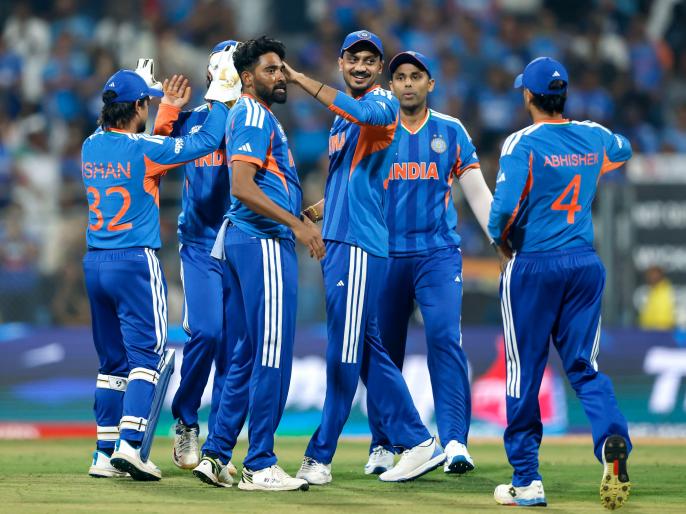
The final week of February confirmed a critical inflection point in the T20 World Cup 2026 Super 8 stage, where early high-variance results have mathematically constrained established contenders, particularly India.
Super 8 Openers: The NRR Catastrophe
India’s qualification certainty evaporated following a decisive 76-run defeat against South Africa in Ahmedabad. This result immediately cratered India’s Net Run Rate (NRR) to a deficit of -3.800, imposing a performance surcharge on subsequent fixtures.
This operational deficit gained immediate significance when juxtaposed against the West Indies’ emphatic 107-run victory over Zimbabwe at Wankhede. The scale of the WI win established a substantial NRR buffer, effectively increasing the required performance ceiling for India to finish in the top two of the group.
NRR Constraint Mechanics: External Dependencies
The format’s dependency on NRR means India has lost control of its destiny. South Africa’s dominant opening win solidifies their position, leaving India competing directly against the NRR-advantaged West Indies for the single remaining semi-final slot, contingent on India winning both remaining matches.
This forces the tactical mandate away from simple point accumulation toward aggressive, high-margin victories—a strategy inherently correlated with increased risk of batting or bowling collapse. The strategic rigidity exposed by the initial loss demands rapid tactical recalibration.
Qualification Scenarios: Self-Determination vs. External Variables
If South Africa secures victory in even one of their remaining games, India’s path becomes exceedingly narrow, likely requiring them to beat West Indies by a margin large enough to overturn both initial deficits simultaneously. This structural pressure mandates maximizing the NRR differential against Zimbabwe in Chennai.
The fixture against Zimbabwe is now a must-win, high-margin game; failure to achieve a significant run-rate swing will render the final encounter against the West Indies a probable elimination contest, regardless of the result.
Competitive Landscape and Format Critique
The early exit trajectory observed for Australia underscores the unforgiving nature of the Super 8 calculation system, where one significant variance loss can negate accumulated group-stage strength.
The West Indies’ efficiency in capitalizing on early conditions (Wankhede pitch/opponent weakness) sets an execution benchmark that India must now match across their remaining fixtures in Chennai and Kolkata, highlighting venue adaptability as a key competitive differentiator.
Strategic Implications of Upset Volatility
Zimbabwe’s performance volatility prevents predictability, ensuring that even matches against lower-ranked teams carry severe NRR ramifications. This high-stakes environment elevates the pressure on coaching staff to ensure flawless execution under stress.
The narrative shift—from India’s expected dominance to a public ‘semifinal push’—reflects a failure in Super 8 phase adaptation, placing intense scrutiny on pre-tournament preparation regarding resilience to early-stage shock results.
Tournament Integrity and Structural Analysis
The T20 WC 2026 structure inherently penalizes performance dips severely when they occur against direct qualification rivals. The Wankhede performance by the West Indies demonstrates superior operational capitalizing ability.
The reliance on ‘multiple external results’ signifies a loss of control for the Indian campaign. Long-term analysis of this format suggests that this structure may inadvertently incentivize conservative play in earlier rounds to protect NRR, potentially undermining competitive excitement if margins become too defining.
Organizational Response and Performance Ceiling
The immediate focus for the Indian establishment is mitigating the psychological fallout of the South Africa loss while engineering the tactical efficiency required for high-margin wins. The organizational integrity will be tested by the demand for near-perfect execution under terminal pressure.
Furthermore, global expansion indicators, such as Canada’s record century, signal a widening talent pool. This mandates that established nations invest strategically in talent identification to maintain competitive parity in future cycles, as upsets against associate nations now carry disproportionate NRR penalties.