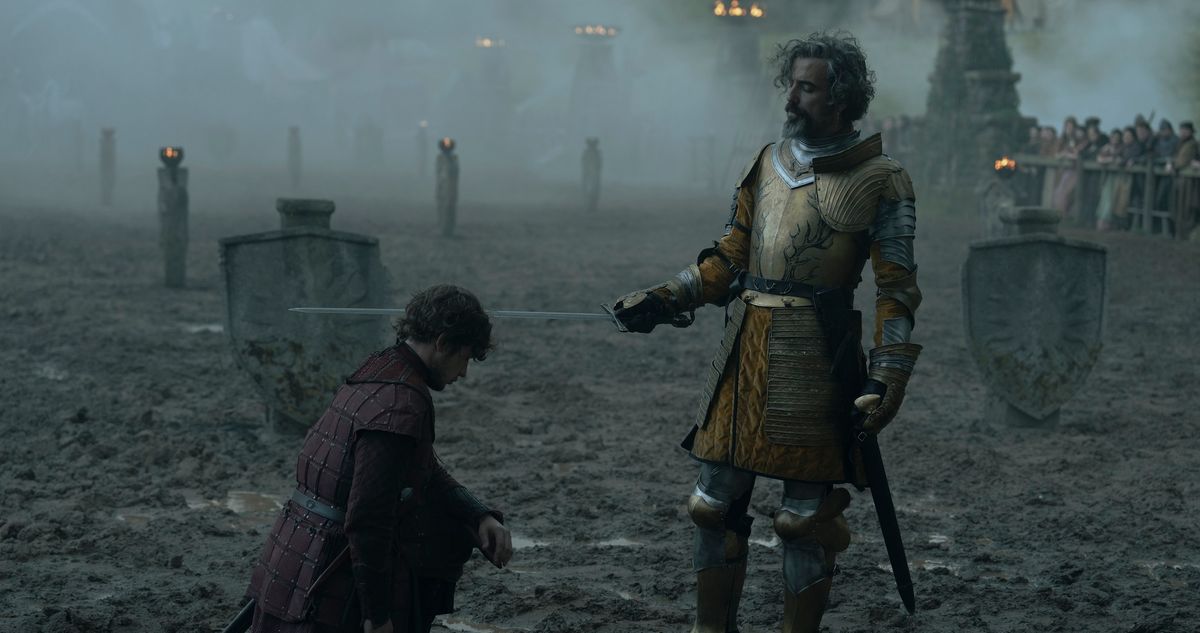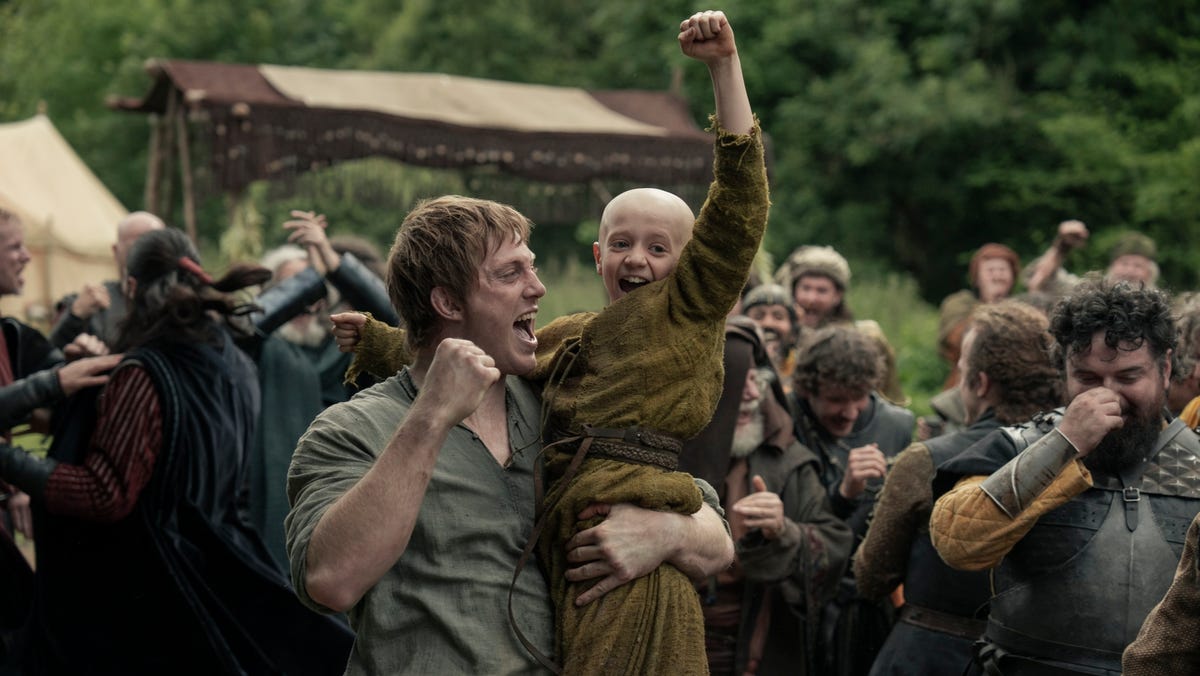
The reported performance metrics for HBO’s A Knight of the Seven Kingdoms, averaging 13 million viewers per episode, provide empirical evidence validating a strategic pivot toward lower-stakes, character-focused narratives within high-investment universes.
This success directly challenges the prior industry axiom that monetizing established intellectual property (IP) in prestige television necessitates continuous, world-ending conflict and massive production expenditure.
Strategic Validation of Focused Narrative Economics
The calculated decision to adapt the localized, character-driven novellas of Tales of Dunk and Egg—absent the existential threats common to Game of Thrones—establishes a scalable, potentially more profitable model for franchise extension.
This operational structure inherently reduces capital expenditure tied to large-scale battle sequences and complex world-building required for high-stakes conflicts. This lowers the financial barrier to entry for developing tangential series within sprawling canons.
This emerging preference mirrors market signals seen in other premium content, such as Marvel’s Wonder Man, reinforcing the thesis that targeted character development can drive premium viewership independently of universal jeopardy.
Studios managing vast IP portfolios can leverage this data to optimize ROI by substituting spectacle saturation with narrative intimacy, achieving significant returns with comparatively constrained budgets.
Character Dependency and Narrative Constraint
The operational success of the series is directly correlated with the established emotional capital invested in Ser Duncan the Tall and Egg. Without a global threat, engagement relies entirely on interpersonal dynamics and localized political maneuvering intrinsic to the source material.
This places exceptional performance leverage on casting quality and character arc execution, as audience investment is tethered specifically to the protagonists’ personal journeys, a stark contrast to narrative structures dependent on the fate of the realm.
The viewership data suggests that, for this IP, established character affinity successfully transcends the requirement for escalating, world-imperiling stakes.
Implications for Source Material Leverage and Continuity Risk
A key structural advantage lies in the pre-existing narrative roadmap provided by George R. R. Martin’s novellas. The availability of The Sworn Sword and The Mystery Knight offers an immediate, low-risk content pipeline for subsequent seasons.
However, this finite source material introduces a critical serialization challenge: the canonical structure enforces a near-total rotation of the supporting ensemble between installments.
Key figures who anchored Season One’s audience investment, such as Ser Lyonel Baratheon or Prince Maekar Targaryen, are largely excised from the next two novellas. This necessitates careful stakeholder management regarding audience attachment to specific performances and supporting arcs.
Managing Audience Attrition During Ensemble Transition
This mandated narrative transition exposes the production to significant risk of viewership attrition. The departure of beloved supporting actors requires a clear communication strategy from the network, defining the adaptation’s episodic, character-rotation nature.
Failure to set expectations regarding the structural break between installments risks alienating viewers who anchor their commitment to established supporting ensembles rather than the core duo.
Capital Allocation and Production Efficiency in the Prequel Landscape
The series’ setting—nearly a century before Game of Thrones and preceding the Targaryen dragon wars—represents a calculated move into a less capital-intensive production envelope than House of the Dragon.
Operating in a period largely devoid of high-cost aerial combat and massive armies allows for a more focused deployment of capital, prioritizing directorial craft over visual effects volume.
This financial efficiency, confirmed by high viewership, establishes a sustainable model for exploiting established IP without succumbing to the escalating cost structures that destabilize mega-franchises.
The value proposition shifts decisively from expenditure on spectacle to precision in narrative execution, offering a viable operational tempo for long-term franchise management.
Bridging the Political Fallout
The immediate dramatic tether to the established political landscape is the fallout from Season One’s climax: the death of Prince Baelor Targaryen and the subsequent implication for Maekar Targaryen as the heir apparent.
While the next novella minimizes royal involvement, this unresolved political tension provides the necessary backdrop against which Dunk and Egg’s personal trials will unfold, ensuring the series maintains narrative context within Westeros.
Competitive Benchmarking for IP Portfolio Management
The success of this focused, lower-overhead approach sets a competitive benchmark for other conglomerates managing vast fantasy/sci-fi universes. It empirically proves that deep lore knowledge can supersede the need for continuous, epoch-defining conflict.
This validates a portfolio strategy where multiple, smaller narrative streams can coexist, each targeting a specific facet of the established world and audience segment, de-risking investment reliance on monolithic tentpoles.
External Constraints: Authorial Pacing
The production’s long-term pipeline is structurally contingent on George R. R. Martin’s output schedule, particularly the completion of The Winds of Winter, which precedes the potential for further novellas.
This authorial dependency creates a fundamental bottleneck, contrasting with the internal production cycles of television. The decision to proceed rapidly with the known Sworn Sword material reflects a commercial imperative to maintain momentum despite external scheduling constraints.
Long-term viability rests on the audience’s demonstrated loyalty to the central duo across mandated narrative and ensemble shifts dictated by the source material’s episodic structure. The success of the next installments will determine if this scaled-down prestige model is structurally sustainable.