Ramadan 2026: Institutional Fragmentation and Operational Risk for Global Businesses
The determination of the Ramadan 2026 start date highlights a significant challenge in global institutional coordination. While Saudi Arabia’s moon-sighting committee confirmed February 18 as the start date, the Council of Shia Muslim Scholars of North America announced February 19 based on a lack of verified sightings in their region. This discrepancy, rooted in varying interpretations of traditional moon-sighting methodology versus modern astronomical calculation, introduces substantial operational and logistical friction for multinational corporations and global supply chains. The divergence between key markets necessitates localized strategies for human resources, logistics, and supply chain management, replacing the possibility of a unified global approach.
The Operational Impact of Varying Start Dates and Fast Durations
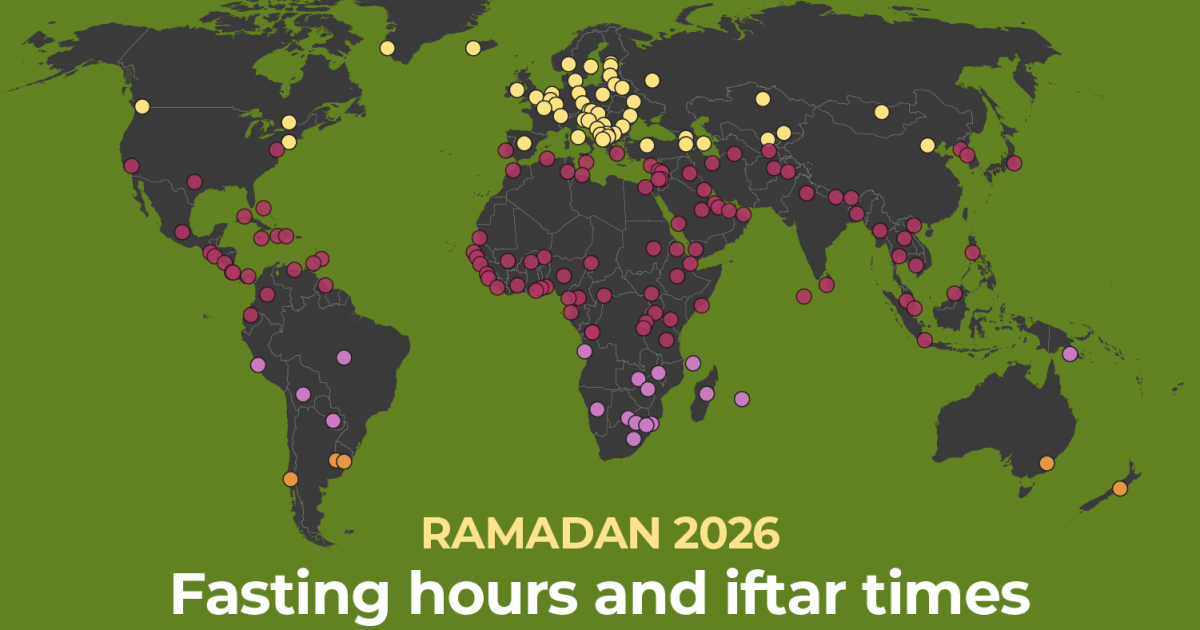
The differing start dates create immediate operational complexities for businesses operating across multiple jurisdictions. Multinational corporations must manage disparate schedules for employee accommodations, supply chain logistics, and market-facing activities. This fragmentation necessitates flexible human resources policies to maintain compliance with local observances without compromising productivity. The source data confirms a one-day difference between Saudi Arabia and North America, requiring dynamic operational planning. Beyond the initial start date, the source data highlights significant variations in fasting duration, ranging from 11.5 to 15.5 hours depending on geographical location. This range directly impacts labor productivity and resource management. In regions with longer fasting hours, companies must implement adjustments to shift schedules and energy consumption patterns to mitigate potential decreases in output during daylight hours. Conversely, for nearly 90 percent of the world’s population in the Northern Hemisphere, fasting hours will be shorter this year, a consequence of the lunar calendar shift, requiring a different set of adjustments to efficiency models.
Market Dynamics and Strategic Planning for Consumer Industries
The annual shift in the lunar calendar, causing Ramadan to begin 10 to 12 days earlier each year, necessitates dynamic strategic planning for consumer-facing industries. The timing of Ramadan relative to other major holidays and seasonal cycles impacts consumer behavior, retail sales, and advertising spending. The source identifies Eid al-Fitr as beginning on March 18, 2026. This pre-Ramadan spending surge, driven by preparations for fasting and subsequent Eid celebrations, requires businesses in the consumer packaged goods (CPG) sector to adjust inventory forecasting and marketing campaigns to capture demand at a different point in the annual cycle. The shift also impacts energy consumption patterns, as consumption typically increases during the pre-dawn meal (Suhoor) and the evening meal (Iftar), requiring utility companies to adjust load forecasting and resource allocation. For multinational corporations, these economic consequences extend to corporate social responsibility (CSR) initiatives, which must be aligned with increased philanthropic activity during the holy month.
Methodological Conflict: Tradition vs. Astronomical Science
The process of determining the start date reveals a tension between traditional religious authority and modern communication channels. The source references announcements made via social media platforms, specifically mentioning a post on X (formerly Twitter) confirming the sighting. This demonstrates the increasing role of digital media in disseminating religious information, potentially accelerating communication but also amplifying institutional divergence. The source data documents a conflict between institutional bodies where the North American council based its differing determination on the lack of verified sightings by the naked eye. While the council referenced astronomical data to justify its decision on the following day, this hybrid approach creates structural challenges for global synchronization. The decision to base the start date on physical sighting rather than purely astronomical calculation introduces a variable element that prevents universal synchronization, complicating operational planning for global organizations that rely on consistent scheduling across-region scheduling.