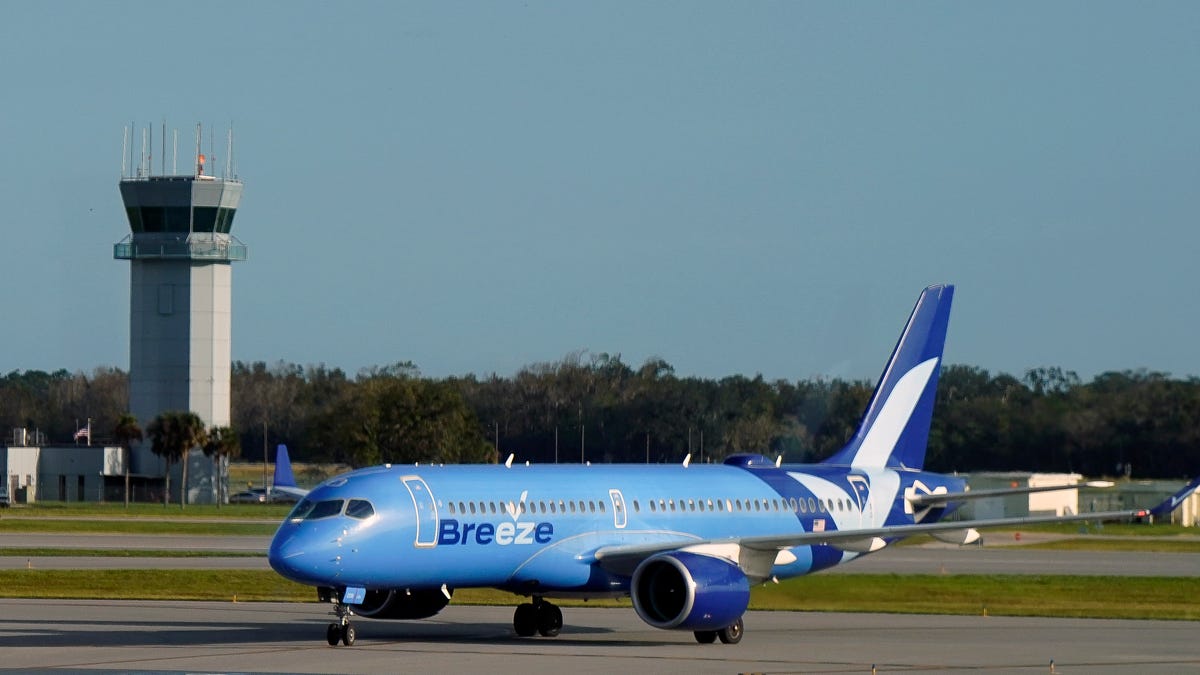
The launch of nonstop service between Rhode Island T.F. Green International Airport (PVD) and Cancun, Mexico, by Breeze Airways on February 14, 2026, represents a landmark strategic entry into the international market. This inaugural direct flight not only adds a coveted leisure destination but fundamentally shifts PVD’s role as a secondary gateway, leveraging its inherent operational efficiencies to capture high-yield leisure traffic historically diverted to more congested Northeast hubs. For Breeze Airways, a low-cost carrier (LCC), this move is a calculated expansion of its hub-bypass strategy, extending its value proposition beyond domestic routes.
Breeze Airways’ Strategic International Foray: A Data-Driven Pilot Program
Structuring the Cancun route as an eight-week test program, concluding in April, underscores Breeze Airways’ disciplined approach to capital allocation and risk management. This limited duration is critical for gathering robust performance data on international ground handling, regulatory compliance, and cross-border operational costs without committing to year-round overhead. By operating a once-weekly Saturday frequency, the airline meticulously aligns its capacity with the traditional Saturday-to-Saturday booking cycles prevalent in the Mexican hospitality sector, thereby optimizing seat occupancy and maximizing revenue per available seat mile (RASM).
David Neeleman’s identification of Breeze as the “hometown carrier” in Providence highlights a deliberate institutional alignment between the airline and the Rhode Island Airport Corporation. This symbiotic relationship aims to cultivate brand loyalty by offering local convenience, a compelling alternative to the broader, often less direct, networks of legacy carriers at major hubs. The successful validation of this pilot phase is poised to influence Breeze’s future appetite for similar point-to-point international routes, potentially solidifying PVD’s position as a specialized international departure point for the broader New England region.
Competitively, this direct route directly challenges the dominance of established carriers that traditionally funnel international traffic through primary hubs. Breeze’s offering eliminates the logistical friction of layovers, a significant value proposition for the family and leisure demographic. PVD’s efficient operational footprint, characterized by shorter TSA wait times and rapid gate access, serves as a force multiplier for Breeze’s low-cost model, enhancing passenger experience while maintaining a lean unit cost structure essential for LCC profitability.
PVD’s Operational Advantage: Catalyzing LCC International Growth
The logistical advantages cited by early travelers, such as the 15-minute transition from arrival to gate, exemplify the structural strengths of T.F. Green International Airport as an agile secondary gateway. For Breeze Airways, these efficiencies translate directly into faster aircraft turnaround times and reduced ground-handling complexities compared to Tier-1 airports. Such operational agility is paramount for an LCC striving for high aircraft utilization rates, especially when navigating the more complex regulatory environments of international expansion.
Under Chief Executive Iftikhar Ahmad, PVD management is strategically positioning the airport as a viable international alternative by actively securing such partnerships. The re-establishment of international service, after a multi-year hiatus, is a critical milestone for the airport’s long-term growth strategy and its capacity to attract vital federal and state infrastructure investment. This route serves as a crucial proof-of-concept for PVD’s ability to seamlessly handle international customs and border protection requirements for the new generation of narrow-body, long-range aircraft favored by LCCs.
Furthermore, the timing of the launch, precisely aligned with the peak winter vacation season, strategically maximizes the capture of discretionary spending from the regional affluent demographic. Data indicating travelers from North Kingstown and students from local institutions like La Salle Academy suggests the route successfully taps into a localized market that prioritizes time-efficiency. This demographic segment, while potentially less price-sensitive than traditional LCC passengers, is highly responsive to the convenience of avoiding the transit complications associated with larger regional airports, offering favorable yield opportunities for Breeze.
Mitigating Passenger Leakage: Economic Impact and Market Dynamics
One of the most significant strategic consequences of this new service is the substantial reduction of “passenger leakage”—a phenomenon where Rhode Island residents travel to out-of-state airports for international departures. By retaining these travelers within the local ecosystem, PVD captures crucial ancillary revenues from parking, concessions, and airport fees that would otherwise be lost to competing facilities. This retention is vital for the financial health of the airport and generates a positive broader economic impact on the Rhode Island hospitality and service sectors.
The eight-week operational window also functions as a strategic hedge against the inherent volatility of fuel prices and fluctuating demand in the international leisure market. By limiting exposure to a specific seasonal peak, Breeze can maintain robust load factors and mitigate the yield dilution that often characterizes off-peak periods. This tactical flexibility is a hallmark of Neeleman-led airlines, which prioritize point-to-point routes that bypass the traditional inefficiencies of hub-and-spoke models.
Stakeholders in the Mexican tourism industry also stand to gain significantly from this direct pipeline to the New England market. Cancun’s established position as a premier destination for U.S. travelers is further reinforced by these new direct links, which effectively lower the barrier to entry for seasonal vacationers. The successful performance of the PVD-CUN route could potentially trigger a competitive response from other airlines, leading to a recalibration of pricing and service levels across the regional market as carriers vie for a share of the lucrative winter getaway segment.
Future Trajectory: PVD and Breeze’s Vision for International Connectivity
The consistent rhetoric from both Breeze Airways and T.F. Green officials explicitly positions this Cancun route as a precursor to a more robust international network. Iftikhar Ahmad’s mention of “additional international routes to come” signals the airport’s proactive efforts to court further expansion, likely targeting other high-demand Caribbean or North American destinations. This forward-looking stance is intrinsically contingent upon the operational success and sustained profitability of the current test program, which serves as a critical benchmark for future institutional commitments and investment.
For Breeze Airways, this international foray out of PVD serves as a vital test of its brand scalability and operational maturity. Expanding beyond domestic point-to-point service demands a more sophisticated level of operational coordination, encompassing international tax compliance, currency management, and enhanced passenger support systems. Successfully navigating these complexities within a controlled, eight-week environment provides the airline with a scalable blueprint for methodical expansion into other secondary markets across the United States.
The broader aviation industry will closely monitor the performance of this route as a key indicator of the viability of secondary-to-international point-to-point models. If Breeze can demonstrate sustained profitability on the PVD-CUN corridor, it could incentivize other LCCs to reconsider their traditional reliance on major hubs for international service. This trend could lead to a significant decentralization of international travel, offering more direct options for travelers in mid-sized markets and alleviating strain on the nation’s largest aviation hubs.
The PVD-Cancun Route: A Blueprint for Decentralized International Travel
As the PVD-Cancun service concludes its initial run in April, the comprehensive data generated will offer invaluable insights into the market’s depth and the operational feasibility of international LCC flights from secondary gateways. The immediate impact represents a clear win for regional connectivity and a significant brand-building exercise for Breeze Airways. The long-term implications, however, will hinge on the carrier’s ability to strategically convert this seasonal momentum into a sustainable, potentially year-round, international presence.
The partnership between Breeze Airways and T.F. Green International Airport exemplifies a modern, mutually beneficial approach to airport-airline relations, where growth is intrinsically linked to the identification of underserved niche markets. By acutely focusing on the specific needs of the Rhode Island traveler—namely, speed, direct access, and convenience—Breeze has successfully carved out a competitive advantage that legacy carriers may find difficult to replicate without significant structural changes. The Cancun route is, therefore, more than a seasonal flight; it is a strategic experiment poised to shape the future of regional international aviation.