The formal designation of the Ramadan 2026 start date by Saudi Arabian authorities functions as a critical stabilization mechanism for global markets and nearly two billion practitioners. By verifying the crescent moon sighting on Tuesday, February 17, the Saudi Supreme Court has effectively synchronized the Hijri calendar with international administrative and logistical timelines. This centralized decree, disseminated via digital-first platforms, illustrates the evolution of traditional religious authority into a facilitator of global predictability, essential for cross-border labor planning and supply chain management.
The Strategic Centrality of Saudi Jurisprudence
Saudi Arabia’s role in determining the lunar cycle’s onset remains a cornerstone of Islamic coordination, directly influencing state holidays and financial market closures throughout the MENA region. The verification of the moon on February 17 dictates that the first day of fasting commences on Wednesday, February 18, 2026. This process mitigates the volatility inherent in decentralized lunar observations, allowing multinational corporations to recalibrate operational hours and utility demands with precision. By providing a definitive baseline, Riyadh reinforces its status as the primary arbiter of the Hijri calendar, a role increasingly vital as the lunar cycle shifts deeper into the Northern Hemisphere’s winter months.
Institutional Fragmentation: The French Schism
In contrast to the clarity provided by Riyadh, the French Muslim landscape exhibits significant structural friction. The dispute between the Grande Mosquée de Paris and the Conseil Français du Culte Musulman (CFCM) regarding a February 18 or 19 start date highlights a deeper crisis of representative legitimacy. This institutional rivalry creates administrative hurdles for the French Muslim population, complicating the coordination of communal activities and workplace accommodations within a secular state framework. This lack of synchronization undermines the collective social standing of these bodies and reflects a growing demand for unified governance that current structures fail to provide.
Operational Dynamics and Labor Productivity
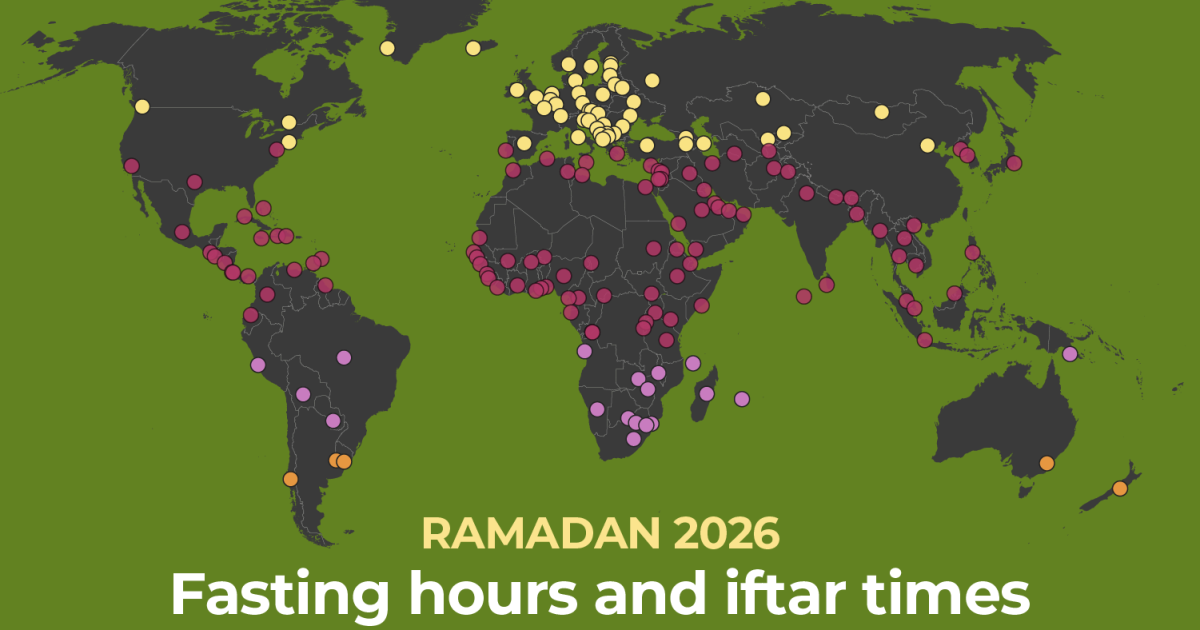
The 2026 fasting window presents a geographical variance in duration, peaking at approximately 15.5 hours in specific Northern latitudes. This February timeframe results in shorter daylight intervals compared to the grueling summer fasts of the previous decade, yet it still necessitates a rigorous recalibration of workplace safety and performance metrics. Industries requiring high physical output must account for the physiological impact of prolonged fasting to maintain operational efficiency. Furthermore, the focus on taqwa (God-consciousness) drives a significant shift in consumer behavior, pivoting toward charitable contributions and evening-centric retail activity.
Economic Significance of the 33-Year Lunar Rotation
The 10rd-to-12-day annual advancement of the Islamic calendar ensures that Ramadan rotates through the Gregorian seasons every 33 years. The 2026 alignment places the holy month in a period of reduced thermal stress for the Northern Hemisphere, which traditionally correlates with stabilized energy consumption during daylight hours. However, the hospitality and retail sectors must prepare for a surge in activity surrounding the anticipated start of Eid al-Fitr on March 18, 2026. Organizations that fail to integrate these lunar shifts into their long-term fiscal planning risk marginalization within the rapidly expanding global halal economy.
Conclusion: The Structural Impact of Lunar Cycles
Ramadan 2026 serves as a case study in how ancient lunar traditions intersect with modern global systems. While Saudi Arabia provides the necessary framework for economic and religious synchronization, the discord in France serves as a warning regarding the risks of institutional fragmentation. Ultimately, the transition of the fast into the winter months offers a unique set of operational parameters, emphasizing the need for clear, unified guidance to navigate the complex interplay of faith, technology, and global commerce.