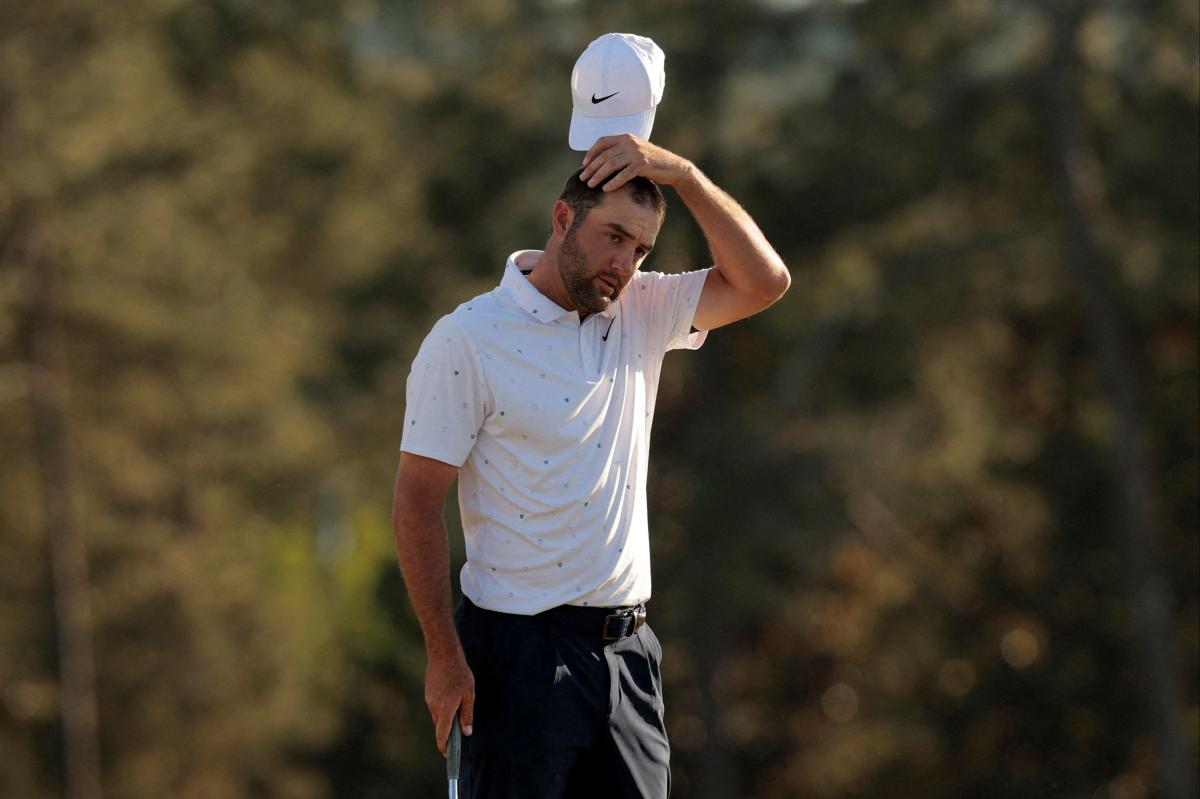
The 2026 Masters Tournament concluded with a sophisticated interplay between elite technical execution and institutional course management. Scottie Scheffler, the world’s top-ranked golfer, achieved a statistical milestone unparalleled in the modern era, yet ultimately conceded the green jacket to Rory McIlroy by a single stroke.
Statistical Anomalies and Historical Parity
Scheffler’s weekend performance—a combined 133—represents an unprecedented surge in efficiency following a volatile second round. By navigating the final 36 holes without a single dropped shot, Scheffler became the first player since 1942 to maintain a bogey-free card through the tournament’s conclusion. This feat, encompassing nine birdies and an eagle, illustrates a level of strategic discipline that typically ensures victory, yet it was neutralized by an early-tournament deficit.
The 12-shot gap Scheffler faced entering Saturday necessitated a high-variance strategy. While his record-breaking efficiency nearly inverted the leaderboard, historical data confirms that such substantial margins are rarely surmountable, regardless of a player’s technical form or momentum.
Operational Critique: Agronomic Consistency vs. Competitive Equity
Despite his historical achievement, Scheffler’s post-round analysis focused on the Masters Committee’s agronomic decisions during the second round. He identified an atypical softness in the greens on Friday afternoon—a departure from the firm, fast conditions that define the tournament’s identity. This lack of consistency, Scheffler argued, created a bifurcated playing field that penalized those in the afternoon wave.
In major championship golf, course setup is the primary lever for regulating scoring. When moisture levels deviate from established norms, the strategic advantage held by precision ball-strikers is often diluted. Scheffler’s inability to break par on Friday served as the catalyst for his runner-up finish, highlighting how a narrow window of operational variance can dictate the trajectory of a four-day event.
The McIlroy-Scheffler Duopoly and Market Impact
The final leaderboard reinforces the current duopoly at the summit of professional golf. Rory McIlroy’s triumph, fueled by a sustained ‘flow state’ and a six-shot cushion, withstood Scheffler’s historic charge. This rivalry continues to drive significant media valuation and sponsorship engagement, positioning both athletes as the definitive anchors of the sport’s commercial landscape.
For Scheffler, this marks his first runner-up finish at Augusta in seven years. His willingness to publicly challenge institutional oversight regarding course setup signals a shift in player-administrator dynamics, where elite competitors are increasingly vocal about the standards of competitive equity.
Institutional Implications for Augusta National
A critique of this magnitude from the world number one necessitates an internal review of course preparation protocols. Augusta National prizes its autonomy and meticulous standards; however, Scheffler’s feedback suggests a perceived lapse in the Friday setup. Ensuring that the course provides a balanced challenge across all waves remains vital for the tournament’s prestige.
Ultimately, the 2026 Masters will be defined by the tension between individual excellence and external variables. Scheffler’s bogey-free streak remains a benchmark of resilience, even as it serves as a case study in how institutional decisions can impact the highest levels of athletic competition.