
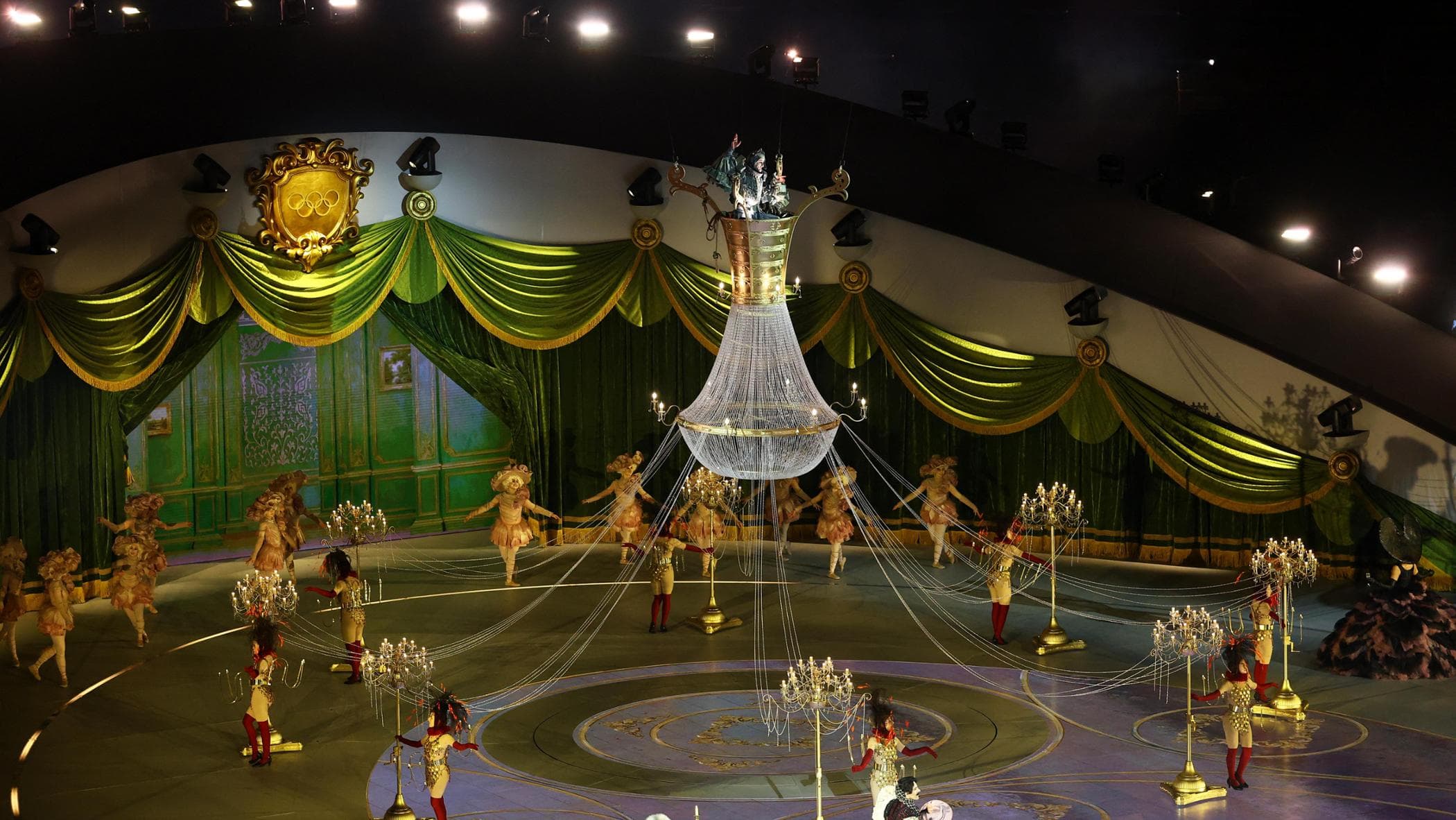
The conclusion of the Milano Cortina 2026 Winter Games at the Arena di Verona institutionalizes a pivot toward heritage-driven event architecture. By repurposing a UNESCO World Heritage site for the closing ceremony, the organizing committee prioritized cultural capital over traditional stadium-centric models, establishing a new benchmark for the integration of historic monuments into global broadcast environments.
This strategic utilization of the first-century amphitheater, titled Beauty in Action, served as a commercial and cultural manifesto. It positioned aesthetic value not merely as a backdrop, but as a primary driver of the Games’ narrative, bridging the gap between alpine athleticism and Italy’s urban artistic heritage.
KPI Benchmarking and Institutional Validation
Italy’s competitive performance yielded a record thirty medals, a 50% increase over the twenty-medal high-water mark set at Lillehammer 1994. This ten-medal delta validates a long-term technical investment in winter disciplines and provides the Italian National Olympic Committee (CONI) with substantial leverage for future institutional funding and infrastructure development.
The presence of Premier Giorgia Meloni and Senate President Ignazio La Russa underscored the political significance of this success, signaling unified state endorsement of the Olympic project’s execution and its contribution to national soft power.
Heritage Management and Operational Innovation
The transformation of the Arena di Verona into a functional Olympic venue demonstrates the capacity of ancient infrastructure to support high-density technical requirements. Leveraging the venue’s acoustic properties for a digital broadcast sets a precedent for host cities seeking to optimize existing cultural assets rather than investing in redundant new builds.
This dual-purpose utilization extends to the Paralympic Games, with the Arena scheduled to host the opening ceremony on March 6. This strategy maximizes the return on temporary infrastructure investments while maintaining a consistent narrative across both Games.
Logistical Integration and Urban Sustainability
The competitive phase concluded with a 2-1 overtime victory for the United States over Canada in the men’s hockey final, reinforcing North American dominance in the current cycle. However, the operational highlight was the Canadian team’s use of Milan’s metropolitan transit system. This integration of elite athletes into public infrastructure reflects a shift toward sustainable, logistically transparent Games management that reduces the event’s urban footprint.
Historical Continuity and the Handover to France 2030
Symbolic continuity was maintained through the 1994 Lillehammer cross-country relay team—De Zolt, Albarello, Vanzetta, and Fauner—who carried the Olympic flame into the Arena. This gesture aligned the 2026 record with Italy’s historical milestones, reinforcing a narrative of generational excellence. Personal narratives, such as the silver medal won by Tomasoni in honor of Matilde Lorenzi, added emotional depth to these technical metrics.
The handover to France 2030, overseen by Giovanni Malagò and Kristy Coventry, initiates a new administrative cycle for the IOC. France inherits a landscape redefined by Milano Cortina’s decentralized, heritage-focused model. As the flame is extinguished, the focus shifts to auditing the financial and environmental sustainability of this multi-city hosting template, which the IOC has validated as a viable blueprint for the future of the Winter Games.