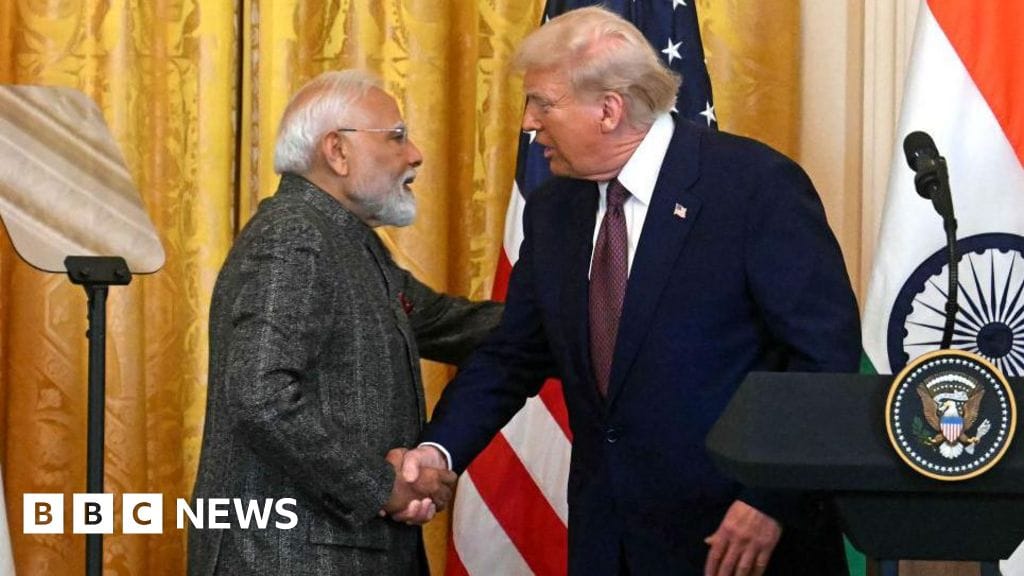
President Donald Trump announced on Monday a significant reduction in tariffs imposed on Indian goods. This policy adjustment is directly linked to an agreement whereby India has committed to ceasing its purchases of oil from Russia. The announcement indicates a strategic linkage between bilateral trade policy and international energy market dynamics.
The reduction in tariffs from a previous level of 50% to 18% has been characterized as a response to this commitment. This action signals a shift in trade relations, with the United States government using its tariff authority as leverage in broader geopolitical and energy security discussions. The agreement implies a complex negotiation process involving economic incentives and strategic foreign policy objectives.
Trade Policy and Tariff Mechanisms
The application of tariffs by the United States is a tool of economic policy designed to influence international trade flows and protect domestic industries. Tariffs act as a tax on imported goods, increasing their cost to consumers and businesses in the importing country. This measure can serve multiple objectives, including reducing trade deficits, promoting domestic production, or exerting diplomatic pressure.
In this instance, the reduction of reciprocal tariffs on Indian goods from 50% to 18% represents a substantial recalibration of trade policy. This administrative action by the executive branch directly alters the cost structure for goods traded between the two nations. The reduction is presented as an exchange for a specific policy commitment from India, illustrating the use of trade concessions as a bargaining chip in international relations.
Geopolitical and Energy Market Implications
India’s agreement to end Russian oil purchases introduces a significant element of geopolitical strategy into the trade discussion. Oil procurement is a critical component of national energy security and economic stability for India. Historically, India has been a substantial purchaser of Russian oil, a relationship that has developed under various global energy market conditions and geopolitical alignments.
The commitment to cease these purchases suggests a potential recalibration of India’s foreign energy policy and its relationships with major energy-producing nations. This move could have ripple effects across global energy markets, influencing supply dynamics and pricing. The United States’ role in facilitating this shift highlights the interconnectedness of trade policy, energy security, and international diplomacy.
Administrative and Structural Context
The decision to lower tariffs is an administrative action executed by the U.S. executive branch, specifically within the purview of trade and economic policy implementation. This process involves reviewing existing trade agreements and imposing or adjusting tariff rates based on presidential authority and stated policy objectives. The administration’s ability to unilaterally alter tariff levels underscores the executive’s significant power in managing international trade relationships.
The institutional framework governing U.S. trade policy allows for such adjustments, often involving consultations with relevant government agencies and consideration of national economic and security interests. The announcement implies that these considerations led to the conclusion that the agreement with India served U.S. policy goals, justifying the tariff reduction. The process itself, while not detailed in the source, inherently involves interagency coordination and the application of established trade negotiation protocols.
Market Reception and Future Considerations
The relief noted in Asia following the announcement suggests that the prior tariff levels were perceived as detrimental to regional trade and economic activity. Tariffs can disrupt established supply chains, increase production costs, and lead to price volatility, impacting businesses and consumers. A reduction in these tariffs can therefore be seen as a move to stabilize or improve trade conditions.
However, the phrase “hope and uncertainty” suggests that the long-term implications of this agreement remain a subject of observation. The practical implementation of ending Russian oil purchases may present challenges for India, and the sustainability of the trade agreement could be influenced by evolving global energy markets and geopolitical developments. The administrative nature of the agreement means its effectiveness will be monitored through ongoing trade data and diplomatic engagement.