
During an ESPN College GameDay broadcast originating from Provo, Utah—framed primarily by the non-conference fixture between BYU and Notre Dame—the analytical panel exposed a fundamental philosophical divide regarding the Big 12 clash between the Oklahoma State Cowboys and Houston Cougars. The deliberation crystallized two competing strategic doctrines: high-variance quarterback ceiling versus low-variance, systemic program discipline.
The Strategic Divide: Personnel Upside vs. Structural Floor
Former Heisman Trophy winner Desmond Howard anchored his projection on Oklahoma State, identifying quarterback Drew Mestemaker as the game’s primary operational catalyst. Howard’s thesis posited that Mestemaker’s passing leverage and downfield aggression would decisively stress Houston’s secondary. Kirk Herbstreit aligned with this personnel-driven evaluation, projecting that individual perimeter execution would ultimately dictate the game’s pace and outcome.
Conversely, Nick Saban and Pat McAfee prioritized organizational structure over isolated production, endorsing Houston. Saban highlighted head coach Willie Fritz’s roster as one of the most mechanically sound and undervalued units in the national landscape. Rather than evaluating individual skill-position discrepancies in isolation, Saban argued that Fritz’s baseline principles—turnover suppression, positional leverage, and procedural efficiency—create an operational floor capable of blunting spread offenses on the road.
The Analytical Weight of Steve Young’s 3-2 Projection
The tactical discourse was further polarized by celebrity guest picker and Pro Football Hall of Fame quarterback Steve Young, who projected Houston to win via an anomalous 3-2 scoreline. While rhetorically hyperbolic, Young’s projection served as a functional diagnosis of extreme offensive friction, forecasting a game defined entirely by defensive front dominance, field-position management, and offensive operational breakdown.
Young’s thesis directly counterbalanced Howard’s faith in Mestemaker. Operating an offense on the road against a Fritz-coached defense demands rapid pre-snap recognition and sustained red-zone efficiency. Young’s defensive projection underscored the systemic risk facing a developing quarterback when interior protection degrades and opposing coordinators systematically eliminate early reads, compressing the game into a territorial battle.
Big 12 Implications: Parity and Program Infrastructure
The divergent picks on national television reflect the broader structural reality of the reorganized Big 12. In a conference characterized by high competitive parity, traditional prestige metrics no longer guarantee road success. Established programs like Oklahoma State require steady operational execution from signal-callers like Mestemaker to neutralize disciplined home underdogs capable of controlling game flow.
Ultimately, the GameDay segment established the definitive analytical tension of this conference encounter: whether singular offensive playmaking can consistently overcome disciplined, clock-controlling defensive architecture.
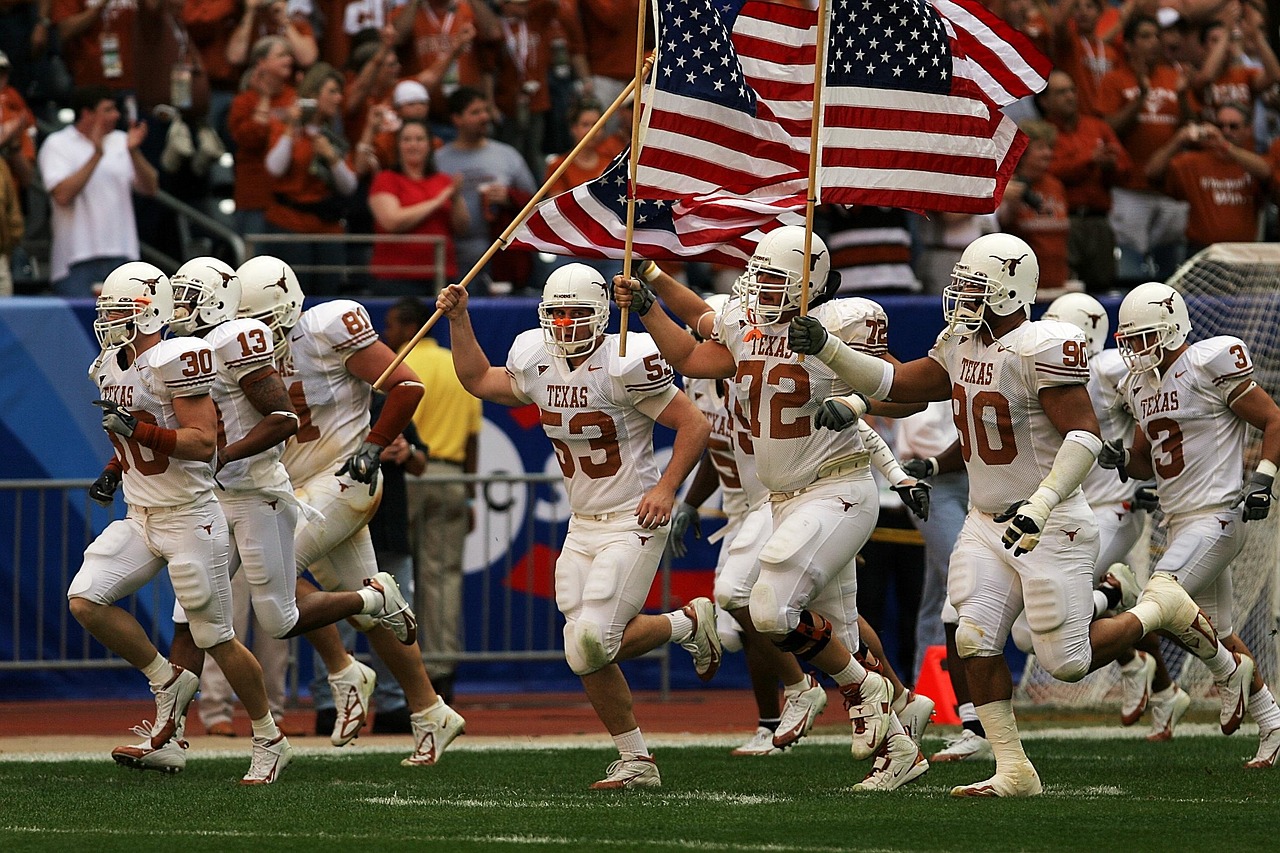
Cover photo by KeithJJ on Pixabay.