
The Kennedy Center in Crisis: Executive Pressure, Governance Failures, and the Battle for Cultural Heritage
The John F. Kennedy Center for the Performing Arts in Washington, D.C., a revered living memorial, is embroiled in an escalating crisis that fundamentally challenges its future. This intense public and political contention dissects critical issues of governance, executive influence, and accountability, ultimately raising existential questions about the preservation of a national cultural landmark.
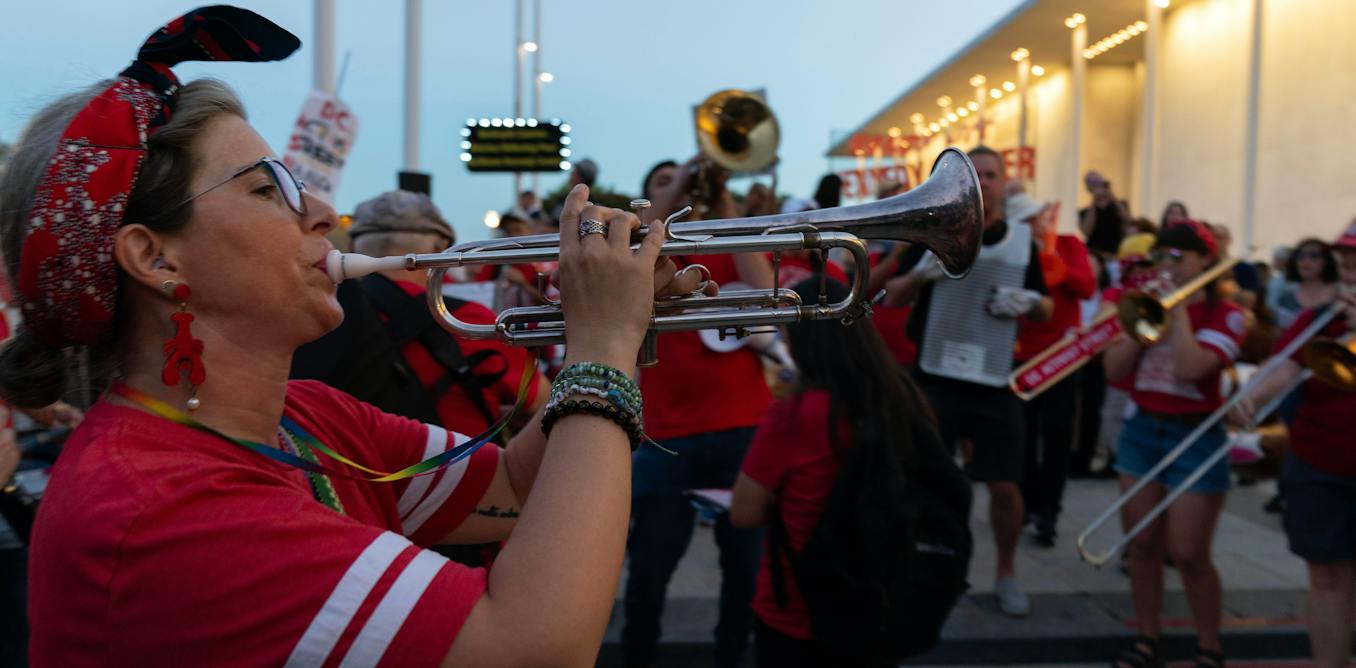
A pivotal moment in this unfolding drama occurred on September 16, 2026, when President Donald J. Trump was photographed aboard Air Force One reviewing a poster stating “Kennedy Center DEMOLISH…” This image was widely interpreted as a direct and provocative signal of executive intent regarding the institution’s fate. Its rapid, viral dissemination across public platforms significantly amplified pre-existing tensions, swiftly galvanizing public sentiment and culminating in widespread protests by arts enthusiasts at the center’s grounds within days.
Operational Threats and the Erosion of Institutional Integrity
Since President Trump’s return to office, the Kennedy Center has faced intensifying scrutiny over its operational viability and future. Fundamental questions now challenge its existence: whether it will remain a vibrant cultural hub or face closure, active programming or dormancy, critical repairs or dismantling, solvency or bankruptcy. This operational precarity is exacerbated by a contentious proposition to incorporate President Trump’s name into its branding, which is more than a marketing decision; it represents a profound redefinition of the institution’s identity, potentially alienating long-standing patrons and altering its historical narrative, thus impacting donor relations and public perception.
Adding to these challenges, an ongoing infrastructure closure dispute directly undermines the Center’s stability. Whistle-blowers allege that previously shelved repairs are a significant contributing factor, exposing a systemic, long-term neglect of critical maintenance that questions the efficacy of past and present institutional stewardship.
Governance Breakdown and the Crisis of Accountability
At the core of the Kennedy Center dispute is a fundamental crisis in governance: who truly possesses the authority to determine the future of a national cultural landmark, and who ensures accountability for these decisions? Despite insights from arts management scholars suggesting clear official answers, the practical application of these multi-layered frameworks—involving federal oversight, a board of trustees, and a congressional charter—appears to be under considerable strain. These structures are explicitly designed to ensure both operational autonomy and fidelity to public trust and the institution’s foundational cultural mission, developed over half a century as a premier platform for world-class performing arts and educational programs.
The whistle-blower allegations regarding shelved critical infrastructure repairs serve as direct evidence of a potential breakdown within these governance layers. Such deferrals indicate a critical failure in strategic asset management, resource allocation, or funding advocacy—all core responsibilities of institutional oversight. These governance failures extend beyond immediate operational issues, severely eroding public confidence and jeopardizing the long-term financial health of the institution, as donors and philanthropic organizations rigorously scrutinize an institution’s stewardship before committing vital capital.
Executive Overreach and the Vulnerability of Cultural Autonomy
A critical dimension of this dispute stems from concerns that executive power is systematically dismantling traditional checks and balances designed to protect cultural institutions like the Kennedy Center from undue influence. This perspective suggests a dangerous shift where executive directives could bypass established institutional safeguards, directly impinging on the autonomy of federally chartered cultural entities.
The President’s review of the “DEMOLISH…” poster was more than a symbolic gesture; it served as a potent test of public and institutional reaction, creating an environment of profound uncertainty that influences internal decision-making and external stakeholder engagement. Such actions exemplify how weakened checks and balances can render institutions vulnerable to pressures regarding funding, programming, leadership, and even their foundational mission.
The insistence on incorporating President Trump’s name into the Kennedy Center’s branding precisely illustrates this tension. This proposed change transcends mere marketing; it risks fundamentally redefining the institution’s identity, potentially alienating core patrons, altering its historical narrative, and profoundly impacting its ability to attract philanthropic support while maintaining artistic integrity. An institution’s brand embodies its promise to stakeholders; perceived political appropriation can jeopardize this trust and its financial sustainability.
Stakeholder Exposure and the Power of Public Advocacy
The potential closure, dismantling, or profound alteration of the Kennedy Center presents significant and far-reaching exposure for a diverse array of stakeholders. Artists, performers, and production staff face direct losses in employment and creative opportunities, thereby debilitating the broader performing arts ecosystem. Audiences, who rely on the center for world-class cultural experiences and extensive educational programs, stand to lose a vital community and educational resource crucial for arts literacy and talent development.
The rapid and robust public reaction, epitomized by widespread protests from arts advocates, emphatically underscores the deep societal value attributed to the Kennedy Center as a cultural anchor. This spontaneous public mobilization functions as a critical, informal check on executive and institutional power, demonstrating the potent leverage of collective civic engagement in safeguarding cultural assets.
Economically, the ripple effects of a major cultural institution’s closure would extend far beyond its immediate confines, impacting local businesses, tourism, and ancillary services within the surrounding urban economy. Furthermore, this dispute starkly reveals the fragility of public-private partnerships that are essential for sustaining large cultural venues. Uncertainty regarding consistent federal support or the threat of political interference can significantly deter private donors and corporate sponsors who prioritize stability, mission alignment, and freedom from partisan entanglement.
Setting Precedents: National Cultural Policy and Institutional Autonomy
The unfolding crisis at the Kennedy Center represents a critical juncture for national cultural policy, setting profound precedents for the autonomy of federally chartered institutions and future executive interactions with cultural landmarks. The questions of solvency and potential bankruptcy expose the precarious financial models underpinning many large cultural organizations, which rely on a fragile balance of government funding, philanthropy, and earned revenue. Disruptions to this balance, such as those caused by political uncertainty or deferred maintenance—a systemic issue highlighted by whistle-blowers—can precipitate existential crises, reflecting broader failures in strategic public asset management.
Furthermore, the branding controversy, particularly the proposed inclusion of a president’s name, challenges the very historical integrity and non-partisan mandate of national memorials. It questions how such institutions preserve their legacy amidst shifting political tides.
The resolution of this dispute will thus offer crucial insights into the resilience of institutional checks and balances and the ultimate power of public advocacy in safeguarding cultural heritage. It will delineate the extent to which executive authority can legitimately reshape the identity and operational future of national cultural assets. Beyond administrative disagreement, the Kennedy Center conflict is a profound test of the mechanisms designed to protect and perpetuate national cultural assets. Its outcome will inevitably influence future capital movements towards cultural preservation and define the strategic positioning of arts organizations within the national dialogue, dictating their perceived stability and freedom from undue political influence.
Photo by ahundt on Pixabay.