The Structural Imbalance of Scarcity
Toyota Motor is confronting an unprecedented **structural deficit** for its flagship RAV4 crossover, where sustained demand critically outstrips manufacturing capacity. Dealers now report inventory measured in mere days, a profound disruption to the traditional high-volume retail paradigm. This acute scarcity is particularly stark within the small-to-midsize crossover segment, a market historically defined by robust inventory buffers and predictable suburban acquisition patterns. Jessica Caldwell, head of product insight at Edmunds, emphasizes the **anomalous velocity** at which these practical, family-oriented vehicles are selling, indicating a market distortion. For high-volume dealerships such as Colonial Toyota in Milford, Connecticut, owner Bobby Crabtree notes that a facility designed to house hundreds of vehicles operates at barely a third of its capacity. This **inventory vacuum** signals a severe disconnect between an eager consumer base and critical product availability, escalating both dealer frustration and customer wait times.
Strategic Pivot to an All-Hybrid Lineup
Toyota’s strategic decision to transition the RAV4 lineup to an **exclusively hybrid powertrain** represents an aggressive, high-stakes bet on market evolution and powertrain consolidation. This pivot aligns with a broader macroeconomic trend, as hybrids now command over 18% of new vehicle sales in the U.S., driven by a demonstrable shift in consumer preference towards fuel efficiency and lower operational costs. The timing of this structural change has been dramatically amplified by **geopolitical volatility**, specifically the ongoing Iran war, which has sustained elevated global oil prices. This external pressure has significantly intensified the **economic imperative** for consumers to choose hybrid alternatives. While eliminating pure gasoline variants streamlines production and reduces complexity in one dimension, it simultaneously concentrates **supply chain vulnerabilities** onto specialized hybrid components. The current inability to meet surging demand underscores a potential underestimation of the immediate, geopolitically-accelerated consumer adoption curve for hybrid technology.
The 2027 Production Bottleneck
Toyota has explicitly communicated that the initial production phase for the new RAV4 will be **deliberately constrained**, a critical decision that postpones full-scale manufacturing capacity until well into 2027. This protracted, multi-year ramp-up establishes a significant window of **systemic scarcity**, introducing considerable strategic risk. The primary concern is Toyota’s inability to **capitalize on the immediate, elevated demand cycle**, potentially surrendering market opportunities. While a controlled production strategy can safeguard product quality and ensure long-term brand equity, the immediate impact is a frustrated consumer base facing unprecedented wait times for a historically accessible, high-volume vehicle. This cautious approach likely stems from a blend of factors: optimizing the new hybrid architecture, mitigating risks associated with specialized component supply chains, or a deliberate strategy to cultivate exclusivity. Irrespective of the internal rationale, the external market reality is a RAV4 effectively **pre-sold or on backorder** before reaching dealership lots.
Market Positioning and Competitive Exposure
The RAV4’s impressive 2025 performance, solidifying its status as the third best-selling vehicle nationwide—and critically, the **top-selling non-pickup**—underscores the profound implications of its current supply deficit. This shortage directly jeopardizes Toyota’s market share, revenue projections, and its hard-won dominance in a pivotal segment. The **elasticity of customer loyalty** is now being tested; impatient buyers, driven by immediate transportation needs, are increasingly susceptible to **competitive displacement**. While RAV4’s brand equity remains robust, the pragmatic requirements of the suburban crossover buyer frequently supersede long-term brand allegiance when confronted with multi-month or multi-year waiting lists. Rival manufacturers in the highly contested crossover segment undoubtedly perceive Toyota’s production constraints as a strategic **arbitrage opportunity**. Competitors capable of ensuring consistent inventory, particularly with compelling hybrid or high-efficiency alternatives, pose a significant threat to erode Toyota’s established market leadership.
Dealer Economics and Operational Strain
The ’empty lot’ phenomenon, starkly evident at dealerships such as Colonial Toyota, imposes severe **economic and operational strain** on the dealer network. While the scarcity allows for robust **pricing power** and minimal discounting on the few available units, the precipitous drop in sales volume critically impacts overall dealership profitability, extending beyond new car sales to vital service, parts, and finance departments. Bobby Crabtree’s assessment of his lot operating at one-third capacity highlights a glaring **underutilization of both physical and human capital**. Dealerships are designed for ‘high-volume throughput’; a critical shortage of a core model like the RAV4 makes the amortization of significant fixed costs (real estate, staff, overhead) profoundly challenging across a reduced transaction base. Moreover, the absence of physical inventory fundamentally alters the ‘customer acquisition funnel’, shifting from an exploratory, selection-based shopping experience to a less engaging, reservation-based model, potentially deterring casual walk-in traffic and reducing impulse purchases.
Geopolitical Influence on Consumer Behavior
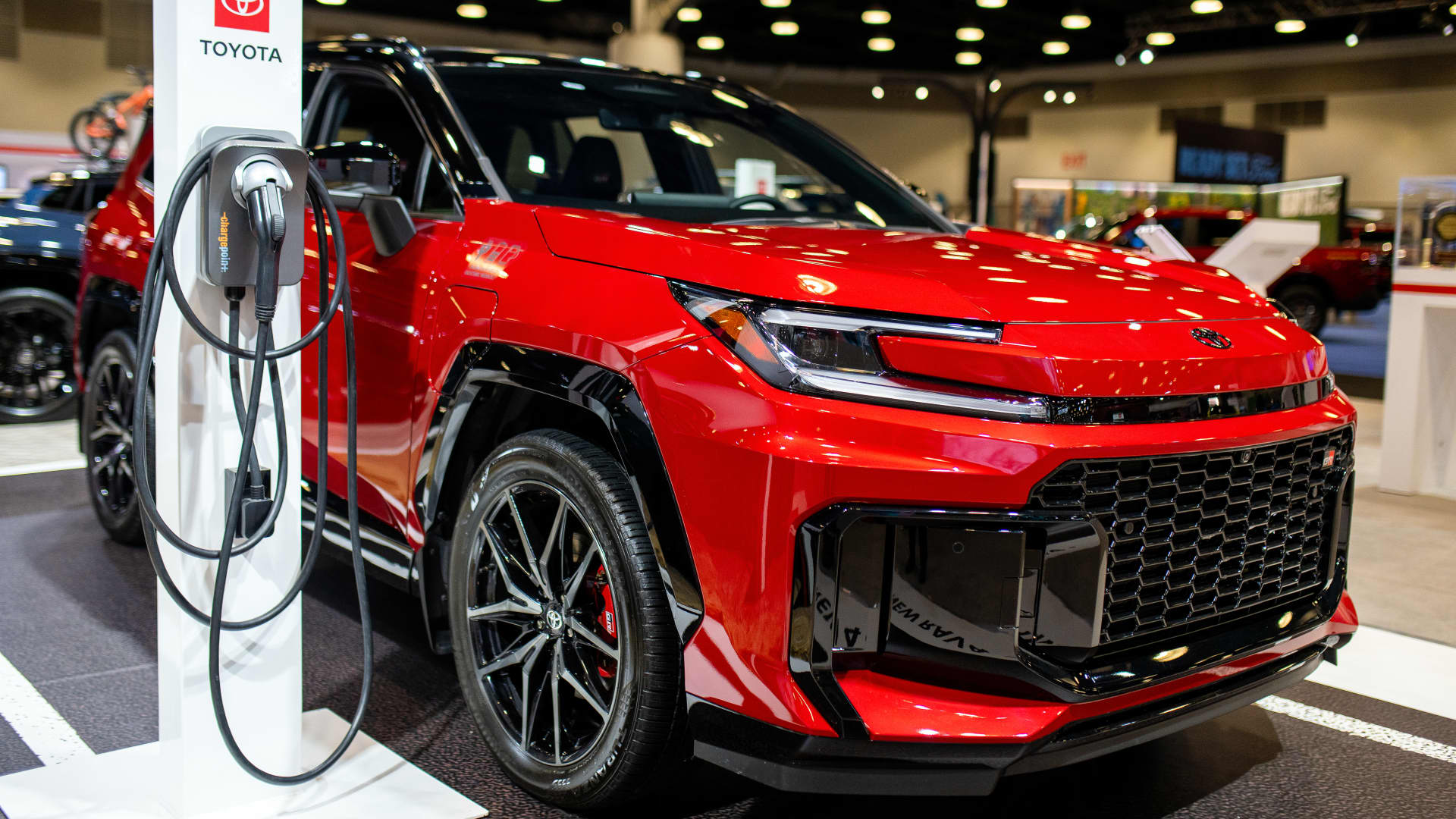
The **geopolitical shockwave** from the Iran war has served as a potent catalyst, dramatically recalibrating the **total cost of ownership (TCO)** equations for American motorists. Sustained elevated fuel prices have fundamentally repositioned the all-hybrid RAV4 lineup from an environmental preference to a **pragmatic economic imperative**. This external market pressure has propelled the hybrid adoption curve at a pace that significantly outstrips Toyota’s current manufacturing lead times. The observed 18% market share for hybrids is thus more than a transient trend; it’s a **structural behavioral shift** driven by pervasive global energy insecurity. While Toyota’s long-term strategic alignment with this shift is prescient, its tactical execution is currently hampered by the inherent lag between rapidly evolving geopolitical realities and the slower kinetics of industrial scaling. Even cutting-edge models like the 2026 RAV4 Plug-in Hybrid GR Sport, showcased in Vancouver, are subject to these overarching systemic production constraints.
Long-Term Brand Equity vs. Short-Term Supply
Paradoxically, the acute scarcity of the RAV4 could inadvertently cultivate an aura of **exclusivity and desirability**, positioning it as a ‘must-have’ vehicle within the typically commoditized crossover segment. However, this ‘fly off the lot’ phenomenon, as characterized by Jessica Caldwell, is a **double-edged sword**. While it signals immense demand, prolonged wait times risk inducing **brand fatigue** and fostering customer defection. Toyota is navigating a precarious balance: upholding its formidable reputation for reliability and quality against the urgent market demand for fuel-efficient mobility. The company’s strategic choice to prioritize a controlled production ramp-up until 2027 explicitly signals a commitment to **long-term structural integrity and brand value** over immediate, short-term volume maximization. As 2027 approaches, Toyota’s paramount challenge will be to sustain its leadership in the non-pickup segment as its manufacturing capacity gradually aligns with a market that has decisively pivoted towards hybrid technology. The current supply crisis unequivocally validates the RAV4’s market relevance, yet simultaneously serves as a potent cautionary tale regarding the inherent risks of high-stakes manufacturing transitions amidst periods of acute global instability.