The Mechanics of Ironic Consumption and Algorithmic Amplification
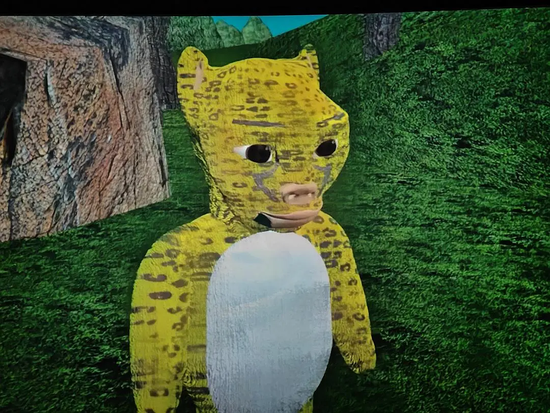
The box office trajectory of the animated feature Niu Lai illustrates a structural divergence between technical execution and commercial performance in contemporary theatrical markets. Initially registering negligible gross yields of ¥7,711 across its first ten days of domestic release, the title underwent an exponential, thousandfold surge within a 48-hour window, surpassing ¥2.2 million in cumulative box office revenue and triggering adjusted forecasts between ¥5.9 million and ¥18 million. This inflection was catalyzed not by intrinsic aesthetic merit, but by algorithmic discovery loops transforming low-fidelity production value into a participatory spectacle of ironic consumption.
Ticketing ecosystems such as Maoyan and Dengta, operating on real-time transactional velocity models, interpreted early social sentiment spikes as organic commercial demand. Douban users deployed hyperbolic “ironic five-star” ratings, paradoxically registering as high-relevance signals within discovery aggregators. For cinema exhibitors operating under dynamic scheduling imperatives, screen allocations shifted immediately toward the title to capture high-margin curiosity foot traffic, displacing conventionally capitalized mid-tier offerings during the peak summer corridor.
Capital Diversification and Lean Micro-Studio Operations
The corporate history of the production entity, Dalian Jingyuan Culture Film and Television Media Co., Ltd., reflects a non-traditional route to market. Rebranded in July 2021 from Dalian Jingyuan Decoration Engineering Co., Ltd., the transition from construction and interior design to media production demonstrates low regulatory friction for small-scale balance sheets seeking cultural distribution licenses. Operating as a lean two-person unit comprised of the director—who handled writing, voice acting, and animation modeling—and his mother, the project spanned five years without external venture or studio capital.
This operational model stands in stark contrast to capital-intensive studio pipelines. The production’s rudimentary, “hand-crafted” (shou cuo) 3D modeling violated mainstream cinematic standards; however, distributor resistance was bypassed by the director’s insistence on theatrical deployment. The resulting juxtaposition between polished ink-wash promotional collateral and substandard feature rendering generated an organic dissonance that served as the primary viral accelerant across digital channels.
Linguistic Capital and Financial Symbolism
A central economic driver of the film’s theatrical momentum is the semantic resonance of its title. Translating to “The Bull Comes,” Niu Lai directly intersects with the vernacular of Chinese financial markets, where the character “Niu” (Bull) signifies macroeconomic expansion and rising equity valuations. This linguistic alignment enabled an act of cultural arbitrage, positioning theatrical attendance as a symbolic, talismanic ritual for retail stock investors seeking market rallies.
The theatrical ticket functioned less as access to narrative media and more as a low-cost derivative asset tied to financial optimism. User discourse across social media platforms documented retail traders linking ticket purchases to the prospective performance of bull-themed equities. The commodification of superstitious retail sentiment insulated the film from qualitative appraisal, proving that conceptual alignment with external market psychologies can offset product deficiencies.
Theatrical Exhibition and Distribution Vulnerabilities
The Niu Lai case reveals core systemic vulnerabilities in theatrical exhibition models dependent on automated yield-management algorithms. The efficiency of memetic, irony-driven virality significantly outperforms traditional studio promotional expenditures in short-term return on investment (ROI). Cinema chains, incentivized strictly by per-seat occupancy rates, must monetize immediate social velocity regardless of content prestige.
Furthermore, the narrative of a five-year familial production effort introduced reputational insulation, reframing technical failure as an authentic outsider pursuit. As algorithmic systems increasingly mediate audience behavior, Niu Lai establishes an operational precedent: under optimized conditions of ironic consumption and symbolic market resonance, technical failure can be converted into a viable theatrical business model.