Regulatory Adjudication at EchoPark Speedway
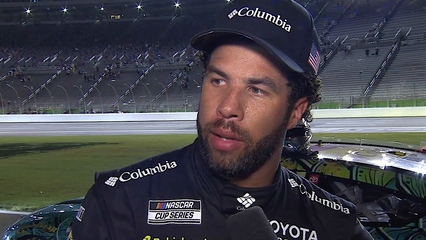
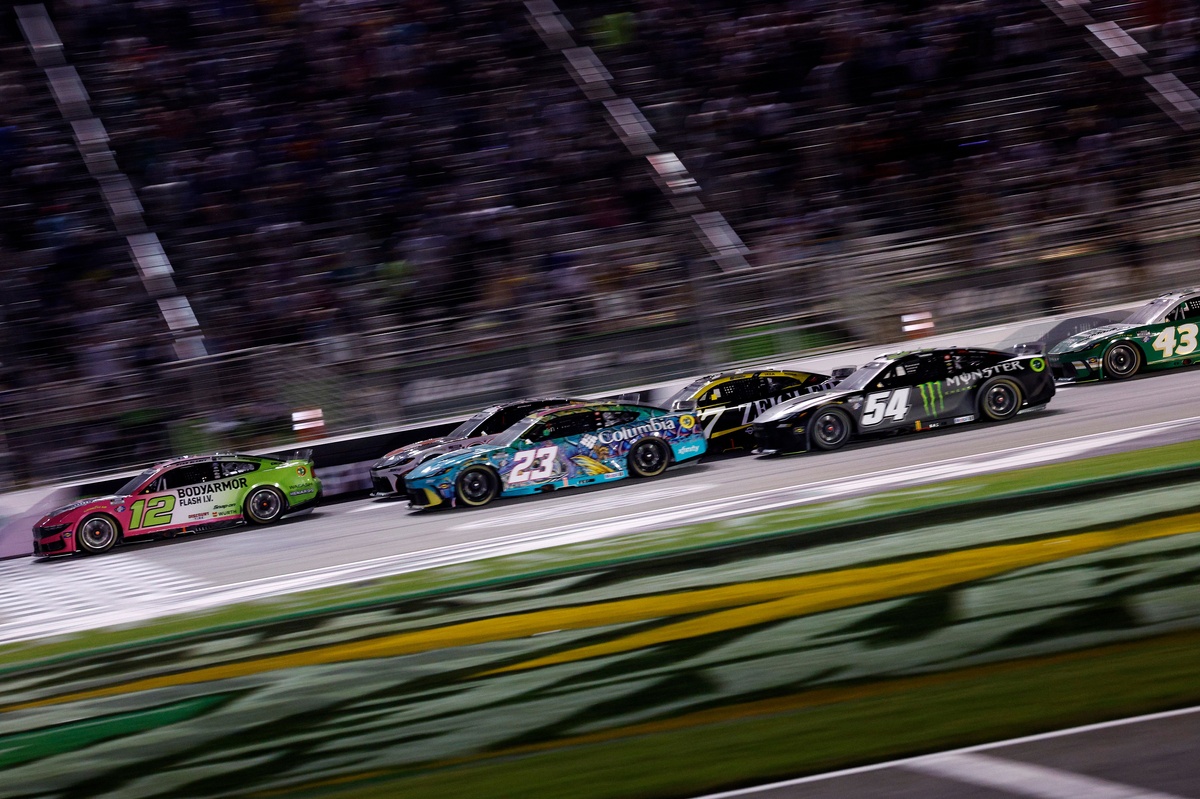
The conclusion of the Quaker State 400 at EchoPark Speedway precipitated a severe structural deficit for 23XI Racing. Bubba Wallace, having crossed the finish line in a provisional podium position, was relegated to 29th following a post-race technical review. The governing body cited a violation of the out-of-bounds policy, specifically the ‘advancement of position’ below the double yellow line during the final circuit’s high-leverage drafting phase.
This reclassification represents more than a localized setback; it constitutes a 27-point statistical regression with immediate implications for the postseason bubble. In the high-stakes ecosystem of the NASCAR Cup Series, such a loss of seasonal capital directly threatens playoff eligibility and depreciates the team’s standing in the owner points standings—the primary metric for year-end financial distributions and charter valuation.
Kinetic Variables and the Mechanics of Infraction
Officials determined that the No. 23 Toyota utilized the apron to bypass the competitive bottleneck on the final lap, gaining a trajectory unavailable within the legal racing surface. This technical interpretation suggests the maneuver bypassed the aerodynamic and physical constraints of the lead pack. Conversely, the driver’s testimony focused on vehicular control and kinetic mitigation.
Wallace’s defense centers on ‘avoidance logic,’ asserting that the descent below the line was a reactive measure to prevent a terminal collision with Ryan Blaney and Ty Gibbs. He maintained that the excursion into the apron resulted in a loss of traction and required heavy brake modulation, arguing that the maneuver functioned as a liability rather than a strategic asset. The friction between regulatory literalism and driver intent remains a primary point of friction in speedway adjudication.
Aerodynamic Wake and Multi-Car Interaction
The incident was catalyzed by complex draft-related physics. As the field approached the white flag, the No. 23 Toyota was subject to significant rear-end pressure, specifically from Ty Gibbs. Wallace contends that this external kinetic energy dictated his car’s trajectory, forcing the vehicle into the sub-optimal surface area. From a performance standpoint, the transition to the apron typically results in a loss of ‘side force,’ complicating the car’s handling and theoretically negating any momentum gained through the shortcut.
Institutional Fallout and Stakeholder Exposure
The 27-point swing introduces a structural disadvantage for Toyota Racing Development (TRD) in the manufacturer’s championship. A runner-up finish would have validated the aerodynamic efficiency of the new Camry XSE package; instead, the 29th-place result persists as a statistical anomaly that obscures the team’s actual performance ceiling. This disparity affects sponsorship ROI, shifting the media narrative from podium success to regulatory controversy.
Furthermore, the interpersonal dynamics between 23XI Racing and Joe Gibbs Racing may be strained. The post-race dialogue regarding the push from Ty Gibbs highlights the volatility of drafting alliances. These interactions are critical for future speedway events, where successful cooperation is often the prerequisite for manufacturer-wide success.
Review Protocols and Future Regulatory Clarity
NASCAR’s reliance on multi-angle video synthesis and timing loops underscores a commitment to rigid boundary enforcement, even when such decisions override the subjective experience of the driver. While Wallace cited telemetry—specifically brake pressure data—to prove he did not intend to gain a position, the visual evidence of the car’s position relative to the yellow line remains the ultimate arbiter. This precedent reinforces the ‘zero-tolerance’ approach to apron usage at drafting tracks, prioritizing safety and track integrity over situational context.
Long-Term Competitive Trajectory
For 23XI Racing, the focus pivots to aggressive point recovery. The loss of a 27-point buffer necessitates a shift in stage-points strategy for upcoming events to mitigate the risk of playoff exclusion. As the sport continues to refine the definition of ‘avoiding a wreck’ versus ‘advancing a position,’ the EchoPark incident serves as a benchmark for the high cost of marginal gains and the uncompromising nature of modern racing regulation.