In a transformative ruling, the United States Supreme Court has fundamentally restructured the federal administrative apparatus. By dismantling the nearly century-old constitutional compromise that protected the heads of independent regulatory agencies from unilateral presidential dismissal, the Court has consolidated executive authority and shifted the federal regulatory paradigm from one of insulated, technocratic expertise to direct, centralized political control.
The Demise of Humphrey’s Executor
This doctrinal shift explicitly overturns the 1935 landmark precedent established in Humphrey’s Executor v. United States. In that unanimous decision, the Court held that Congress could constitutionally insulate commissioners of independent regulatory agencies—designed to exercise quasi-legislative or quasi-judicial functions—from arbitrary presidential removal. Monday’s ruling decisively rejects this limitation, establishing that any federal officer exercising executive authority must remain subject to the President’s discretionary removal power under Article II.
Writing for the majority, Chief Justice John Roberts asserted that without unilateral authority to discharge agency heads, the President cannot fulfill the constitutional mandate to ensure that federal laws are faithfully executed. By eliminating these statutory removal protections, the ruling subjects independent regulators—who oversee critical sectors of the domestic economy—directly to the political and policy priorities of the sitting administration.
This decision marks the culmination of a decades-long effort by conservative legal theorists to challenge the constitutional legitimacy of the modern administrative state. By stripping away the structural buffers that shielded agency commissioners from political dismissal, the Court has altered the operational landscape of federal oversight, ushering in an era where regulatory enforcement is directly aligned with presidential electoral cycles.
John Roberts and the Forty-Year Unitary Executive Campaign
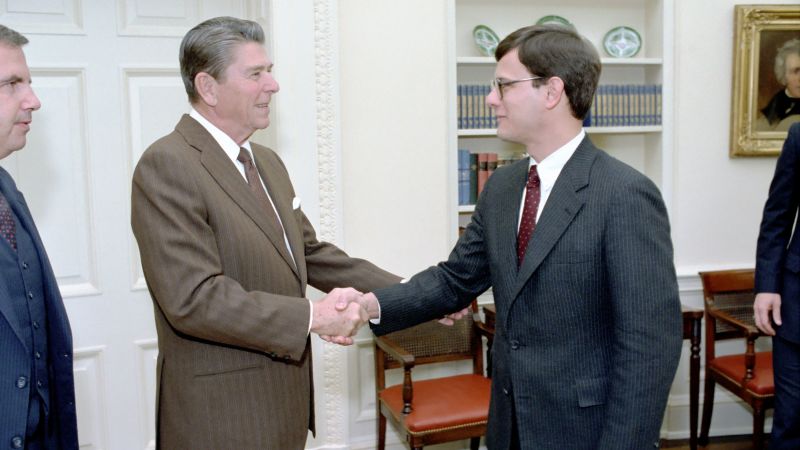
Far from an abrupt departure, this ruling represents the realization of a long-term jurisprudential project championed by Chief Justice Roberts. Dating back to his 1983 memoranda as a young lawyer in the Reagan administration’s Office of Legal Counsel, Roberts has consistently targeted what he termed the constitutional anomaly of independent agencies operating outside the direct supervision of the President.
Since his appointment as Chief Justice in 2005, Roberts has systematically chipped away at statutory limits on presidential removal. In the pivotal 2010 ruling, Free Enterprise Fund v. Public Company Accounting Oversight Board, he articulated his vision of unitary executive accountability, arguing that allowing independent entities to operate beyond presidential control dilutes democratic accountability and prevents the public from identifying where the executive responsibility ultimately lies.
From his position at the center of the Court, Roberts observed that federal jurisprudence had been steadily retreating from the 1935 precedent for years. He maintained that the historical insulation of these agencies conflicted with the original design and structural integrity of the United States Constitution, finalizing the alignment of administrative law with his long-held theory of a unified executive branch.
Institutional and Operational Fallout
The structural consequences for the federal bureaucracy are immediate. Agencies once characterized by bipartisan continuity and technical specialization must now navigate direct subordination to the White House. The vulnerability of commissioners to at-will dismissal functionally dismantles the staggered-term, multi-member commission model, which was originally engineered to prevent abrupt, politically driven policy swings.
This shift alters the incentives for agency leadership, who must align their regulatory agendas with the immediate political objectives of the Executive to secure their tenure. Consequently, federal oversight is likely to become more volatile, reflecting the shifting priorities of successive administrations. Furthermore, the ruling severely curtails Congress’s Article I authority to design independent oversight mechanisms, limiting its ability to delegate technical authority while maintaining a non-partisan buffer between regulators and the presidency.
Market Volatility and Corporate Strategy
For global markets and corporate compliance officers, the elimination of regulatory insulation introduces profound systemic risk. Corporate capital allocation depends heavily on long-term regulatory predictability. Under this new regime, federal policy guidelines risk high-frequency volatility, pivoting rapidly with successive presidential administrations.
This potential for policy whiplash complicates strategic planning in highly regulated sectors such as energy, technology, and finance. Industries may find themselves navigating conflicting regulatory regimes as successive administrations install and remove agency heads to suit their political agendas. Moreover, tying regulatory tenure exclusively to political alignment risks hyper-politicized agency leadership, potentially degrading the technical quality of federal rulemaking and enforcement.
Judicial Factionalism and Strategic Alliances
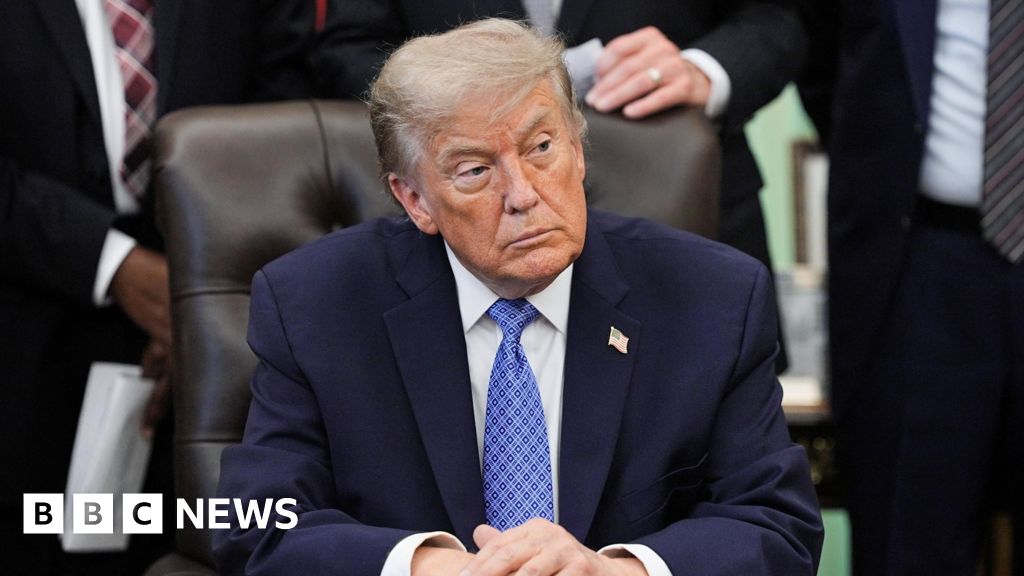
While the ruling represents a decisive victory for advocates of the unitary executive theory and a major political win for Donald Trump, the Court’s broader action reveals a highly complex judicial dynamic. Beneath the landmark decision on administrative power, the Court delivered three distinct defeats to the former president on the same day, indicating that the conservative supermajority does not operate as a monolithic bloc in support of executive interests.
In these parallel decisions, the Court’s liberal wing forged tactical alliances with key conservative jurists. These shifting coalitions demonstrate that several conservative justices prioritize strict statutory textualism, federalism, and judicial restraint over unyielding assertions of executive privilege. This internal division suggests that while the Court is committed to dismantling the administrative state, it remains highly unpredictable regarding other expansions of executive power.
Strategic Realignments in Washington
The ruling forces an immediate strategic realignment among policymakers, advocacy groups, and corporate lobbyists. Congress must now draft future legislation under the assumption that it cannot insulate new oversight bodies from presidential control. Lobbying strategies will also shift, focusing heavily on the White House and direct executive actions rather than attempting to influence independent commissions over long, stable tenures.
Ultimately, this decision marks a historic departure from the governance models established during the New Deal era. By prioritizing presidential accountability over regulatory independence, the Supreme Court has redefined the relationship between the citizen, the market, and the state, setting a trajectory that will shape the federal bureaucracy for decades to come.