Evolving Competitive Equilibrium in Major League Baseball
The upcoming contest between the Atlanta Braves and the Cincinnati Reds on May 29, 2026, offers a compelling lens into the dynamic forces shaping Major League Baseball’s competitive landscape. This matchup transcends a mere game, serving as an analytical case study in strategic resource allocation, team ascendancy, and the complex interplay of on-field performance with broader organizational objectives.
Atlanta, an established market leader, consistently demonstrates a superior operational framework, reflected in their league-best 38-win record (.667 win percentage) and a robust collective .334 wOBA offensively (3rd overall). This sustained excellence underscores effective talent identification, sophisticated player development pipelines, and data-driven roster construction, all contributing to a formidable and enduring competitive advantage.
Conversely, the Cincinnati Reds, with a 29-26 record, represent an emerging competitive force. Their recent offensive surge, evidenced by a .322 wOBA over the last 30 days—surpassing Atlanta’s .315 mark in the same period—signals a potential disruption to established National League hierarchies. This improvement highlights their strategic resource optimization and capacity to challenge dominant franchises.
Strategic Player Asset Management and Pitching Rotations
The pitching duel featuring Grant Holmes (Braves, 3.78 ERA) and Chris Paddack (Reds) illuminates distinct philosophical approaches to player asset management and in-season risk mitigation. Holmes’ inconsistent performance, particularly his diminishing effectiveness after facing opposing lineups twice, presents a critical operational challenge requiring dynamic adjustments.
This performance metric necessitates a highly proactive bullpen strategy, as evidenced by the readiness of relief pitchers like Didier Fuentes. Such tactical allocation of pitching resources, informed by advanced analytics, is paramount for managing pitcher workload, optimizing game outcomes, and preserving valuable assets throughout a demanding season.
Holmes’ recent outing—five innings, ten strikeouts, two walks against the Nationals, despite two solo home runs—suggests a potential inflection point. A sustained rebound would significantly enhance his long-term value, directly impacting future contract negotiations, potential trade market considerations, and the overall stability of the Braves’ pitching staff.
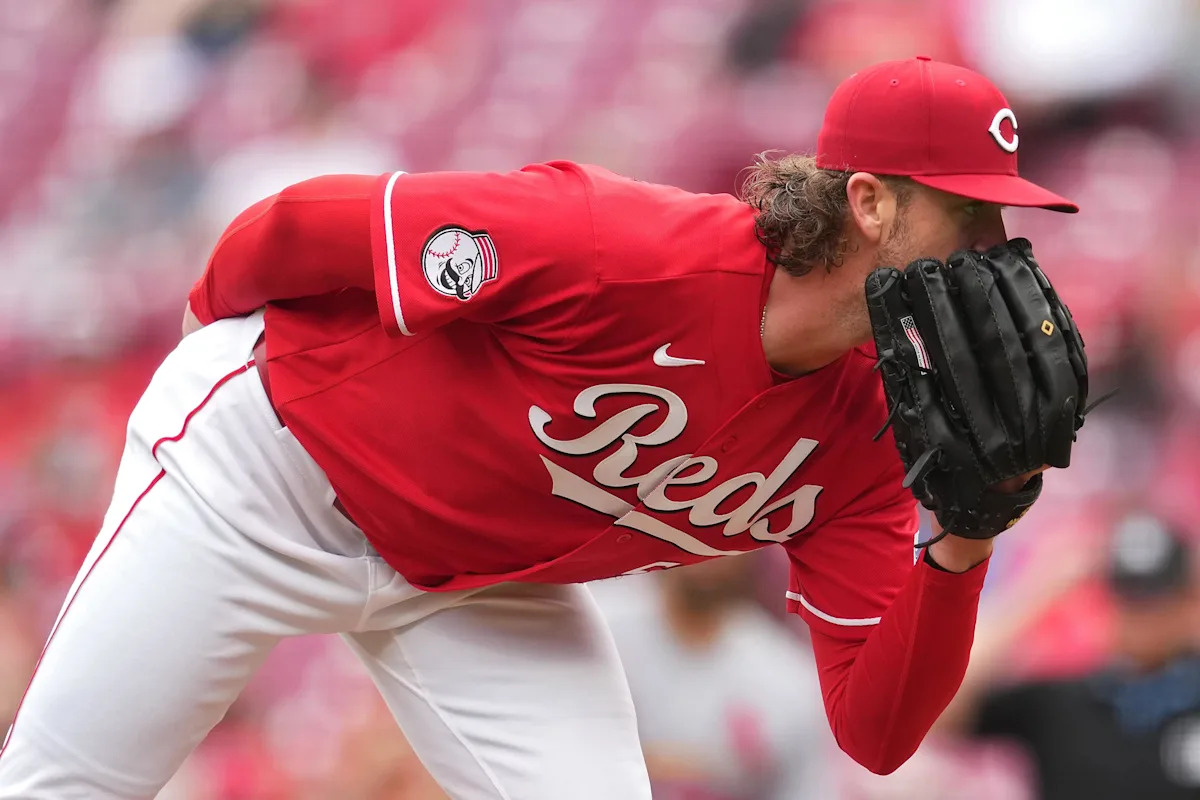
For the Reds, Chris Paddack’s reintegration into the rotation, after struggling with the Miami Marlins (6.86 ERA, 0-6), exemplifies a calculated reclamation strategy for distressed assets. His subsequent “perfectly fine” performances (two starts of 5.0 innings each, 4 total earned runs) showcase the potential for value arbitrage within a new organizational context.
This strategic acquisition by Cincinnati reflects a precise risk assessment, leveraging an opportunity to stabilize their rotation with a high-upside player who could benefit from a change of scenery or refined coaching. Paddack’s ability to provide operational relief critically influences the team’s short-term competitive outlook and long-term roster development.
Offensive Performance as a Driver of Market Valuation
The offensive prowess of both teams extends beyond immediate game results, significantly influencing franchise valuation, fan engagement, and media rights revenue. Atlanta’s elite offense, characterized by league-leading metrics, directly enhances the franchise’s brand equity and market appeal.
Consistently high offensive performance translates into tangible financial returns: increased attendance, higher merchandise sales, and more lucrative broadcast agreements. The Braves’ status as a market-leading “powerhouse” is inextricably linked to their run-scoring capability, creating a compelling entertainment product for both consumers and investors.
The Reds’ recent offensive surge, notably surpassing Atlanta’s wOBA over the last 30 days, indicates a burgeoning competitive threat and a potential re-rating of their market position. This improvement has the capacity to galvanize local fan support, drive viewership growth, and attract new sponsorship opportunities as the team transitions from an emerging contender to a more formidable force.
Such shifts in offensive dynamics necessitate a re-evaluation of team investment strategies, influencing decisions on player payroll, facility upgrades, and marketing expenditures. Sustained offensive success is a primary determinant of fan loyalty and media narratives, directly dictating revenue streams and long-term financial stability across professional sports.
Data Analytics, Predictive Models, and Betting Market Efficiency
The financial dimension of Major League Baseball is further illuminated by the sophisticated interplay between betting markets and advanced analytical models. Money line odds (Atlanta -146, Cincinnati +124) reflect a quantifiable market consensus on perceived team strength and probability of victory, guiding significant capital flows within the sports betting ecosystem.
The over/under for total runs, set at 9.5, offers another layer of predictive insight, indicating aggregated market expectations for offensive output and pitching performance. These figures are not speculative but are derived from complex algorithms and extensive data analysis, highlighting the pervasive institutionalization of quantitative methods in sports finance.
The SportsLine Projection Model, noted for its “red-hot 14-4 run” on top-rated MLB picks and proficiency in home run prop selections, exemplifies the growing reliance on data science for informing betting strategies and broader market predictions. The model’s algorithmic validation confers significant authority and trust, influencing both professional bettors and casual enthusiasts.
The integration of such robust models into the sports media landscape provides an essential analytical framework for understanding game outcomes and player performance, extending far beyond traditional subjective assessments. This analytical depth impacts not only betting behavior but fundamentally influences how teams evaluate talent, optimize game-day strategies, and manage financial risk, reflecting a league-wide pivot towards data-driven decision-making.
Institutional Dynamics and Competitive Trajectories
The contrasting trajectories of the Braves as an established market leader and the Reds as an emerging challenger underscore the inherent cyclical nature of competitive balance within professional sports leagues. Sustaining elite performance, as Atlanta demonstrates, demands continuous, strategic investment in talent acquisition, infrastructure, and innovation, often requiring substantial capital expenditure and a long-term organizational vision.
Teams like the Reds, striving for competitive parity and upward mobility, must navigate intricate strategic choices regarding player acquisition, development, and financial allocation. The tactical decision to acquire a pitcher like Chris Paddack illustrates a targeted response to immediate operational needs, while simultaneously seeking to unlock latent value from underperforming assets.
Major League Baseball’s competitive landscape functions as a dynamic ecosystem, where team performance is a direct outcome of both individual player contributions and overarching organizational strategy. The capacity to adeptly manage player volatility, optimize roster construction, and adapt to evolving league-wide trends is paramount for both maintaining established dominance and achieving sustained competitive ascendancy.
Ultimately, the May 29, 2026, game between the Braves and the Reds transcends a single contest; it serves as a critical snapshot of ongoing strategic battles, financial valuations, and operational adjustments that define the modern era of professional baseball. The outcomes of such pivotal games contribute to broader narratives of success and challenge, profoundly influencing stakeholder perceptions and shaping the future trajectory of participating franchises within the highly competitive sports entertainment market.