
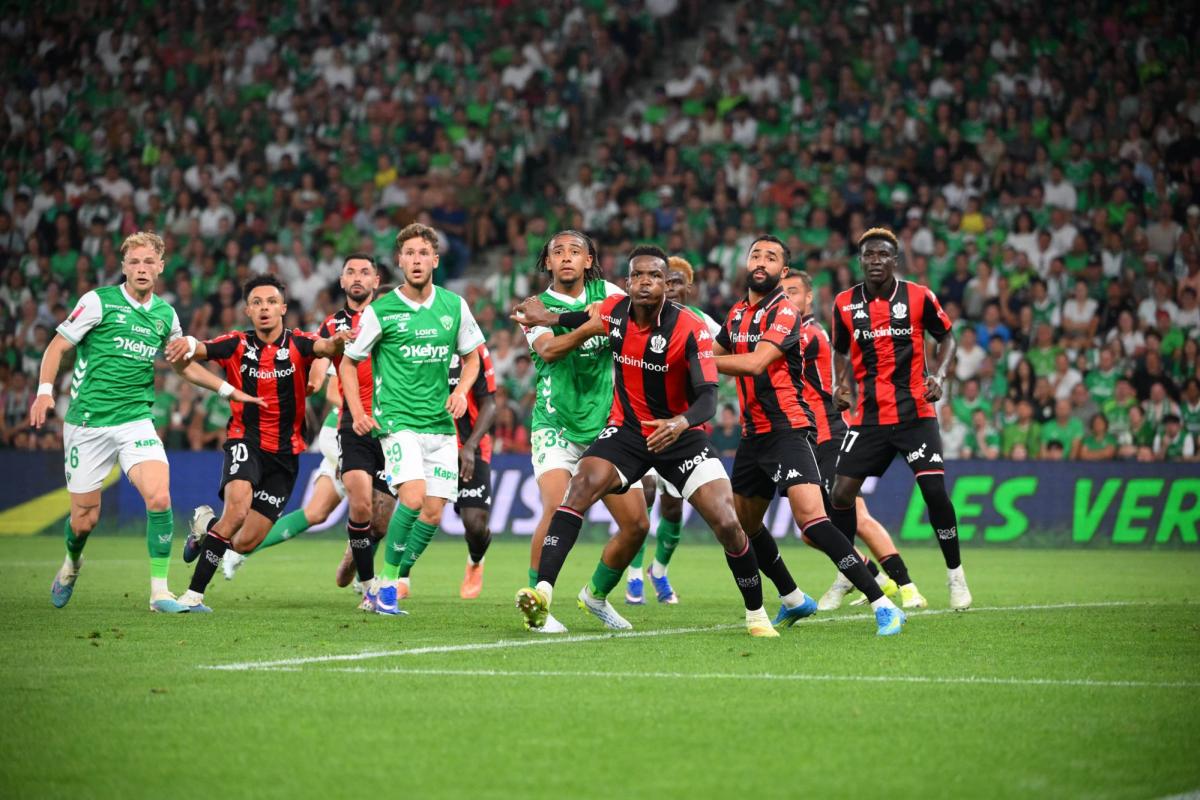
The decisive second-leg playoff between OGC Nice and Saint-Étienne transcends a standard seasonal conclusion; it represents a collision between historical prestige and modern financial volatility. For Nice, a club that initiated the campaign with aspirations for European qualification, this descent into a relegation struggle signals a systemic failure of institutional objectives. The stakes are underscored by the club’s quadruple French championship pedigree, which provides zero insulation against the harsh economic attrition of Ligue 2.
The Institutional Weight of Potential Relegation
Should Nice surrender their top-flight status, the fallout would trigger an unprecedented restructuring of the club’s operational budget and capital hierarchy. Terminating a twenty-four-year tenure in Ligue 1 would not only jeopardize long-term commercial partnerships but also necessitate a rapid liquidation of high-value assets to mitigate the sharp contraction in broadcasting revenue and sponsorship valuations. This ‘cliff-edge’ scenario threatens the very foundation of the club’s mid-term strategic planning.
The psychological burden on the squad is exacerbated by a increasingly toxic atmosphere. The recent 1-3 loss to Lens in the Coupe de France final acted as a catalyst for supporter alienation, effectively severing the connection between the playing staff and the local power base. In this high-pressure vacuum, the margin for technical error has effectively reached zero.
Security Mandates and Operational Liability
The Alpes-Maritimes prefecture’s mandate for a ‘huis clos’ (closed-door) match at the Allianz Riviera is a direct consequence of the breakdown in public order. Following a pitch invasion during the Nice-Metz fixture—resulting in approximately €600,000 in physical damages—authorities have prioritized public safety over match-day revenue. This intervention highlights an escalating friction between the club’s ultra-factions and the administration, transforming the stadium from a competitive asset into a liability.
While playing in a vacuum may provide the squad temporary relief from immediate supporter hostility, it removes the home-field advantage critical for playoff survival. The anticipation of civil unrest in the event of a negative result further illustrates the volatile socio-political climate surrounding the club’s current management.
Tactical Stagnation and Technical Deficiencies
The scoreless first leg at Geoffroy-Guichard exposed a profound lack of offensive connectivity. High temperatures and the psychological gravity of the fixture appeared to induce tactical paralysis, with both sides failing to record a single shot on target. This stalemate suggests a risk-aversion strategy that shifts the entire burden of creativity to the return leg at the Allianz Riviera.
Nice’s failure to test the Saint-Étienne goalkeeper highlights a persistent breakdown in the final third. The absence of clinical execution has forced the team into a reactive defensive posture, leaving them vulnerable to a single high-impact error. To survive, the tactical emphasis must transition from mere risk mitigation to proactive disruption of Saint-Étienne’s defensive block.
Personnel Dynamics and Strategic Utility
The availability of Elye Wahi provides Nice with a critical offensive pivot. Wahi’s capacity to stretch defensive lines and exploit half-spaces is essential for a team struggling with technical waste. His return offers the technical staff a dynamic alternative to the static play patterns that characterized the first leg. Conversely, the loss of Hicham Boudaoui to a jaw injury early in the first leg has disrupted the midfield equilibrium. Replacing Boudaoui’s work rate and defensive coverage remains a primary concern against a Saint-Étienne side noted for its physical generosity.
Saint-Étienne’s Path to Restoration
For Saint-Étienne, this playoff is a strategic vehicle to reclaim their position within the French football hierarchy. Manager Philippe Montanier has emphasized high-intensity metrics as the foundation for their promotion bid. The ‘Verts’ aim to exploit Nice’s institutional fragility, maintaining a disciplined defensive structure to frustrate the home side and capitalize on the inevitable gaps that emerge as Nice is forced to chase a result. The outcome hinges on a single moment of individual brilliance or a critical officiating decision in an environment defined by narrow margins.
Conclusion: The Macro-Economic Fallout
The final whistle will conclude a season described as ‘unbreathable’ by the Nice faithful. The transition from Champions League hope to second-division fear serves as a stark reminder of the volatility inherent in professional football. The absence of fans and the presence of heavy security create a backdrop of crisis management. Whether Nice preserves its 24-year legacy or Saint-Étienne completes its restoration will be determined by which institution better manages the psychological and structural pressures of this fiscal ‘dead-heat.’

Photo by Icsilviu on Pixabay.