Roster Depth: The Strategic Imperative Redefining NBA Playoff Success
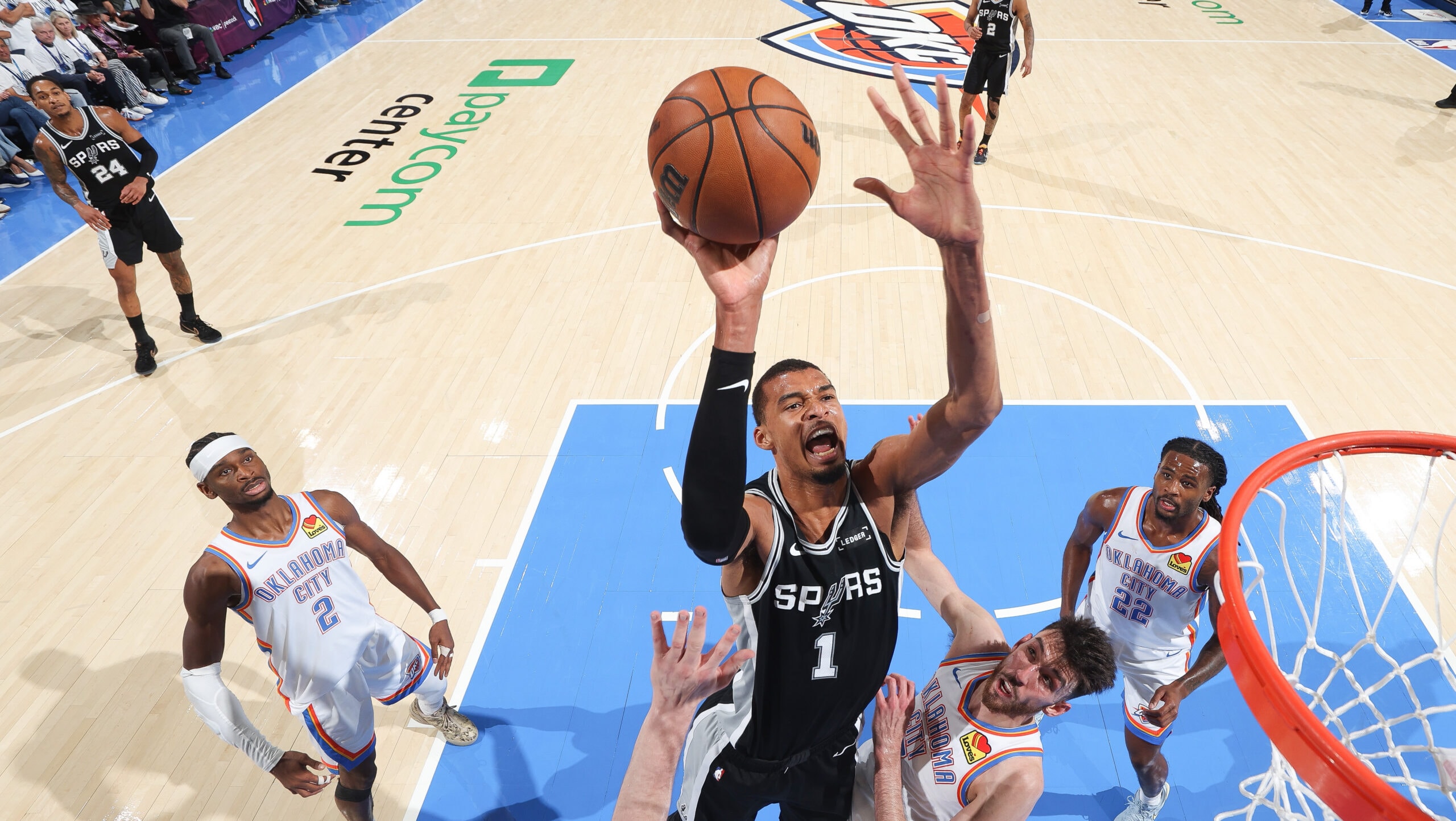
The Oklahoma City Thunder’s commanding 3-2 lead against the San Antonio Spurs in the Western Conference Finals, positioning them one victory from a potential second consecutive NBA Finals appearance, unequivocally highlights a fundamental evolution in competitive basketball strategy. This pivotal series, underscored by a decisive 127-114 Game 5 victory, has conspicuously shifted analytical paradigms from a sole focus on marquee individual talent towards the profound, systemic advantages of robust organizational depth and sophisticated player development.
Beyond the anticipated clash between MVP finalists Shai Gilgeous-Alexander and Victor Wembanyama, the emergent narrative centers on the catalytic performances of role players such as Jared McCain and Alex Caruso. Their instrumental contributions, alongside valuable input from Kenrich Williams and Cason Wallace, have consistently demonstrated a critical strategic advantage, proving the resilience and versatility inherent in a meticulously constructed and adaptable roster.
Operational Resilience and Strategic Risk Mitigation Through Depth
Oklahoma City’s sustained competitiveness, even amidst significant personnel challenges—notably the multi-game absence of injured All-Star forward Jalen Williams and guard Ajay Mitchell—underscores a superior model of operational resilience and strategic risk mitigation. The seamless integration of players like Jared McCain, who delivered 20 points in his crucial first playoff start, exemplifies a sophisticated organizational commitment to talent identification, comprehensive player development, and a coaching philosophy that empowers the entire roster.
This intentional cultivation of distributed talent actively mitigates the intrinsic volatility of professional sports, particularly the unpredictable impact of injuries. By developing interchangeable parts and diverse skill sets across the roster, the Thunder ensure performance continuity, minimizing the reliance on a limited number of high-value assets. This strategic foresight safeguards competitive standing and investment, reflecting a mature understanding of the demanding physical realities of extended playoff runs.
Financial Implications of Depth-Driven Roster Construction
A depth-oriented strategy offers substantial financial advantages for franchise management and long-term sustainability. By prioritizing internal player development and cost-effective acquisitions of impactful role players, teams can significantly optimize salary cap allocation. This approach circumvents the often-disproportionate financial burden associated with constructing a roster predominantly around maximum-contract superstar talent, freeing up resources for other strategic investments.
Such a shrewd financial model fosters unparalleled flexibility in roster construction, enabling agile adaptation to evolving market dynamics and player valuation trends. This yields potentially higher returns on investment in player personnel. Moreover, the capacity to absorb critical injuries without a precipitous decline in on-court performance directly protects the franchise’s market value, ensuring robust fan engagement and stable revenue streams across ticketing, merchandise, and lucrative media rights.
Competitive Leverage and League-Wide Strategic Redefinition
The Thunder’s demonstrable roster depth constitutes a formidable competitive challenge, compelling opposing franchises to fundamentally re-evaluate their defensive schematics and talent acquisition methodologies. When a team’s offensive and defensive impact emanates from a diversified array of contributors beyond its primary stars, it profoundly complicates opposition scouting reports and game planning, introducing a critical element of strategic unpredictability.
This competitive leverage transcends individual playoff series, actively shaping league-wide trends in talent identification and roster construction. Franchises across the NBA are now implicitly challenged to scrutinize their internal player development pipelines and foundational team-building philosophies, prompting a potential systemic pivot away from exclusive star-centric models toward a more balanced, distributed allocation of high-utility talent and specialized skill sets throughout the entire roster.
Player Valuation and Evolving Career Trajectories in a Depth-Centric League
The elevated performances of complementary players like Jared McCain and Alex Caruso in high-pressure playoff environments exert a significant and immediate impact on their individual player valuations within the competitive league ecosystem. Their capacity to embrace critical roles and consistently deliver under intense scrutiny substantially enhances their marketability, directly influencing future contract negotiations, trade value, and overall career trajectory.
This phenomenon vividly illustrates the diverse, multifaceted pathways to sustained career success in professional sports. It underscores that profound impact is not exclusively the domain of top draft selections or established All-Stars. Instead, it validates the strategic imperative of identifying and developing late-round picks, undrafted free agents, and astute veteran acquisitions who can organically thrive within a meticulously defined and empowering team system, thereby establishing robust, alternative models for talent development and long-term player retention.
Franchise Trajectory and Optimized Market Positioning
For the Oklahoma City Thunder, the imminent prospect of a potential second consecutive NBA Finals appearance signals a period of profound, sustained competitive excellence, dramatically recalibrating the franchise’s long-term trajectory and market positioning. Consistent deep playoff advancements demonstrably build brand equity, solidify an expansive and loyal fan base, and significantly enhance the team’s intrinsic attractiveness to highly sought-after prospective free agents and lucrative corporate sponsors.
This sustained, systemic success cultivates an ingrained winning culture, initiating a self-reinforcing, virtuous cycle of elite talent attraction and optimized on-court performance. Conversely, for the San Antonio Spurs, currently facing elimination, the definitive outcome of this series will serve as a critical inflection point in their own developmental arc, necessitating immediate and comprehensive strategic evaluations of their roster composition, coaching methodologies, and overarching competitive roadmap within a rapidly evolving NBA landscape.
Media Narrative and Elevated Fan Engagement: A Shift from Star-Centricity
The pronounced emphasis on “role players” as decisive factors fundamentally reconfigures the prevailing media narrative surrounding the NBA Playoffs. This paradigm shift moves beyond simplistic individual heroics, instead celebrating collective team effort, strategic depth, and the systemic brilliance of comprehensive roster construction. This evolution directly influences how elite sports journalism frames success, fostering a broader, more sophisticated fan appreciation for the intricate complexities of team building and innovative coaching strategies.
These compelling depth-driven narratives cultivate significantly deeper fan engagement, as supporters connect authentically with a wider spectrum of players who embody resilience, unexpected contributions, and the collective pursuit of excellence. Furthermore, this dynamic provides substantially richer content for analytical discourse, transcending basic box score statistics to meticulously explore the systemic factors and organizational philosophies that are truly antecedent to competitive advantage, as notably demonstrated by Rohan Nadkarni’s insightful analysis.
Institutional Influence: Redefining League-Wide Best Practices
The Oklahoma City Thunder’s resounding success with a depth-first organizational approach wields significant institutional influence, poised to establish new best practices for talent management and holistic team construction across the entire National Basketball Association. League executives, astute general managers, and pioneering coaches will undoubtedly undertake rigorous scrutiny of this compelling model, meticulously seeking to replicate its demonstrated operational efficiencies and potent financial advantages.
This impactful phenomenon will catalyze a comprehensive re-evaluation of established scouting methodologies, recalibrate developmental league strategies, and prompt a strategic reallocation of resources towards nuanced player skill enhancement at every tier of a professional franchise. The profound institutional impact extends even to how the league strategically markets its premier product, potentially augmenting its historical reliance on individual star power with compelling, team-centric narratives that resonate with a broader audience.
San Antonio Spurs: Developmental Imperatives and Future Strategic Alignment
For the San Antonio Spurs, facing imminent elimination against a formidable opponent showcasing superior roster depth, this series furnishes critical, actionable insights into their own emergent developmental trajectory. While media narratives often foreground their generational star Victor Wembanyama, the compelling performance of the Thunder’s complementary cast implicitly challenges the Spurs to rigorously assess their existing complementary talent and overall roster equilibrium.
This defining playoff experience will undeniably inform San Antonio’s future strategic imperatives concerning player acquisitions, prioritized draft selections, and the systemic cultivation of their own robust organizational depth. It profoundly underscores the relentless, ongoing competitive arms race inherent in professional sports, where even the most promising young teams must continuously evolve and strategically optimize their team-building paradigms to credibly contend at the absolute highest echelons of league competition.
Synthesizing the Depth Advantage: A Transformative Paradigm
The Oklahoma City Thunder’s compelling playoff trajectory, meticulously characterized by the pivotal and often unexpected contributions of its strategically cultivated role players, transcends a mere series advantage. It unequivocally signals a transformative paradigm shift in contemporary professional basketball. This potent emphasis on comprehensive organizational depth, prioritized over a singular reliance on star power, furnishes a compelling blueprint for sustained competitive advantage, critically influencing operational, financial, and overarching strategic decision-making across the entire National Basketball Association.
This innovative, depth-first approach provides a robust, multi-layered framework for strategic risk mitigation, significantly enhances organizational financial flexibility, and concurrently generates intricate competitive challenges that profoundly complicate opposing team strategies. As the Thunder stand poised on the precipice of a potential second consecutive NBA Finals appearance, their meticulously orchestrated success stands as a powerful, enduring testament to the invaluable efficacy of a comprehensively built roster in the relentless, high-stakes pursuit of championship contention.