
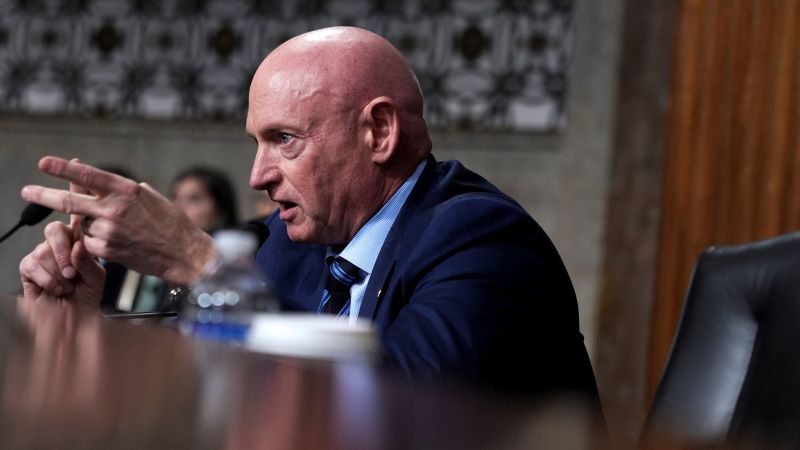
The legal confrontation between Defense Secretary Pete Hegseth and Senator Mark Kelly has reached a pivotal juncture at the DC US Circuit Court of Appeals. A three-judge panel signaled a high likelihood of upholding a lower court’s block against the Department of Defense’s (DoD) attempt to discipline Kelly, a retired Navy captain. The litigation examines the limits of the Uniform Code of Military Justice (UCMJ) when applied to retired service members serving in the legislative branch.
Pedagogical Foundations and the Duty to Disobey
During oral arguments, the court focused on the pedagogical frameworks of the United States Naval Academy and West Point. Judge Nina Pillard noted that the principle of refusing illegal orders is not a subjective political stance but a foundational component of military curriculum. By framing Kelly’s public advisory to service members as an extension of established doctrine, the court effectively challenged the government’s characterization of his speech as insubordinate or disruptive.
Judge Florence Pan emphasized the institutional absurdity of requiring retired officers to forfeit their status—and associated benefits—to articulate principles taught at the nation’s elite academies. This line of questioning suggests the judiciary views the Pentagon’s reach into the post-service lives of veteran-legislators as an unreasonable expansion of executive authority, particularly when such speech aligns with core military ethics.
Constitutional Buffers Against Executive Overreach
The Justice Department’s attempt to revive Hegseth’s disciplinary plan faces significant hurdles following the initial ruling that the Pentagon’s actions were “unconstitutionally retaliatory.” The appellate panel’s scrutiny suggests that the executive branch failed to establish a compelling military necessity that overrides First Amendment protections. This tension highlights a strategic overreach by the DoD, attempting to weaponize administrative levers against political critics.
The institutional risk for the Pentagon is the potential for a binding precedent that permanently curtails the Defense Secretary’s discretionary power over retired personnel. By pursuing Kelly, the administration has inadvertently triggered a judicial correction that reaffirms the independence of the “long gray line.” While Judge Karen Henderson showed more openness to the government’s jurisdictional arguments, the majority consensus appears to favor a robust defense of the separation of powers.
Strategic Implications for Civil-Military Relations
For Senator Mark Kelly, a favorable ruling solidifies his role as a protected voice on military ethics within the Senate, likely emboldening other veterans in Congress to speak on sensitive operational matters without fear of administrative reprisal. For the Pentagon, a loss in this venue necessitates a strategic recalibration, signaling that the judiciary will not tolerate the use of military law to settle partisan disputes.
Ultimately, the case serves as a barometer for the health of constitutional norms. By citing the curriculum of Annapolis and West Point as a legal defense, the court has validated the moral and legal obligation to disobey illegal orders as a permanent professional duty that survives the transition to civilian life. This reinforces the principle that the American military remains accountable to the Constitution rather than the transient directives of political appointees.

Photo by stux on Pixabay.